


Best Blanket for Toddler Bed How to Choose Safely
The moment usually looks small. Your toddler has outgrown the crib, the new bed is assembled, and bedtime suddenly feels different. You're standing there with a blanket in your hands wondering whether it's cozy, too big, too heavy, too fluffy, or somehow all of those at once.
That's a smart question to ask. The best blanket for a toddler bed isn't just a cute smaller version of an adult throw. It needs to match a child's age, movement, sleep habits, room temperature, and the shape of the bed itself. A blanket that feels lovely on the couch can be awkward, bulky, or hard for little hands to manage at night.
Parents often get stuck on timing alone. They ask when a child can have a blanket, then stop there. But once your child is old enough, the next question matters just as much: what kind of blanket is safest and easiest to live with every day? Size, weight, fabric, edging, and washability all matter in a real bedroom.
A toddler also experiences bedding emotionally. A familiar texture or favorite image can make a new bed feel less like a big leap and more like a gentle step. That's one reason personalized options, including a custom photo blanket, can become part of a calming bedtime routine when the blanket itself is lightweight and age-appropriate.
Introduction to Finding the Best Blanket for a Toddler Bed
One family I often think about had a child who loved the routine of the crib but hated the change to a toddler bed. The mattress was fine. The room was safe. The issue was that everything felt too open. Once the parents switched to a small, light blanket the child could pull up and push away easily, bedtime stopped feeling like a struggle and started feeling familiar again.
That's why blanket shopping deserves more thought than you might expect. The right blanket can support comfort, help a child practice independence, and make laundry simpler. The wrong one can bunch at the rails, slide to the floor, or feel too warm halfway through the night.
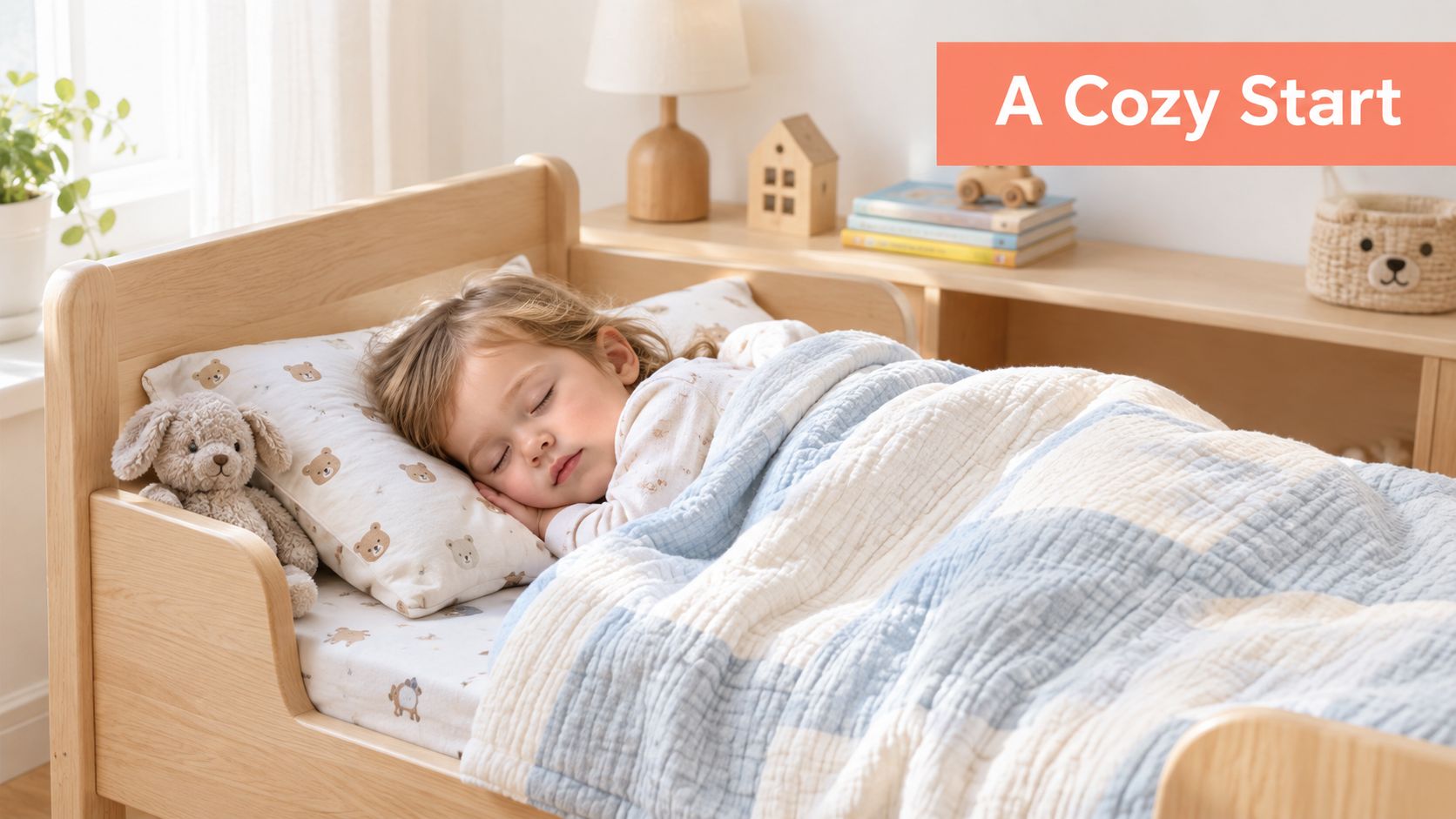
Why toddler blankets are their own category
A toddler bed is a small sleep space with its own rules. The blanket should fit that smaller footprint and be easy for a child to move without help. That usually means thinking in practical terms:
- Smaller scale: A blanket that stays on the mattress better is less likely to puddle at the sides.
- Lighter feel: Toddlers shift a lot. They sleep best with bedding they can kick off or pull back up.
- Simple care: Spills, nighttime accidents, and daycare germs make easy washing a daily advantage.
What comfort really means here
Comfort isn't only softness. For toddlers, comfort also means predictability. A blanket that feels the same after repeated washes, doesn't scratch at the edges, and doesn't overheat the child tends to work better than a dramatic plush option that looks beautiful in photos.
If you're considering a keepsake style, a personalized blanket can serve both function and feeling. A photo, name, or favorite theme can make the bed feel like their place, not just a bed they've been moved into.
Safety Foundations Every Parent Should Know First
A blanket can feel like a small upgrade. In a toddler bed, it is really a safety decision first.
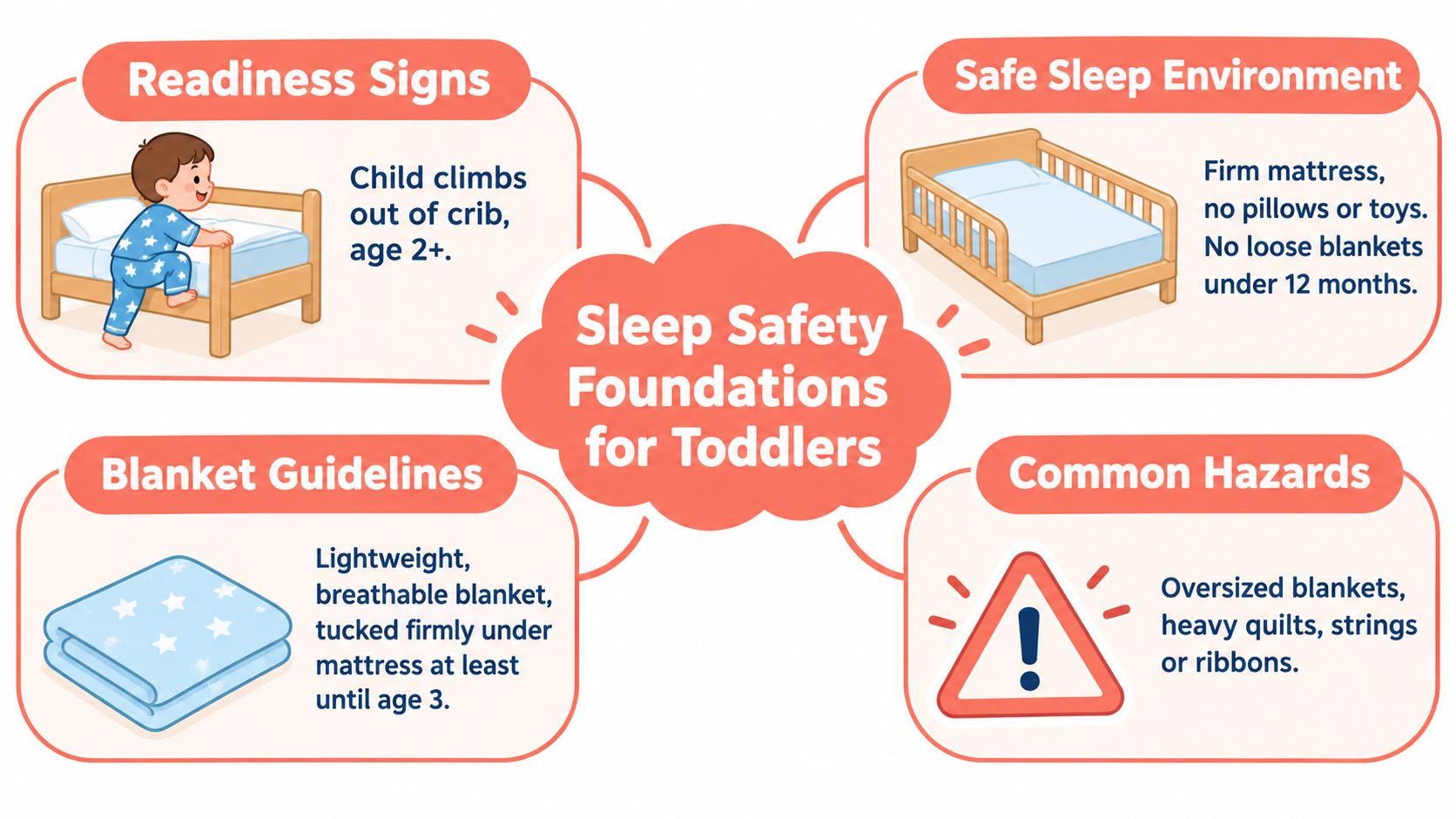
For babies, the rule stays firm. Soft objects and loose bedding, including blankets, should be kept out of the sleep area to reduce the risk of suffocation, entrapment, and strangulation, with sleep clothing preferred instead, according to the CDC safe sleep guidance.
Blanket use changes later because the child changes. A toddler who can roll, push fabric away, and reposition during sleep has more control over bedding than a young infant. That is why parents should treat the first blanket like a first pillow or first pair of shoes. The milestone matters, but the fit matters too.
Why the blanket rule starts strict
The early rule is strict because infants do not reliably move bedding away from the face or body. What looks cozy to an adult can act more like an obstacle in a small sleep space.
That context helps parents avoid a common mistake. Once a child passes the newborn stage, it is easy to assume any cute crib-size quilt or plush throw is fine. Safer toddler blanket choices are much simpler than that. They are lighter, smaller, and easier for a sleepy child to kick off without help.
Practical rule: If a blanket seems decorative, oversized, or heavy, it is probably the wrong starting point for a toddler bed.
What readiness looks like
Age gives you a starting line, not the whole answer. The U.S. Consumer Product Safety Commission notes that soft objects and loose bedding should stay out of infant sleep areas, while blanket use is more commonly considered after infancy through CPSC safe sleep guidance.
Look for everyday signs you can observe at home:
- Your child is past the first birthday. That is the usual point when families begin discussing blankets.
- Your child can remove fabric independently. If a blanket rides up, they should be able to push it down or pull it off.
- Your child sleeps in a toddler bed or other non-infant setup. The sleep space and the child's movement skills should match.
- Your child does not need weight for comfort. Toddlers need manageable bedding, not heavy covers.
Here's a helpful visual walkthrough for parents thinking about the transition:
What safe blanket use means in practice
Safe blanket use means more than “blankets are allowed now.” It means the blanket should suit a small bed and a small sleeper.
Start with four filters:
- Size: Choose a toddler-appropriate blanket that covers the body without pooling far beyond the mattress edges.
- Weight: Pick a light blanket your child can throw off easily during sleep.
- Fabric: Breathable materials usually make temperature swings easier to manage than thick, heat-trapping options.
- Edging: Look for smooth, flexible edges rather than stiff trim, heavy satin borders, tassels, or tied details.
This is the gap many buying guides skip. Parents often hear when a toddler can have a blanket, but the safer question is what kind works in a real bedroom in July, in January, and after twenty washes.
A firm mattress still matters too. If you're also reviewing sleep-surface basics, this guide to safe baby mattress protection is useful because it explains how parents can keep a bed clean and protected without adding bulky layers.
A good toddler blanket should feel like a light extra layer, not a weighted topcoat. If it seems hard for you to fold compactly, it is probably too much blanket for a toddler bed.
Materials and Warmth That Match Every Season
Fabric changes how a blanket behaves. Two blankets can look similar folded on a bed and feel completely different at 2 a.m. One breathes and flexes. The other traps heat and turns into a little heap near your toddler's knees.
The best approach is to match the material to the season, then keep the blanket lighter than your first instinct. In toddler beds, light layering works better than one thick quilt.
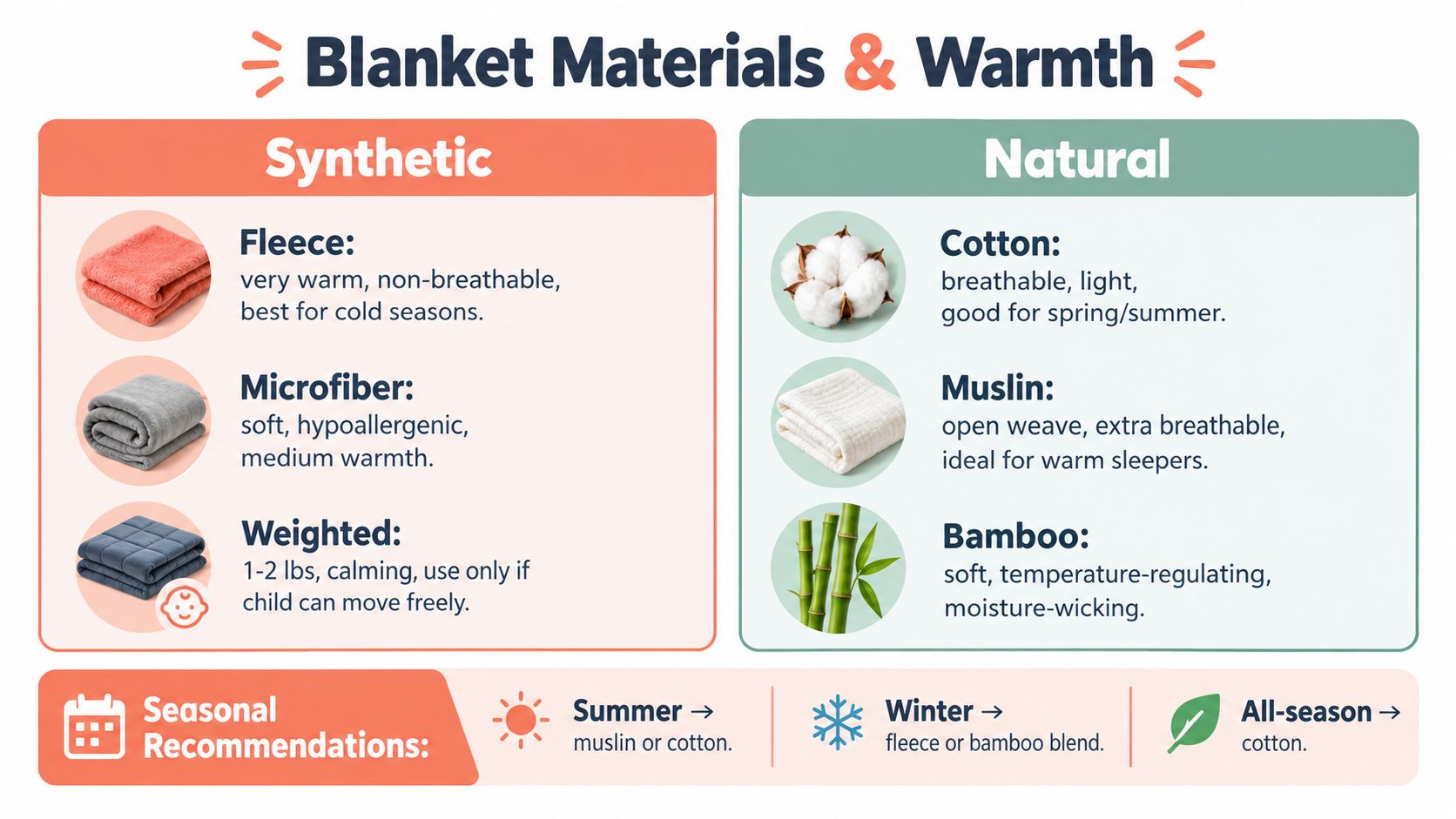
How common blanket materials compare
Some fabrics are easier to live with than others. Breathability, warmth, and wash behavior all count.
| Material | Best Season | Breathability and Weight | Care Notes |
|---|---|---|---|
| Cotton | Spring, summer, all-season mild rooms | Breathable and usually light to medium weight | Usually easy to machine wash |
| Muslin | Warm weather | Very breathable and light | Can wrinkle but usually washes well |
| Bamboo blends | Mixed temperatures | Soft, breathable feel, often light to medium | Check label for gentler wash guidance |
| Fleece | Cold weather | Warm but less breathable, often light in hand but heat-retaining | Usually easy care, can hold warmth |
| Minky | Cool rooms, naps, layering use | Plush feel, less airy than cotton | Wash carefully to preserve softness |
| Sherpa | Cold weather, decorative layering | Cozy and warmer, often bulkier | Can take longer to dry |
| Woven blanket | All-season depending on weave | Breathability varies, often flatter and easier to drape | Bound edges matter for durability |
Breathable versus plush
A lot of parents get torn between what feels soft in the store and what works overnight. Plush fabrics can feel wonderful at bedtime but may be too warm for a child who runs hot or moves constantly.
Breathability usually beats fluff for overnight sleep. Softness matters, but airflow matters more.
For many families, cotton or muslin is the easiest starting point. They're straightforward, familiar, and less likely to overwhelm a small sleep space. Fleece has a place in colder rooms, but it works best when the blanket is still small and light.
If you want to compare textures before buying, this guide on fleece vs sherpa vs woven blanket materials is helpful because it breaks down how the fabrics feel and function in everyday use.
A simple seasonal approach
Parents often ask if they need a separate blanket for each season. Sometimes yes, but the bigger goal is flexibility.
- Summer or warm sleepers: Choose muslin or light cotton.
- Cooler months: Use a slightly warmer but still manageable blanket, such as a lighter fleece or breathable layered option.
- All-year use: A midweight cotton blanket is often the easiest everyday choice.
If you're comparing weight and touch across bedding types, some families also browse options like a hyper cotton blanket just to understand fabric hand and construction, even though for toddler sleep I'd still keep the final choice light and non-weighted.
What to avoid
Bulky quilts, oversized duvets, and heavily padded blankets create more management problems than comfort benefits in a toddler bed. They bunch, slide, and can make a small child feel trapped rather than tucked in.
The blanket should support sleep, not become a project every bedtime.
Sizing and Fit for a Standard Toddler Bed
A blanket can be made from the right fabric and still be wrong for the bed. Fit is where many good purchases go sideways. Adult throws often seem harmless until you see one draped over rails, hanging to the floor, or twisted under a child's legs by morning.
Toddler beds are standardized to fit a full-size crib mattress and are intended for children at least 15 months old and up to 50 lb according to the CPSC toddler bed FAQ. That standard matters because the bed itself is compact. Oversized bedding creates more edge drape and more bunching near guardrails and gaps.
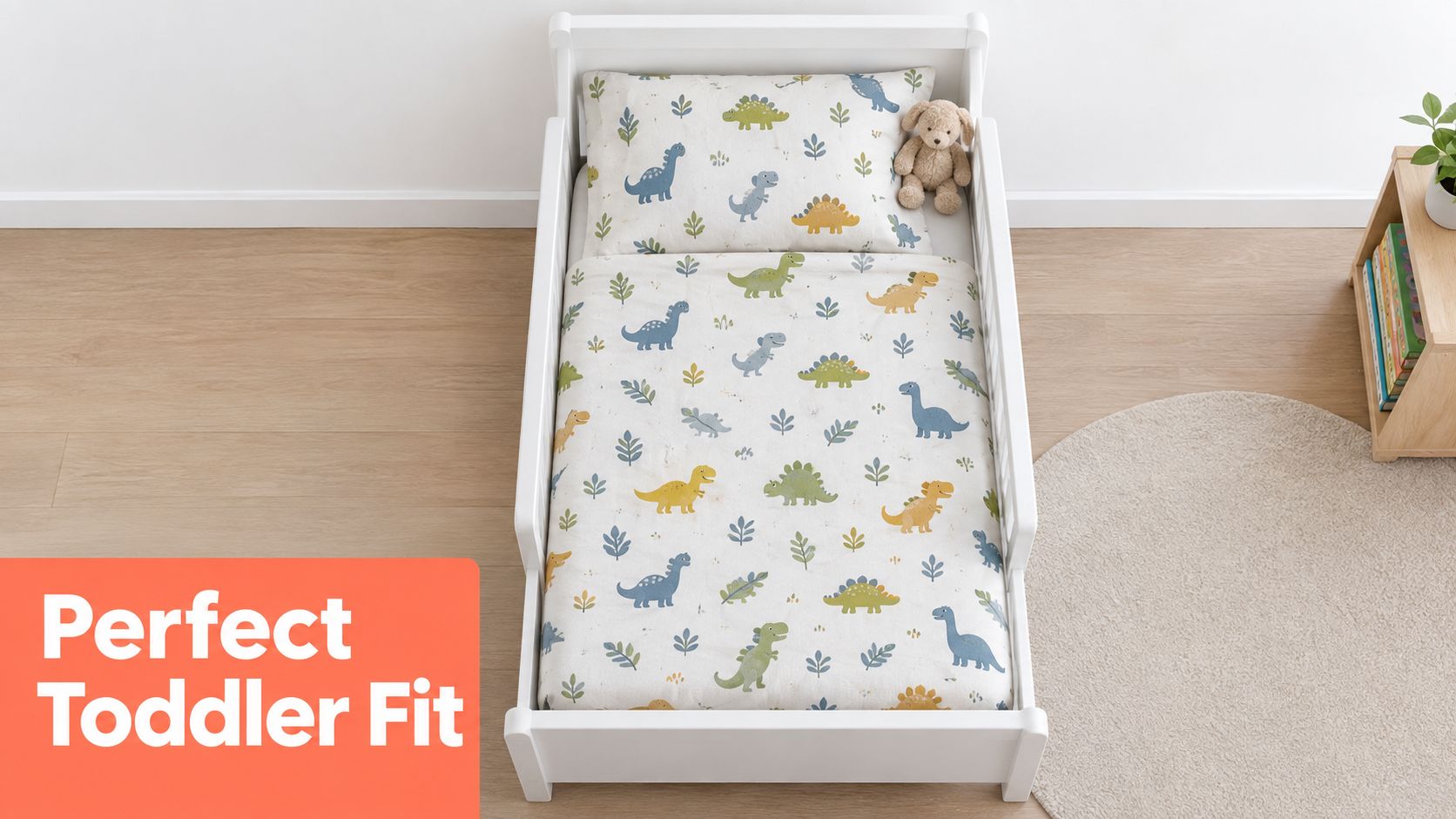
What a good fit looks like
A well-fitted toddler blanket usually stays within the mattress footprint or close to it. It covers the child without spilling far over the sides.
That matters for three reasons:
- Less bunching: Extra fabric gathers quickly in a small bed.
- Easier movement: Small hands can pull a smaller blanket up or push it away.
- Fewer rail interactions: Less drape means less chance of catching on the guardrail or mattress edge.
If the blanket looks oversized when the bed is made, it will feel even larger at night when your toddler rolls and kicks.
A quick at-home fit test
You don't need exact blanket math to assess fit. Use the bed itself.
- Lay the blanket flat on the made bed.
- Check whether it hangs heavily over the sides or end.
- Pull it up to where your toddler would sleep.
- Notice whether it can be moved with one hand easily.
If it puddles near the rail, it's probably too large. If it feels dense when folded, it may be too heavy for independent use.
For parents trying to compare blanket dimensions more broadly, this blanket size guide helps show how crib, toddler, throw, and larger sizes differ in practical terms.
Why weighted construction misses the mark here
Even when a weighted blanket is marketed for comfort, it's not the right starting point for a toddler bed. In a small sleep space, added load doesn't improve safe sleep performance. It gives the child more material to manage.
When you're choosing the best blanket for a toddler bed, smaller and lighter usually wins. Not because it looks less impressive, but because it works better in real life.
Washability Durability and Details That Matter Daily
Parents live with blankets more than they shop for them. Juice spills happen. Nighttime accidents happen. Daycare germs hitch a ride home. A blanket that needs delicate handling usually becomes a frustration fast.
The everyday details tell you a lot about whether a blanket will still feel good after repeated washing. Start by looking at the edges. Bound edges tend to stay neater and feel safer than decorative fringe in a toddler sleep setting, because there's less loose trim to catch, twist, or fray.
Construction details worth checking
A blanket doesn't need fancy features. It needs durable basics.
- Bound or finished edges: These usually hold shape better than fringe.
- Consistent stitching: Loose seams can open up after wash cycles.
- Soft but stable fabric: Some plush blankets feel nice at first but pill quickly.
- Clear care label: If the instructions are fussy, daily use gets harder.
The thickness matters here too. Thick layers take longer to wash, longer to dry, and often lose their shape unevenly. A lighter blanket is easier to rotate through the week.
How to think about laundry reality
Parents often buy one “special” blanket and one practical blanket. For toddler sleep, the better approach is to make sure the blanket used most nights is both comforting and washable.
A few simple questions help:
- Will it survive frequent machine washing?
- Will the print or color still look clear after repeated cleaning?
- Will the edges stay smooth?
If your family outsources some household washing, services that fold and deliver laundry show just how much parents value bedding that's easy to clean and quick to turn around. That's a good reminder that convenience isn't a luxury here. It's part of the product's usefulness.
What tends to age well
Flat woven blankets, breathable cotton options, and well-finished fleece styles often hold up better than highly embellished designs. Decorative add-ons can look sweet on day one but become the first thing to wear out.
The best blanket for a toddler bed should still feel familiar after many wash cycles. Toddlers notice that. If the blanket turns scratchy, stiff, or lumpy, they often reject it long before an adult would.
Style Personalization and Custom Photo Blankets for Kids Rooms
A toddler doesn't separate comfort from meaning the way adults do. A blanket with dinosaurs, stars, a pet photo, or a family picture can become part of the bedtime ritual because it feels known. That emotional familiarity matters most during transitions, especially when a child is learning to stay in a new bed.
Themes can help a room feel coherent, but they can also do practical work. A prince, princess, or dinosaur design can turn “time for bed” into “time for my blanket.” That small shift gives children a sense of ownership over sleep.
Personalization that supports routine
A personalized blanket works best when the design supports, not overrides, the practical basics. Keep the fabric breathable, the size manageable, and the finish simple. Then let the image or pattern do the comforting.
That's where Custom Photo Blankets can make sense for some families. A child may settle more easily with a lightweight blanket that carries something familiar, like a family photo, a beloved pet, or a favorite color story.
One option in this space is That Blanket Co, which offers personalized blankets with photo, name, and kids-theme designs across different fabric types. If you want ideas before choosing a layout, this guide on how to personalize a blanket gives useful examples of how families turn memories or themes into everyday bedding.
The strongest personalized toddler blanket isn't the loudest design. It's the one your child recognizes immediately and uses comfortably.
Seasonal gift timing matters too
If you're buying a blanket as a gift, the calendar changes how people shop. November and December are the core holiday-gifting window. The National Retail Federation says holiday spending during those two months is forecast to total $979.5 billion to $989 billion, with projected growth of 2.5% to 3.5%, and consumers planned to spend an average of $890.49 on gifts, food, decorations, and seasonal items in 2025 according to NRF holiday gifting research. For a toddler blanket, that makes personalized bedding a natural holiday keepsake.
April and May call for a different message. Mother's Day falls on the second Sunday in May each year, which makes spring a strong season for family-photo blankets and sentimental home gifts, as reflected in Mother's Day and seasonal spending coverage from PwC. A toddler's photo blanket can double as a practical room piece and a meaningful keepsake for moms, grandmothers, or new parents.
Your Final Checklist and Answers Before You Buy
By the time you're ready to buy, the choice should feel simpler. You're not looking for the fluffiest blanket or the fanciest set. You're looking for the one your child can use safely, comfortably, and repeatedly.
Quick checklist before checkout
- Age readiness: Your child is past the infant stage and can move bedding away from the face.
- Lightweight build: The blanket feels easy to lift, fold, and kick off.
- Breathable fabric: Cotton, muslin, or another lighter fabric usually works well.
- Right size: It fits the toddler bed without heavy overhang.
- Finished edges: Bound edges are usually more practical than fringe for nightly use.
- Easy care: It can handle frequent washing without becoming rough or misshapen.
- Room fit: The warmth matches your home and your child's sleep style.
- Child appeal: Your toddler likes the color, theme, or image enough to use it willingly.
Common last-minute questions
How many toddler blankets do I need?
Two is practical for most families. One can be on the bed while the other is in the wash.
How do I introduce a new blanket?
Start with quiet familiarity. Let your toddler use it during story time, then place it on the bed at night so it feels known before it feels necessary.
When should I size up?
Size up when the bed changes, not just because your child gets taller. An adult-size blanket in a toddler bed usually creates more hassle than comfort.
What if my toddler kicks blankets off?
That's common. Some children still prefer wearable sleep clothing for warmth. A blanket doesn't have to replace what already works.
The best blanket for a toddler bed is the one that your child can manage, your laundry routine can handle, and your bedtime routine can rely on.
That Blanket Co offers personalized blankets that can fit into this decision when you want something meaningful as well as practical, with custom photo, name, and kids-theme options in machine-washable fabrics. If you're choosing a lightweight blanket that helps your toddler feel at home in their new bed or shopping for a holiday or Mother's Day keepsake, visit That Blanket Co to explore the available styles.