


What Is the Best Fabric for Pet Hair? Your Ultimate Guide
If you're a pet parent, you know the struggle is real. Fur seems to magically appear on every surface, no matter how often you clean. But here's a little secret from those of us who have been in the trenches: your choice of fabric can be a game-changer. The best fabric for pet hair is almost always a smooth, tightly woven synthetic material. Think of fabrics like microfiber and certain polyesters as your first line of defense—they act like a shield, letting you wipe fur away instead of letting it weave itself into your decor.
Your Hair-Free Home Starts with the Right Fabric
Living with pets means embracing a little bit of their fluff, but it doesn't have to mean surrendering your home to it. The right fabric can be the difference between a constant cleaning battle and a home that stays beautiful with minimal fuss. This isn’t just about picking a color that hides fur; it’s about the science of the material itself.
So, what makes a fabric a fur magnet or a fur repellent? It all comes down to a few key things: the type of fiber, how tightly it's woven, and even static electricity.
Loose, textured weaves like wool, tweed, or plush velvet basically have thousands of tiny little hooks that grab onto pet hair and refuse to let go. On the other hand, smooth, dense surfaces give that pesky fur nothing to cling to. Understanding this one simple principle is the key to creating a home that’s truly pet-friendly.
Quick Guide to Pet Hair Resistance in Fabrics
To make your life a little easier, here’s a quick-glance table that breaks down what to look for—and what to avoid—when you’re on the hunt for pet-friendly fabrics.
| Fabric Characteristic | Best for Repelling Hair (Your Goal) | Worst for Attracting Hair (To Avoid) |
|---|---|---|
| Weave | Tight and flat (e.g., microfiber, canvas) | Loose and open (e.g., tweed, knits) |
| Fiber Type | Smooth synthetics (e.g., polyester, nylon) | Textured natural fibers (e.g., wool) |
| Pile | Low pile or no pile | High pile or plush (e.g., velvet, chenille) |
| Static | Low static potential | High static potential |
Getting a handle on these basics is everything. When you're designing a space that has to stand up to shedding, choosing the best fabric for reupholstering a sofa is one of the most important decisions you'll make for the long-term cleanliness and durability of your home.
This proactive mindset applies to everything in your home, from the big furniture pieces down to the cozy little accents. A soft, inviting blanket doesn't have to be a fur nightmare.
By choosing materials that naturally resist hair, you spend less time cleaning and more time enjoying cuddles with your furry family members.
For example, a Custom Photo Blanket made from the right kind of smooth polyester fleece is the perfect marriage of sentimental value and practical, hair-resistant design. It's a win-win for any pet-loving home. If you're looking for more ways to blend pet-friendly function with style, check out some of our favorite cozy home decor ideas.
Understanding Why Some Fabrics Are Hair Magnets
Ever wonder why your favorite wool sweater seems to collect every last piece of pet hair within a five-mile radius, while your denim jacket stays almost pristine? It’s not magic—it's all down to the science of fabric. Three key things determine whether a material will act like a magnet for fur: static electricity, fiber texture, and weave tightness.
Think back to rubbing a balloon on your hair and watching it stick to the wall. That’s static electricity, and it’s the number one culprit behind clingy pet hair. Certain fabrics, especially synthetics like polyester in dry environments, build up that same static charge. This charge actively pulls lightweight fur right out of the air and makes it cling for dear life.
This flowchart breaks down how a simple piece of cloth can become either a pet-hair shield or a total fur trap.
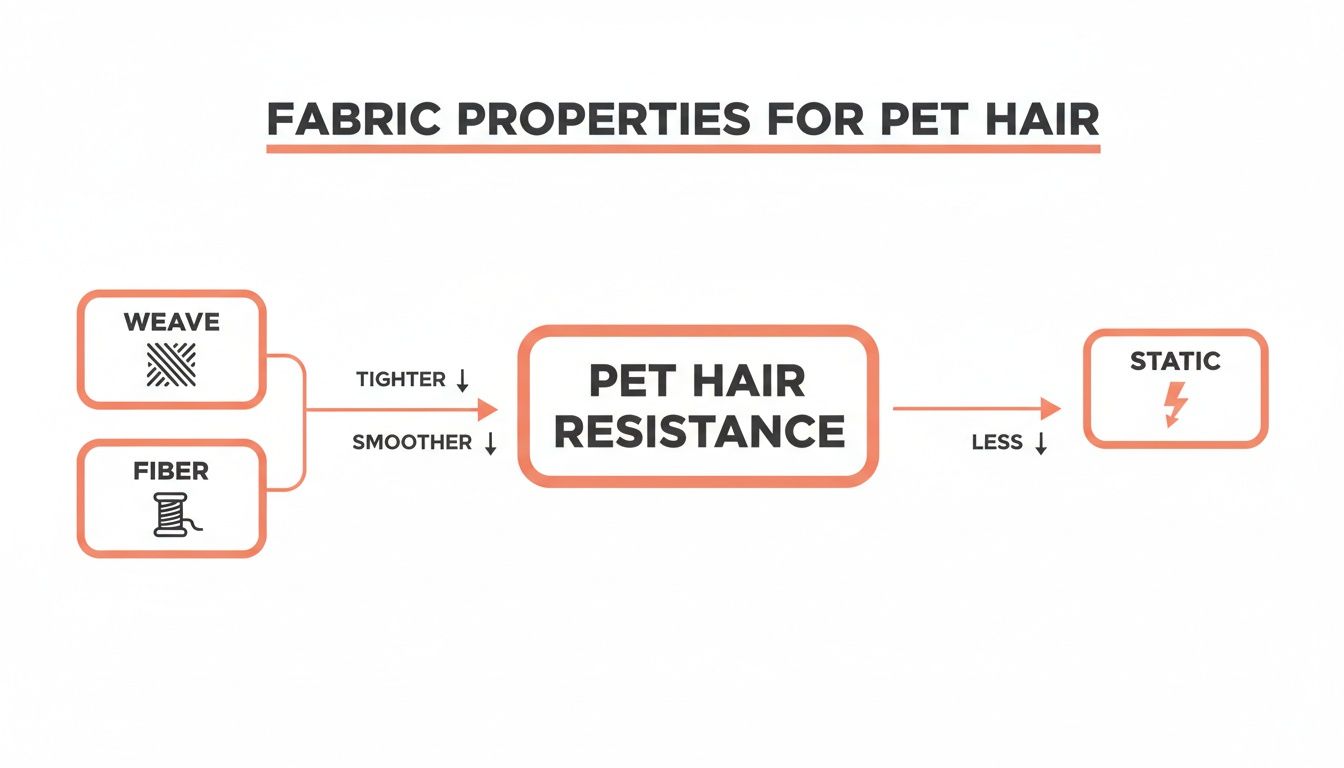
As you can see, it's the combination of the fiber, the weave, and the potential for static that dictates how a fabric will perform in a home with pets. Getting a handle on these three elements is your first step toward choosing textiles that work for you, not against you.
The Role of Fiber and Weave
Static isn't the only thing working against you. The physical structure of the fabric itself plays a huge part. Natural fibers like wool, for instance, have microscopic scales covering their surface. These tiny imperfections act like little Velcro hooks, snagging individual hairs and locking them in tight. The smoother the fiber, the less it has to grab onto.
This is exactly why the best fabric for pet hair is often made from smooth, man-made fibers that offer zero grip.
The fabric's weave is just as critical. Picture something with a loose, open weave—like a chunky knit sweater, tweed, or even corduroy. These materials are full of tiny nooks and crannies where pet hair loves to get trapped and burrow deep. Once it’s in there, good luck getting it out with just a lint roller.
A fabric's construction is its first line of defense. Tightly woven materials present a smooth, impenetrable surface, leaving nowhere for pet hair to hide.
On the other hand, fabrics with a tight, flat weave like canvas or microfiber create a solid barrier. There are simply no gaps for hair to work its way into. Instead, the fur just sits on the surface, making it easy to wipe away. This is the secret behind why a high-quality fleece used in a Custom Photo Blanket can feel unbelievably soft yet stay surprisingly easy to clean—it’s the perfect blend of comfort and practicality. Choosing a tight weave is one of the smartest moves you can make for a cleaner, fur-free home.
Discovering the Best Pet-Friendly Fabrics
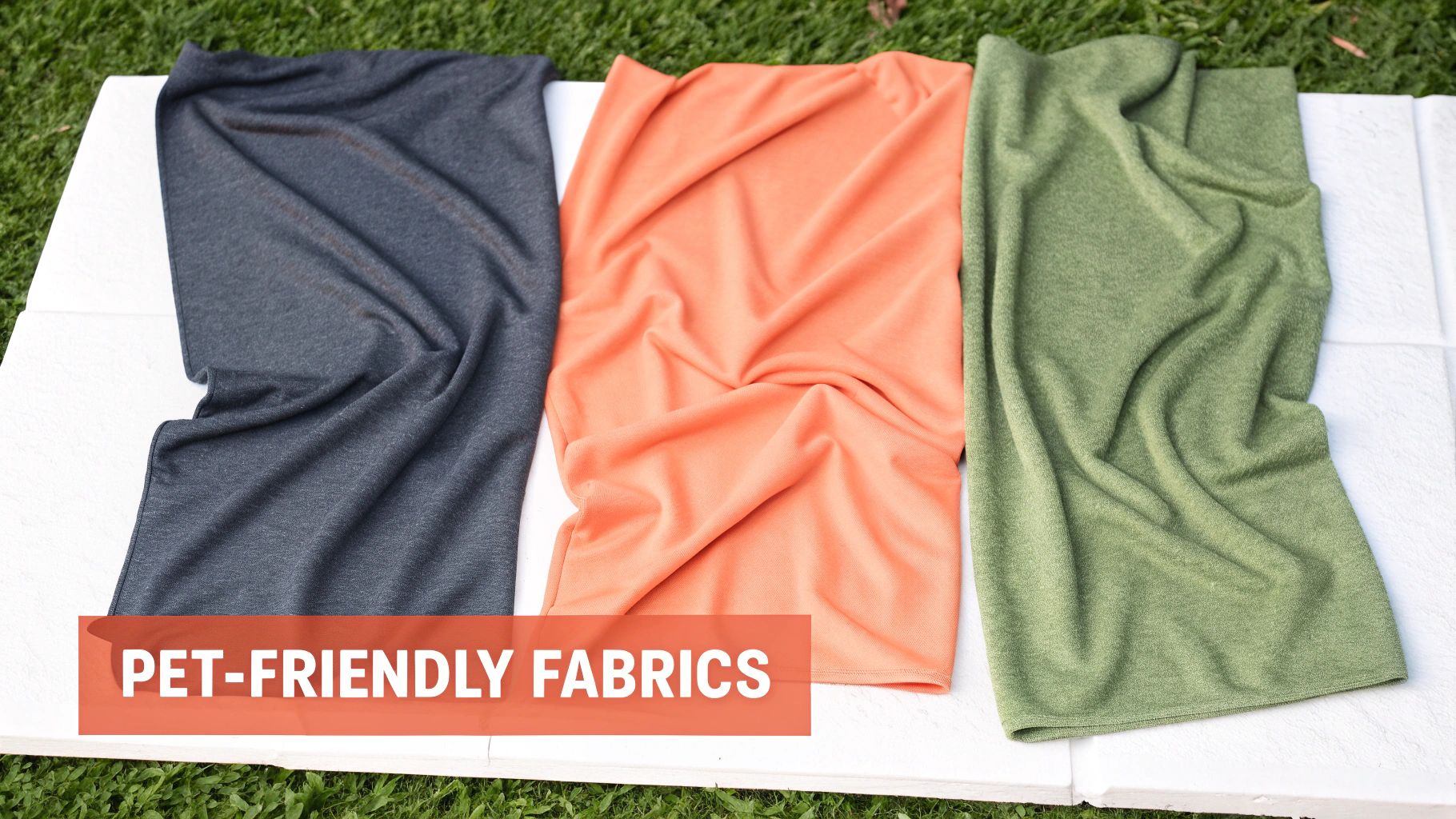
Now that you know what turns a fabric into a fur magnet, let’s shine a light on the champions that do just the opposite. Choosing the best fabric for pet hair is all about picking materials that are tough, a breeze to clean, and basically tell fur to slide right off. The top contenders are almost always synthetics, which makes sense—they were engineered for modern life, and that includes our furry family members.
These fabrics all share a few key traits that make them perfect for a pet-loving home. On a microscopic level, their fibers are incredibly smooth, leaving nothing for hair to grip onto. They’re also woven tightly, creating a solid barrier that stops fur, dander, and dirt from getting trapped deep inside the material.
Unpacking the Top Fabric Choices
Let's take a closer look at the materials that consistently win the battle against pet hair. Each one brings its own unique blend of durability, comfort, and easy maintenance to the table.
-
Polyester Blends: This is a true workhorse fabric. Polyester is known for its incredible strength and resistance to stains and wrinkles. When it’s used in cozy home textiles like fleece or sherpa, its smooth synthetic fibers naturally repel hair, letting you wipe or shake it off in seconds.
-
Microfiber: While it's technically a type of finely woven polyester, microfiber deserves its own shout-out. The fibers are split into ultra-thin strands, creating a dense yet soft surface that’s nearly impossible for pet hair to penetrate. It’s a fantastic choice for furniture and bedding.
-
Nylon: Famous for its exceptional durability and resistance to scuffs and snags, nylon is a brilliant choice for anything in a high-traffic area. Just like polyester, its synthetic nature gives it a smooth finish that doesn’t attract or hold onto fur, making cleanup a snap.
When it comes to blankets in pet-loving homes, polyester blends really are the top dog. Fabric tests show polyester sheds hair residue much more effectively after a wash. It's no coincidence that many pet hair removers work best on slick synthetics, not fluffy, clingy fabrics.
For pet owners designing Custom Photo Blankets—backed by 4.95-star reviews from over 100K+ blankets sold—this means your furry friend’s photo stays vibrant and free of hair buildup. Ultimately, choosing polyester can significantly slash your hair removal efforts.
Comfort Without Compromise
Don't worry, choosing a practical, hair-resistant fabric doesn’t mean you have to give up on softness and comfort. Modern materials truly offer the best of both worlds, which is why they’re perfect for things you and your pets use every single day—like a favorite blanket.
The perfect pet-friendly fabric combines durability and easy cleaning with a luxuriously soft feel, proving you don't have to choose between a stylish home and a happy pet.
This is exactly where materials like fleece and sherpa shine. A high-quality polyester fleece, for instance, is an ideal choice for a custom photo blanket. It gives you that warm, inviting feel you’re looking for, while its smooth, tight weave keeps pet hair on the surface for a quick shake-off.
You can learn more about the differences between these cozy options by reading our custom blanket materials guide. At the end of the day, these fabrics let you enjoy endless cuddles without the endless cleaning.
Choosing the Perfect Custom Blanket for Pet Lovers
Knowing which fabrics are best for pet hair is one thing, but finding a beautiful, practical, and meaningful item for your home is the real win. This is where a custom photo blanket goes from being a nice gift to the perfect solution for any pet owner. It’s a way to celebrate your furry family member without creating another chore for yourself.
By choosing durable, hair-resistant materials like our ultra-soft fleece and sherpa, you really do get the best of both worlds. You can put a favorite photo of your pet in stunning, gallery-quality detail on a blanket that’s designed to keep fur from clinging. Instead of getting trapped, hair just sits on the surface, making cleanup as simple as a quick shake or a gentle swipe with a lint roller.
This mix of sentimentality and practicality makes a Custom Photo Blanket an ideal gift that keeps on giving, no matter the season.
The Perfect Gift for Any Occasion
For the holiday season in November and December, just imagine the joy of gifting a cozy, personalized blanket featuring a pet's adorable face. It's a warm, thoughtful present that truly stands out. Similarly, for Mother's Day in April and May, a custom blanket capturing the special bond between a mom and her furry companion is a keepsake she will treasure forever.
A custom photo blanket is more than just a cozy layer; it's a functional piece of art that honors the love you have for your pet while respecting your desire for a clean, hair-free home.
When you're picking the best fabric for pet hair, nylon and similar synthetics reign supreme for their exceptional resistance. With the global pet care market booming, pet owners are getting smarter about their purchases. For throws personalized with professional, long-lasting prints, fabrics with a smooth finish can mean significantly less cleaning time because hair simply brushes right off.
Since many pet owners now prefer reusable hair removers, a slick fabric surface makes those tools even more effective. It's all about empowering families with practical, joyful home comfort.
The customization process itself is effortless. You can learn more about how to design the perfect custom pet photo blanket in our detailed guide. It’s a functional, beautiful, and deeply meaningful tribute to the pets who make our lives whole.
Practical Tips to Keep Your Fabrics Hair-Free
Choosing the right material is a huge first step, but even the best fabric for pet hair needs a little TLC. Keeping your blankets and throws looking pristine isn’t about non-stop scrubbing. It’s about a few smart habits that stop fur from weaving itself into the fabric in the first place. A few simple tricks can make a world of difference and seriously cut down on your cleaning time.
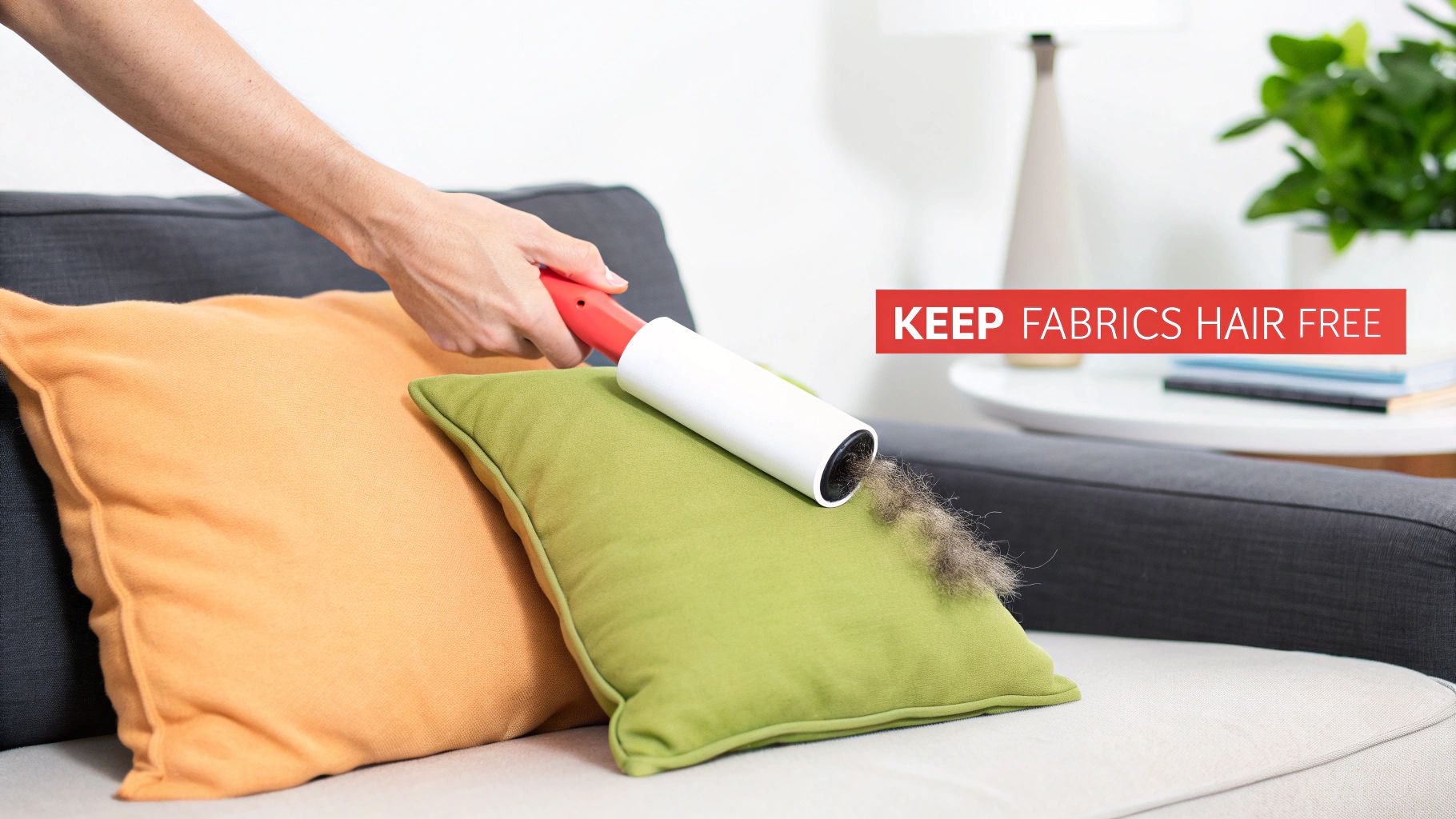
Before a blanket even sees the inside of your washing machine, a quick pre-treatment can work wonders. This is probably the most important step for getting rid of the bulk of loose hair, which keeps it from clogging your machine's filter or, even worse, re-depositing onto your other clothes. It’s a small effort with a massive payoff.
Simple Pre-Wash Hair Removal
Your pre-wash toolkit doesn't need to be fancy. In fact, you probably already have everything you need to lift away stubborn fur before it becomes a woven-in nightmare.
-
The Damp Rubber Glove Trick: Just pull on a standard rubber cleaning glove, get it slightly damp, and wipe your hand across the fabric. The combination of friction and moisture is almost like magic—it pulls the hair into clumps that are a breeze to pick up and toss.
-
The Go-To Lint Roller: There’s a reason a good lint roller is a pet owner’s best friend. Give your blankets a thorough once-over to grab all the loose fur just sitting on the surface.
Beyond picking the right fabrics, knowing the best way to get dog hair off a couch is a game-changer for a truly hair-free home. These same methods work just as well for blankets, pillows, and any other textile your pet has claimed as their own.
Laundry Day Best Practices
Once you’ve tackled the surface fur, it’s time to let the washing machine do the heavy lifting. The right settings and a simple, natural additive can help release any hairs still clinging on, leaving your fabrics fresh, soft, and fur-free.
When you start a load, always go with cold water. Hot water can actually make static cling worse, encouraging any leftover fur to stick right back to the fabric. Cold water gets the job done without the static problem.
Add a half-cup of white vinegar to your machine's rinse cycle. It works like a natural fabric softener, helping the fibers relax and let go of any lingering pet hair. Don't worry, it won't leave a scent behind.
When it's drying time, toss in a few wool dryer balls. As they tumble around, they create space between the fabrics, which improves airflow and physically knocks loose any last bits of fur. This gentle agitation is perfect for keeping the gallery-quality print on a Custom Photo Blanket looking vibrant, ensuring it stays soft, beautiful, and ready for years of cozy, fur-free cuddles.
Your Pet-Friendly Fabric Questions Answered
Even with the best game plan, a few questions always pop up when you're trying to find the best fabric for pet hair. Let's tackle the most common ones we hear, so you can feel totally confident in creating a home that’s both clean and cozy.
Is Sherpa a Good Fabric for Pet Hair?
This is a great question, and one we get all the time—sherpa is just so irresistibly soft! While traditional wool sherpa can definitely be a hair magnet, the high-quality polyester sherpa we use is a completely different story. Its synthetic fibers are much smoother and don't build up nearly as much static.
So while its fluffy texture might catch some loose fur floating by, the hair just sits on the surface instead of getting tangled deep within the weave. A quick shake, a brush-off, or a spin in the wash is usually all it takes to get it looking good as new, making it a fantastic choice for pet owners who refuse to sacrifice comfort.
Does Leather Repel Pet Hair?
Oh, absolutely. When it comes to repelling pet hair, leather and its faux counterparts are the undisputed champions. The smooth, non-porous surface gives fur absolutely nothing to cling to. A simple wipe-down, and it’s gone. While our heart is in soft, cuddly blankets, this is a golden tip for anyone picking out new furniture.
The key takeaway is simple: a smooth, non-porous surface is always a pet owner's best friend, whether it's on a couch or a cozy throw blanket.
How Can I Reduce Static on My Blankets?
Cutting down on static is a game-changer for keeping fabrics hair-free. Seriously, less static means less cling. Here are a few simple tricks that work wonders:
- Add Moisture to the Air: Running a humidifier, especially during those dry winter months, makes a huge difference in reducing static around your home.
- Use White Vinegar in the Wash: Just add a half-cup of white vinegar to your washing machine's rinse cycle. It’s a natural fabric softener and an amazing static neutralizer.
- Switch to Wool Dryer Balls: Toss a few wool dryer balls in with your laundry. They're a fantastic, natural alternative to disposable dryer sheets for softening fabrics and cutting down on static.
What Are the Worst Fabrics to Have with Pets?
The main offenders are usually fabrics with loose, open weaves or those that are naturally prone to a lot of static. Materials like velvet, corduroy, wool, and open-weave knits are notorious hair traps.
Velvet's plush pile acts like a tiny brush, wool's scaly fibers grab onto fur for dear life, and those beautiful loose knits create a million little pockets for hair to get stuck in. Steer clear of these, and you'll save yourself countless hours with the lint roller.
Ready to find that perfect blend of snuggly comfort and easy cleaning? Create a beautiful, hair-resistant keepsake for your home. Design your own Custom Photo Blanket today and get back to enjoying endless cuddles—without the endless cleanup.