


A Complete Guide to Custom Fabric Printing Services
Have you ever wished you could turn a favorite photo, a cool piece of digital art, or even one of your kid’s drawings into real, usable fabric? That’s exactly what custom fabric printing services are all about. They take your unique vision and transform it into a physical textile, letting you create one-of-a-kind items with a truly personal touch.
Bringing Your Creative Vision to Life
At its heart, custom fabric printing is the bridge that connects a digital idea to a real-world product. It’s the technology that lets you print any design, pattern, or photograph directly onto a roll of fabric.
Think of it like a super-specialized printer. But instead of loading it with paper, you’re feeding it materials like cotton, polyester, or canvas. This process has thrown open the doors to a world of creative possibilities for everyone, not just big-name designers.
The applications are wonderfully diverse, ranging from personal hobbies to full-blown entrepreneurial ventures. The best part? The journey from a simple idea to a finished product is surprisingly straightforward, empowering anyone with a creative spark to make something completely unique.
From Digital Design to Physical Fabric
So, what can you actually create with this? Honestly, the options are pretty much endless—it all comes down to your imagination. You could design fabric for:
- Personalized Apparel: Dream up a dress with a pattern you designed from scratch, or make matching pajamas for the whole family. For a deep dive into this popular use, check out a complete guide to custom T-shirt printing.
- Unique Home Decor: Think custom upholstery for a statement chair, one-of-a-kind curtains that perfectly match your style, or even branded tablecloths for a special event.
- Heartfelt Gifts: Turn a cherished memory into a warm, cuddly custom photo blanket. It’s more than a gift; it’s a meaningful keepsake that captures a special moment forever, especially during the holiday season.
The real magic of custom fabric printing is its power to make tangible objects out of memories and ideas. It transforms a simple digital file into something you can touch, wear, or gift to someone you love.
In the sections ahead, we’re going to demystify the entire process. We’ll explore the different printing methods, help you pick the perfect fabric, and walk you through preparing your artwork for flawless results. We want to make your creative journey as smooth and successful as possible.
Understanding The Technology Behind Your Custom Fabric
Got your design ready? Awesome. Now, let’s talk about the magic that gets that design from your screen onto a soft, huggable fabric. The technology used by custom fabric printing services is what makes it all happen, and knowing a little about it helps you pick the right process for your project. It's like choosing the right kind of paint for a canvas—each method creates a totally different look and feel.
The whole world of custom printing has blown up recently. What was once a niche industry is now a global market worth over $2.9 billion, and it's expected to hit $5 billion by 2035. This boom is all thanks to people like you wanting more unique, personalized stuff, from t-shirts to home décor.
This growth is great news because it means the technology is better and more accessible than ever. Let's break down the two most popular methods you'll come across.
Direct-to-Garment (DTG) Printing
Think of Direct-to-Garment (DTG) printing like a super-advanced inkjet printer at your office, but instead of spitting ink onto paper, it prints directly onto fabric. It uses special water-based inks that are perfect for creating designs with tons of colors and intricate details, like a detailed drawing or a photorealistic image.
DTG works best on natural fabrics, especially 100% cotton or materials with a high cotton blend. The ink soaks right into the fibers, which gives the finished print a really soft feel you can barely notice. That's why it's the go-to for comfy t-shirts, hoodies, and tote bags.
Dye-Sublimation Printing
Dye-sublimation is a whole different ballgame. This process starts by printing your design with special heat-sensitive inks onto a sheet of transfer paper. That paper is then laid onto the fabric and pressed with high heat. The heat works some serious magic, turning the ink into a gas that permanently bonds with the fibers of the fabric.
Instead of the ink just sitting on top of the material, it literally becomes a part of it.
The result is a stunningly vibrant print that will never crack, peel, or fade. It has absolutely no texture, which is why it's the perfect method for creating a beautiful, edge-to-edge custom photo blanket. It captures photographic details with incredible clarity.
Because the ink needs to chemically bond with the fabric, dye-sublimation is exclusively for synthetic materials like polyester. This makes it the champion for activewear, swimsuits, and of course, the ultra-soft fleece and minky fabrics we use for high-quality blankets. To see this amazing process in action, you can explore how our printing process works.
This simple chart shows how an idea travels from your imagination to a finished product you can hold.
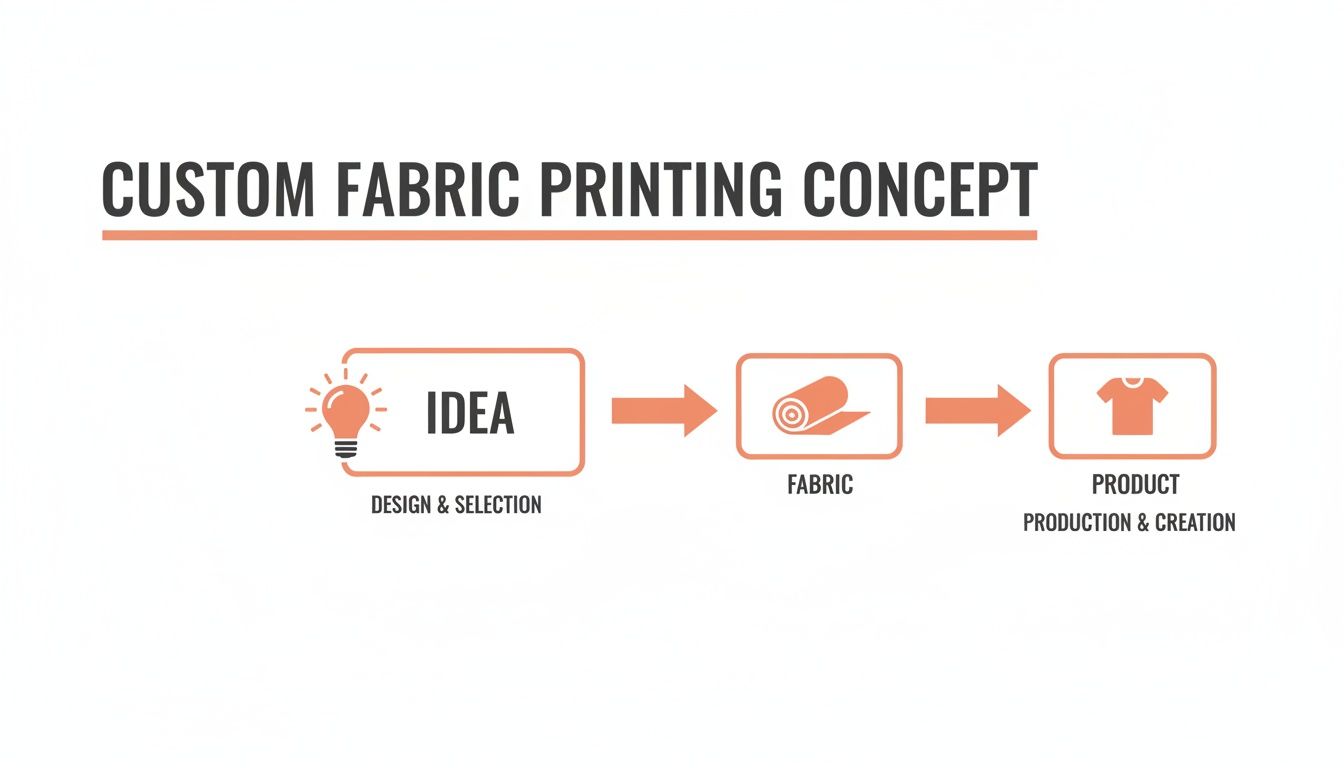
As you can see, the core of it all is turning a digital concept into a real-world item through the right fabric and printing choices.
To make things even clearer, here’s a side-by-side comparison of the most common printing techniques. This should help you figure out the best option for your project's fabric and the final look you're going for.
Comparing Popular Fabric Printing Methods
| Printing Method | Best for Fabric Types | Feel of the Print | Ideal Use Cases |
|---|---|---|---|
| Direct-to-Garment (DTG) | Natural fibers (cotton, bamboo, linen) | Soft, breathable, minimal texture | T-shirts, hoodies, tote bags, baby onesies |
| Dye-Sublimation | Synthetic fabrics (polyester, fleece, minky) | No feel at all; part of the fabric | Photo blankets, activewear, swimwear, banners |
Ultimately, the best printing method really comes down to what you're making and what you want it to feel like.
Which Method Is Right for You?
So, how do you decide? It really boils down to two things: your fabric and what you want the final product to be.
- Got a project with natural fibers like cotton? Go with DTG. You’ll get a soft print with great detail that’s perfect for apparel.
- Working with synthetic fabrics like polyester? Choose dye-sublimation. You'll get unbeatable vibrancy and durability for things like photo blankets and activewear.
Understanding this key difference helps you make a smarter choice. It also explains why a printing service might recommend one method over another, ensuring your final product looks and feels exactly the way you imagined.
Choosing the Perfect Fabric for Your Custom Project
Picking the right fabric is just as crucial as the design you spent so much time perfecting. It's a choice that shapes not just the final look, but the entire feel and purpose of your creation. Think of it like a chef choosing ingredients; the material you start with dictates everything that follows.
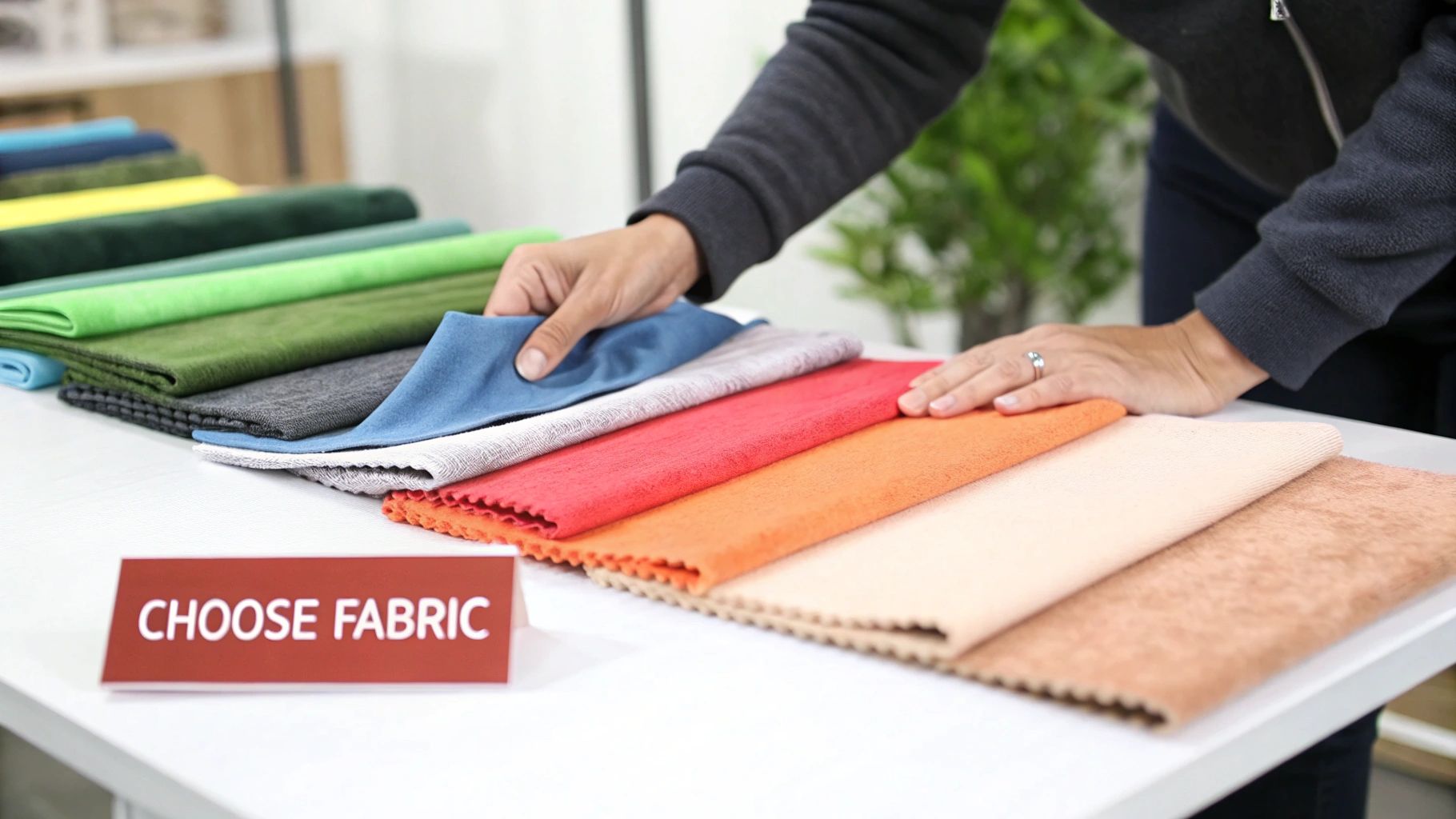
Instead of getting lost in a long list of fabric names, it’s much easier to think about what you’re trying to make. This way, you can match the material’s qualities to your specific vision, ensuring your project turns out both beautiful and practical.
For Soft and Cozy Creations
When your goal is pure warmth and comfort, a few fabrics stand out from the rest. Materials like fleece and minky are practically engineered for softness, making them the go-to choice for items meant to be cuddled and cherished.
These fabrics have a plush, gentle texture that feels incredible against the skin. Their synthetic makeup also happens to be the perfect canvas for dye-sublimation printing. This process results in unbelievably sharp, vibrant prints that become a permanent part of the fabric, so they’ll never fade or crack.
This blend of softness and print quality makes them perfect for:
- Custom Photo Blankets: Minky fleece is the gold standard for photo reproduction. Its smooth, non-pilling surface allows for breathtaking detail, turning a favorite photo into a snuggly, high-definition keepsake.
- Personalized Pillows: Create decorative pillows that add a soft, personal touch to a living room or bedroom.
- Cozy Loungewear: Think custom pajama pants or a soft robe that’s perfect for unwinding at home.
Since these fabrics are so popular for blankets, it helps to know the subtle differences in their textures. If you want to dig a little deeper, you might find our guide on the differences between fleece, sherpa, and woven blanket materials really helpful.
For Light and Airy Apparel
If you're designing clothes that need to flow and breathe, you’ll want to look at lighter materials. Fabrics like cotton lawn or voile are well-known for their beautiful drape and airy feel, making them ideal for comfortable, stylish garments, especially in warmer weather.
For Durable and Versatile Projects
For projects that need to stand up to daily use, durability is everything. Heavier fabrics like canvas and certain types of polyester are built for toughness and a long life. Their sturdy weave makes them excellent choices for home decor items that see a lot of action, like tote bags or floor cushions.
A common mistake is picking a fabric based only on the design, without thinking about its texture or weight. Always imagine how the final item will actually be used—a flowy dress and a sturdy tote bag need completely different materials to be successful.
To make sure you’re not disappointed, it’s always a good idea to order swatches first. Holding a sample in your hand is the only real way to know if its texture, thickness, and color are what you're looking for. This small step can save you from committing to a big order that doesn't quite match your vision, ensuring your custom fabric project turns out exactly as you planned.
How to Prepare Your Artwork for Flawless Printing
Getting your artwork just right before you hit "upload" is the single most important step for a professional-quality result. Think of it like a chef doing prep work before service; the better the prep, the more delicious the final dish. This part of the process is where we tackle the common technical hurdles that can make or break your custom fabric project.
The explosive growth of print-on-demand is a huge reason why high-quality custom fabric printing services are more accessible than ever. The global POD market is projected to hit an incredible $19.8 billion by 2029, a trend that lets anyone create unique apparel and home decor without any upfront investment. For a closer look at this industry shift, you can explore the latest print-on-demand statistics and trends. This easy access makes understanding the basics of file prep even more critical.
Understanding Image Resolution and DPI
One of the biggest factors for a sharp, clear print is resolution, measured in DPI (Dots Per Inch). You can think of DPI like the thread count in high-end bedsheets—the more threads per inch, the smoother and more detailed the fabric feels. In printing, more dots of ink per inch create a crisper, clearer, and more professional-looking image.
A low-resolution photo, especially one you’ve grabbed from the internet, might look okay on your phone screen but will turn into a blurry, pixelated mess on fabric. This is why 300 DPI is the industry gold standard for printing. It ensures every tiny detail, from the sparkle in an eye on a Custom Photo Blanket to the fine lines in a logo, is rendered with absolute clarity.
When you submit a file for printing, it’s not just an image; it’s a blueprint. A high-resolution, 300 DPI file is a clear and precise blueprint that tells the printer exactly where to place every single dot of ink for a flawless finish.
For a detailed walkthrough of what makes a photo truly shine, be sure to review our complete guide on understanding our photo requirements. It'll help make sure your blanket comes out perfectly.
Color Modes and File Types
Another key element is the color mode. Your computer and phone screens use the RGB (Red, Green, Blue) color model, creating images with light. Printers, on the other hand, use the CMYK (Cyan, Magenta, Yellow, Black) model, mixing physical inks to create colors on fabric. It’s vital to ensure your file is in the correct mode for printing to avoid any surprising color shifts in the final product.
Finally, the file format you save your artwork in really matters. Here’s a quick checklist to run through before you finalize your masterpiece:
- Check Resolution: Is your image set to 300 DPI at its final print size?
- Verify Dimensions: Do the artwork's dimensions match the product you’re ordering?
- Review for Errors: Proofread any text for typos and check for design elements that are too close to the edge.
- Save Correctly: Export your final design as a high-quality file type like PNG or TIFF. These formats preserve image quality without nasty compression.
Creative Project Ideas for Your Custom Printed Fabric
Once you get a feel for what custom fabric printing services can do, a whole new world of creative projects suddenly opens up. You're no longer limited to what’s on the shelf. Instead, your unique designs can turn everyday items into personal masterpieces. The potential is huge, really only capped by your own imagination.
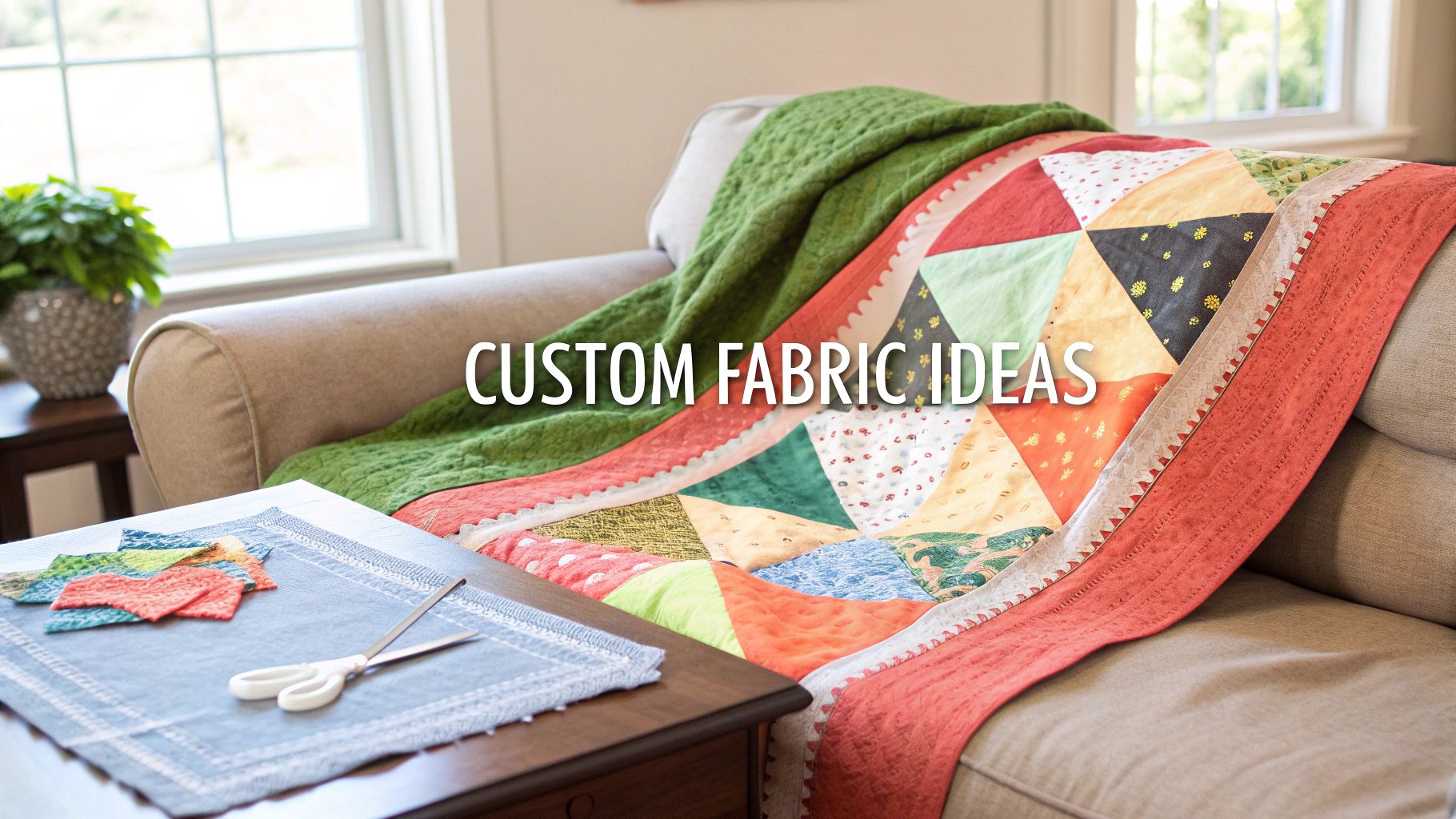
This desire for creative freedom is what’s fueling some serious growth in the market. The custom clothing printing world, which is a huge slice of this pie, is set to grow at a strong 8.8% compound annual growth rate through 2033. It's a boom powered by our collective desire to be unique, as more and more people use custom clothes and textiles to show off their personal style. If you want to dig deeper into the numbers, you can explore more insights on the custom clothing printing market.
And this trend goes way beyond t-shirts. It's popping up in home decor, crafting, and especially in gift-giving.
For the Home and Beyond
With custom printed fabric, you can splash your personality into every corner of your life. Why settle for mass-produced designs when you can create items that are truly you?
Here are a few ideas to get you started:
- Personalized Upholstery: That old armchair or footstool? Give it a second life by reupholstering it with fabric printed with a custom pattern, a favorite drawing, or even a subtle monogram.
- Bespoke Quilting Squares: This is where it gets really special. Print cherished family photos or your kids' artwork onto fabric squares to create a one-of-a-kind quilt that tells a story.
- Branded Event Decor: Planning a wedding, birthday, or corporate event? Design and print custom backdrops, banners, or tablecloths to create a theme that’s cohesive and totally memorable.
- Unique Accessories: You can craft just about anything—from custom tote bags and backpacks to scrunchie headbands and unique book covers—using fabric that has your personal stamp on it.
The real magic of custom fabric is how it turns functional items into meaningful keepsakes. A simple piece of cloth becomes a canvas for memories, branding, or pure artistic expression.
Creating the Perfect Gift for Any Occasion
Maybe the best use for custom fabric is making heartfelt gifts. A personalized present just shows a level of thought and care that something off-the-shelf can never quite match.
Thinking about the time of year can spark some of the best ideas. During the holiday rush of November and December, a Custom Photo Blanket is the ultimate gift. Just imagine wrapping your loved ones in a cozy fleece blanket covered in their favorite family photos—it’s a present that delivers both physical warmth and a whole lot of nostalgia.
Then, as April and May roll around, that same custom blanket becomes a touching and personal way to celebrate Mother's Day. Printing a collage of family moments creates a beautiful keepsake that honors her role in the family, making it a gift she’ll treasure for years to come. By tailoring your project to the season, you can create the perfect, timely gift every time.
Got Questions About Custom Fabric Printing? We've Got Answers
So, you're ready to jump into the world of custom fabric printing, but a few questions are probably popping into your head. That’s completely normal! This is where we clear things up, tackling the most common things people ask about cost, care, and timing so you can start your next project with total confidence.
Think of this as your go-to cheat sheet. For more general printing info, you can always check out their frequently asked questions page, but for now, let’s get right into the specifics.
How Much Does Custom Fabric Printing Cost?
The final price tag on your custom fabric really comes down to a few key things. The type of fabric you pick, the printing method needed for it (like dye-sublimation for polyester), and how much you're ordering all play a part.
As a rule of thumb, synthetic fabrics like polyester often have a different price point than natural ones like cotton. The best part about modern print-on-demand services is you don't need a huge upfront investment—you just pay for what you order. To get the real numbers, your best bet is to use the instant quote tool on a provider’s website with your exact project details.
How Do I Care for My Custom Printed Fabric?
You’ll want to keep your custom creations looking and feeling great for years, right? Proper care is the secret. The goal is simple: protect the print while keeping the fabric soft and cozy.
For most digitally printed fabrics, a simple routine is all you need:
- Wash: Gentle cycle with cold water is your best friend.
- Detergent: Stick with a mild, phosphate-free detergent.
- Dry: Air drying is perfect, but a tumble dry on low heat works too.
- What to Avoid: Keep bleach and fabric softeners away! They can make those beautiful printed colors fade over time.
This gentle approach is exactly what you’d want for something like a Custom Photo Blanket, making sure it stays vibrant and snuggly, wash after wash.
Pro tip: Always give the specific care instructions from your printing service a quick look. Different inks and fabrics might have slightly different needs to stay looking their best.
Can I Print a Photograph onto Fabric?
Yes, absolutely! In fact, it’s one of the most popular and heartwarming ways people use these services. It’s how you create those truly personal gifts that capture a special memory and make someone’s day.
To get a really stunning result, always start with a high-quality photo. We’re talking at least 300 DPI to make sure every little detail comes through sharp and clear. Smooth, tightly woven fabrics like minky fleece are an amazing canvas for photos, which is why they’re the top choice for creating beautiful and sentimental Custom Photo Blankets.
What Is the Typical Turnaround Time?
How quickly you get your custom fabric depends on the printer's schedule, how complex your order is, and the shipping option you choose. Many print-on-demand companies are surprisingly fast, often printing and shipping orders within just 3-7 business days.
A word to the wise: always plan a little extra time, especially during busy seasons like the holidays in November and December. Before you click "order," check the estimated production and shipping timelines. This is especially important if you’re working toward a deadline for a gift or a big event. A little planning ensures your custom piece arrives right when you need it.
Ready to turn your favorite photos into a cherished keepsake? At That Blanket Co, we make it easy to create beautiful, high-quality custom photo blankets that bring your memories to life. Start designing your one-of-a-kind blanket today!