


How to Decorate a Nursery for Your Baby
Decorating your nursery is all about creating a space that feels safe, works for you, and is filled with love for your new baby. Think of it as a few key stages: mapping out a practical layout, picking a calming color palette, choosing furniture that’s both safe and stylish, and finally, adding those personal touches that make it yours. The goal is to design a nurturing environment where your family will make its first cherished memories.
Your Nursery Journey Starts Here
Creating the perfect room for your new arrival is one of the most exciting parts of preparing for parenthood. It’s your chance to design a space that reflects your family’s love and style. But let’s be honest, with so many ideas and options out there, it's easy to feel a little overwhelmed. This guide is here to break it all down into simple, manageable steps, helping you focus on what truly matters.
Our goal is to move past the pressure of creating a "perfect" room and instead focus on one that is practical, safe, and deeply personal. We'll walk through everything from sketching a functional layout that makes sense for late-night changes to choosing furniture that will last for years. You’ll find advice on building a serene color scheme and layering in soft textures to make the room feel cozy and inviting. For more inspiration on how to get started, this helpful guide to creating the perfect nursery offers a great overview.
Making the Space Uniquely Yours
The most beautiful nurseries are the ones filled with meaning. We’ll explore how to add those unique touches that tell your family’s story, turning a simple room into a personal haven. A simple way to do this is with personalized items that blend sentiment with function.
A custom photo blanket, for instance, can be draped over a glider for warmth during those late-night feedings or hung as a sweet piece of wall art. It transforms a simple essential into a cherished keepsake, celebrating your new beginning.
Adding these personal elements is a wonderful way to begin building memories before your baby even arrives. A Custom Photo Blanket makes an incredible holiday gift that's both practical and deeply sentimental, perfect for wrapping the new baby in warmth and love. For those looking for more gift ideas that add a personal touch, our guide on the best personalized baby gifts offers plenty of inspiration. Ultimately, this journey is about more than just decoration; it's about crafting a loving welcome for the newest member of your family.
Laying a Smart Foundation for Your Nursery
Before you even think about picking up a paintbrush or ordering that perfect crib, the most important part of nursery decorating happens with a measuring tape and a piece of paper. This is the foundation stage—it’s all about smart planning to make sure the room isn’t just beautiful, but truly functional for the countless hours you’ll spend there. Trust me, a solid plan now will save you so much time, money, and stress later on.
First things first, measure the room’s dimensions. Get the length and width, but don't forget to note where the windows and doors are, and any other quirks like slanted ceilings or built-in shelves. Now, grab a pencil and sketch out a simple floor plan. It doesn’t have to be a work of art! This little visual guide will be your best friend, helping you see exactly what you’re working with and preventing that classic mistake of buying furniture that’s way too big or small for the space.
This is a great visual for breaking down the process into manageable stages, from planning all the way to adding those final personal touches.
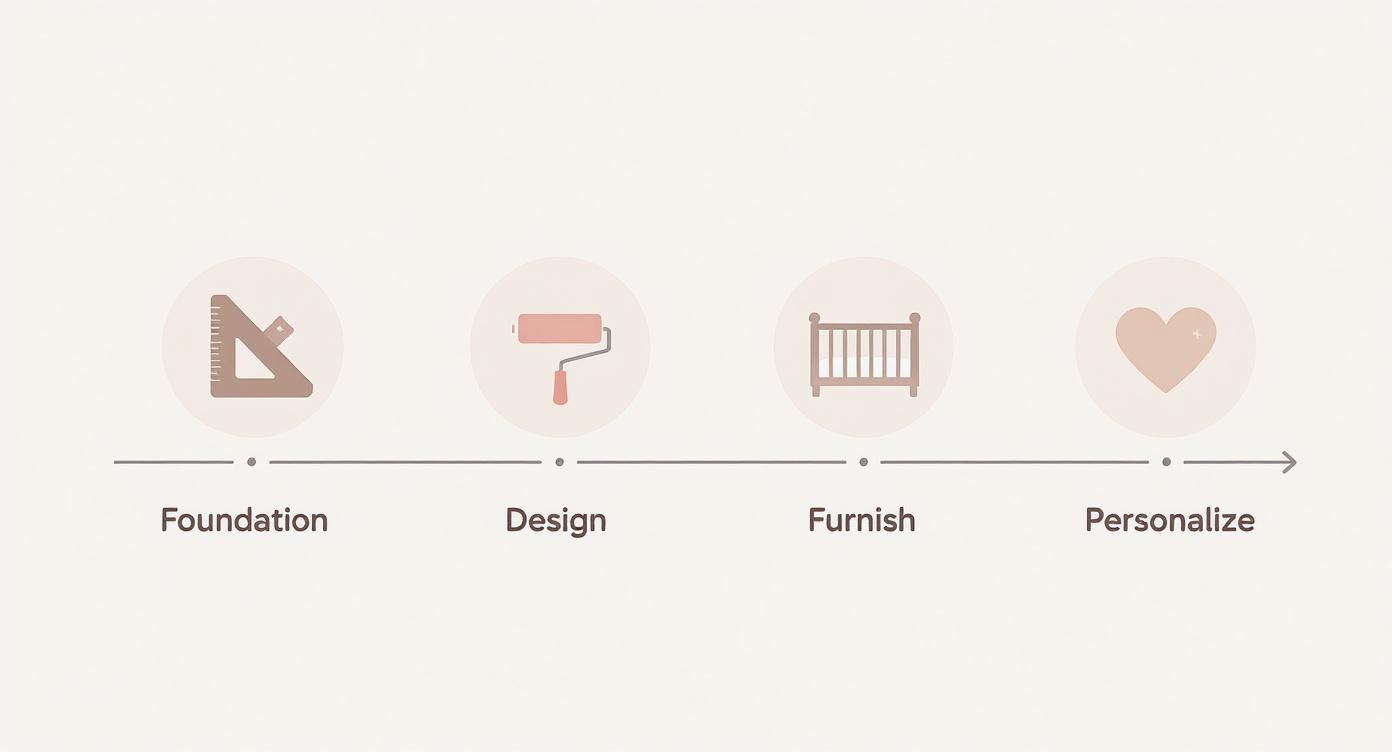
As you can see, a successful nursery project builds on itself. Each step flows logically into the next, helping you create a space that feels cohesive and thoughtfully designed.
Setting a Realistic Budget
With your floor plan in hand, it’s time to talk numbers. It's so easy to get carried away with all the adorable things out there, so setting a budget helps you decide where to invest and where you can save. Key pieces like a safe crib and a super-comfortable glider are often worth spending a bit more on, since you'll be using them daily for years.
On the flip side, you can definitely save on smaller decorative items, cute storage bins, and artwork. A well-planned budget means you can prioritize spending on what really matters for your baby's comfort and safety.
- Invest: Crib, glider or rocker, and a quality dresser that can grow with them.
- Save: Themed decor items, extra bedding (you really only need a few fitted sheets), and small storage solutions.
Designing Functional Nursery Zones
An effective nursery layout is all about creating functional zones that make your daily routine smoother. Thinking in "zones" helps create an intuitive flow, making sure everything you need is right where you need it—especially during those hazy, middle-of-the-night feedings.
The goal is to create a layout where the most frequent tasks—sleeping, changing, and feeding—are supported by their own dedicated, well-equipped areas. This simple organization makes the room work for you.
Think about setting up these three primary zones:
- The Sleeping Zone: This area should feel calm and uncluttered. Place the crib away from windows, drafts, and direct sunlight. Remember, the only things that should be in the crib are a firm mattress and a fitted sheet.
- The Changing Zone: A dresser topped with a changing pad is a fantastic two-in-one solution that saves space. Keep diapers, wipes, and creams organized in the top drawer or in nearby baskets for quick, one-handed access.
- The Feeding Zone: Create a cozy corner with a comfortable glider or rocker and a small side table. This little table is a lifesaver for holding a bottle, a book, or your phone during long feeding sessions. A nearby lamp with a dimmer switch helps create a soothing, sleepy ambiance.
This focus on multi-use furniture is a huge trend in modern nursery design. In fact, a recent report showed 42% of parents prioritized modular furniture that adapts as their child grows, like convertible cribs. This is part of a bigger market shift, and you can learn more about the rising demand for versatile baby furniture as parents look for long-term value.
Choosing a Theme and Color Palette
Okay, this is where the fun really starts. With the practical stuff like your plan and budget sorted, you can dive into the creative heart of the nursery—picking a theme and color palette that feels warm, welcoming, and perfect for your new arrival.
Forget about chasing fleeting trends. The real goal here is to create a space that feels timeless, serene, and can easily adapt as your little one grows. A great way to start is just by thinking about the feeling you want the room to have. Are you picturing a calm, nature-inspired retreat? A bright, clean, modern space? Or maybe something a bit more whimsical and playful? There are no wrong answers—it’s all about creating a room that feels right for you and your family.
Finding a Timeless Nursery Theme
Think of a theme as a gentle guide for your decorating decisions, not a rigid rulebook. It’s what helps pull everything together for a cohesive look. While it's tempting to go all-in on a specific character, themes with a bit more longevity usually work out better in the long run.
Try considering themes that are more conceptual. This approach is so much more flexible, allowing you to swap out smaller decor items—like art or a mobile—as your child's interests change, without having to redo the entire room.
- Nature-Inspired: This is a huge one right now. Think woodland creatures, soft botanical prints, or a subtle safari vibe. These themes are naturally calming and bring a little bit of the outdoors in.
- Modern Minimalist: This style is all about clean lines, simple shapes, and a neutral color base. It’s fantastic for creating a tranquil, uncluttered environment that feels peaceful for everyone.
- Subtle Storybook: Instead of focusing on one specific character, this theme captures the magic of classic fairy tales with soft colors, vintage-inspired art, and charming details.
We’re seeing a huge shift toward these more soothing designs. In fact, 57% of parents are now choosing nature-inspired motifs like florals and woodland themes to create a tranquil atmosphere. If you're curious, you can explore more about current nursery decor trends to see how palettes have evolved.
Building a Calming Color Palette
Color has a massive impact on mood, and in a nursery, the goal is usually to create a sense of peace and restfulness. This is why you’ll often see recommendations for soft, gentle hues. Colors like soft greens, warm neutrals, and dusty blues can create a wonderfully serene environment that feels soothing for both you and your baby.
A fantastic designer trick for getting your colors just right is the 60-30-10 rule. It’s a simple, foolproof framework that helps your palette feel harmonious instead of chaotic.
Here’s how it works:
- 60% Primary Color: This is your room's main color, usually the one you'll put on the walls. It sets the overall tone.
- 30% Secondary Color: This color supports the primary one and is often used for bigger items like furniture, the rug, or curtains.
- 10% Accent Color: This is your fun pop of color! Use it for smaller decorative pieces like pillows, artwork, and special keepsakes.
A Custom Photo Blanket can be the perfect accent piece. It’s a beautiful way to bring in your 10% color while adding a deeply personal element that tells your family’s story.
This simple rule helps you layer colors with confidence, creating a look that feels balanced and visually interesting.
To get your creative juices flowing, here’s a quick look at some popular themes and the color palettes that bring them to life.
Popular Nursery Themes and Color Schemes
| Theme | Primary Colors | Accent Colors | Overall Vibe |
|---|---|---|---|
| Woodland Retreat | Sage Green, Warm Greige | Burnt Orange, Mustard Yellow | Cozy, Calming, Rustic |
| Coastal Serenity | Soft Blue, Sandy Beige | Crisp White, Coral | Airy, Relaxing, Fresh |
| Modern Minimalist | White, Light Gray | Black, Natural Wood Tones | Clean, Uncluttered, Calm |
| Boho Chic | Terracotta, Cream | Dusty Rose, Olive Green | Warm, Eclectic, Earthy |
| Subtle Safari | Khaki, Ivory | Gold, Muted Greens | Adventurous, Playful, Warm |
Hopefully, this table sparks a few ideas! Choosing a theme and color palette is one of the most exciting parts of this journey.
When you’re ready to find that perfect finishing touch, you can browse a beautiful selection of kids and nursery blankets to find a piece that ties your whole color scheme together. This structured approach to color makes decorating feel so much more manageable and fun.
Selecting Safe and Functional Nursery Furniture
When you start pulling together a nursery, it's so easy to get swept up in the adorable designs. But let's get real for a minute—the furniture you choose has to be more than just cute. It needs to be safe, functional, and tough enough to handle everything from newborn snuggles to toddler adventures. This is where the practical side of decorating takes over, and safety standards are everything.
The global market for nursery furniture is huge, expected to hit $20.0 billion by 2035. Cots and cribs alone are projected to make up 32.1% of that market's revenue in 2025. This tells us one thing: parents are serious about finding durable, safe options. Wooden furniture is especially popular for its strength and timeless look. You can find more details on these nursery furniture market trends and the rising demand for sustainable materials.
The Centerpiece: The Crib
The crib is the heart of the nursery, so it’s the perfect place to start. And when it comes to the crib, safety is completely non-negotiable. Modern cribs are built to meet strict federal safety standards, which is why it’s always best to buy new if you can. That way, you know you're getting the latest protections.
Here’s a quick checklist for choosing a safe crib:
- Slat Spacing: The gaps between the slats can't be more than 2 3/8 inches wide—about the width of a soda can. This is a critical feature to prevent a baby's head from getting stuck.
- Corner Posts: Look for cribs where the corner posts are either totally flush with the top of the headboard or very tall (over 16 inches). This design prevents your baby's clothing from snagging.
- Non-Toxic Finish: Babies chew on everything. Make sure the crib's paint and finish are certified non-toxic.
- Adjustable Mattress Height: Most cribs have multiple mattress levels. A higher setting is a lifesaver for your back when your baby is tiny, and you can lower it once they learn to sit and stand up.
My best tip? Go for a convertible crib. These are genius—they transform from a crib into a toddler bed, and some even become a daybed or a full-sized headboard. It’s a smart investment that grows with your child and saves you from buying new furniture every few years.
Essential Companions: The Glider and Dresser
While the crib is for sleeping, a comfortable glider or rocker is your command center. You’ll spend countless hours here feeding, cuddling, and trying to soothe a fussy baby in the middle of the night. Trust me, comfort is everything. Find one with great back support and padded armrests.
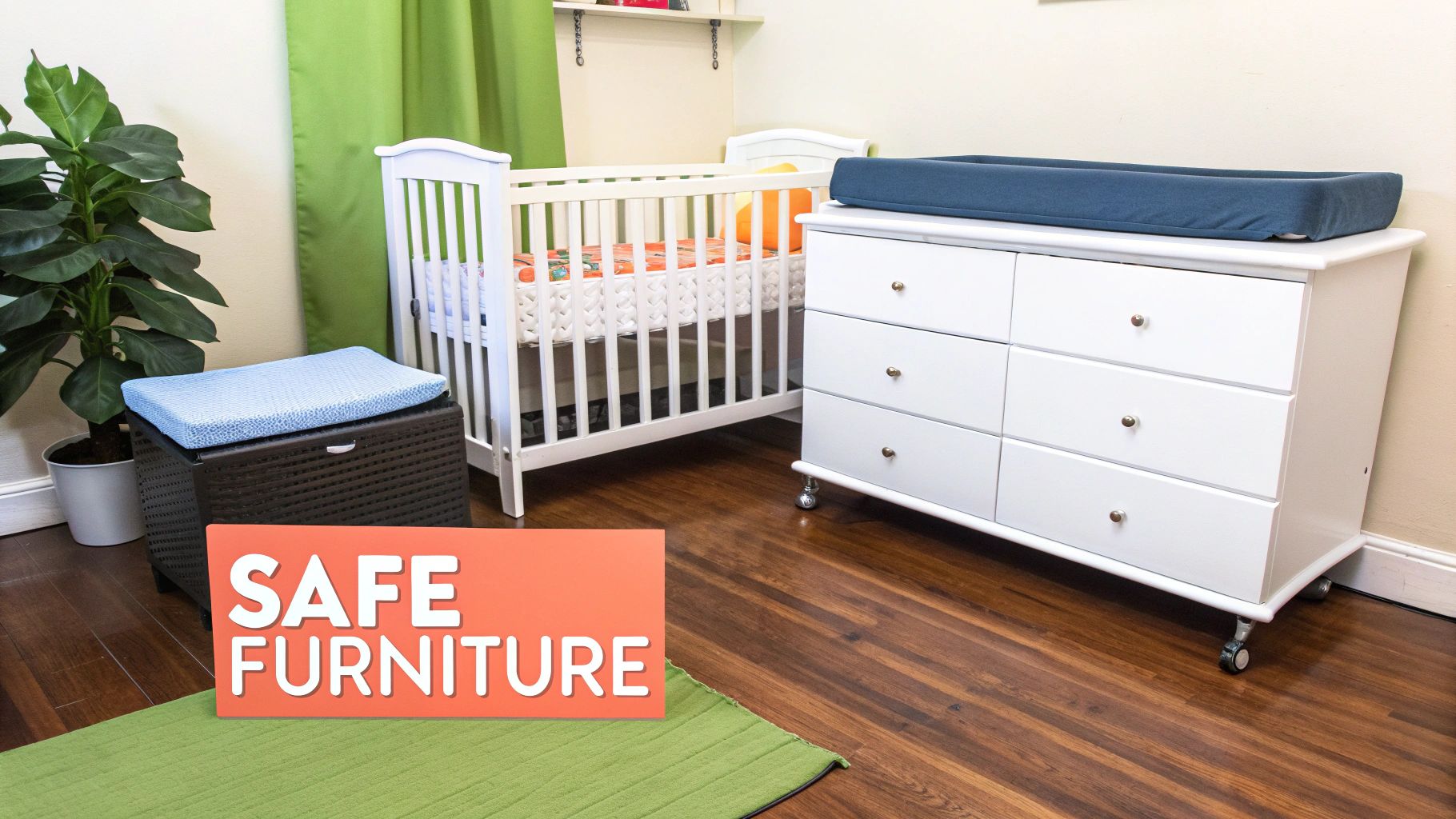
A dresser is another nursery workhorse. Here’s a brilliant space-saving trick: choose a standard-height dresser and top it with a secure changing pad. This combo gives you tons of storage for clothes and diapers right where you need it for changes.
Anchoring and Smart Placement
Once you have your key pieces, where you put them—and how you secure them—is just as important. Any tall or heavy furniture like a dresser, bookshelf, or changing table must be anchored securely to the wall. This is a non-negotiable step to prevent dangerous tip-over accidents.
Smart placement also helps create a safer room with better flow. The crib should be positioned away from windows to avoid drafts, and kept far from blinds, curtains, or any cords. Taking these simple steps minimizes risks and helps you build the peaceful, safe haven your baby deserves. Your furniture choices are the foundation of a nursery that is as secure as it is beautiful.
Adding Warmth and Personal Touches
Now that the big furniture pieces are in place, it’s time for the fun part: adding all the cozy layers that turn a room into a true sanctuary. This is where you get to sprinkle in your family’s personality and create a space that feels warm, comforting, and uniquely yours.
First up, textiles. The right fabrics can completely change the vibe of a nursery, adding softness, color, and texture. A plush, soft rug is an absolute must. It gives you a comfy spot for tummy time and will eventually cushion those first wobbly steps.
Layering window treatments is another game-changer. I always recommend blackout curtains—they are a lifesaver for helping your baby (and you!) get better sleep by creating a dark, restful space for naps and nighttime.
Creating a Meaningful Focal Point
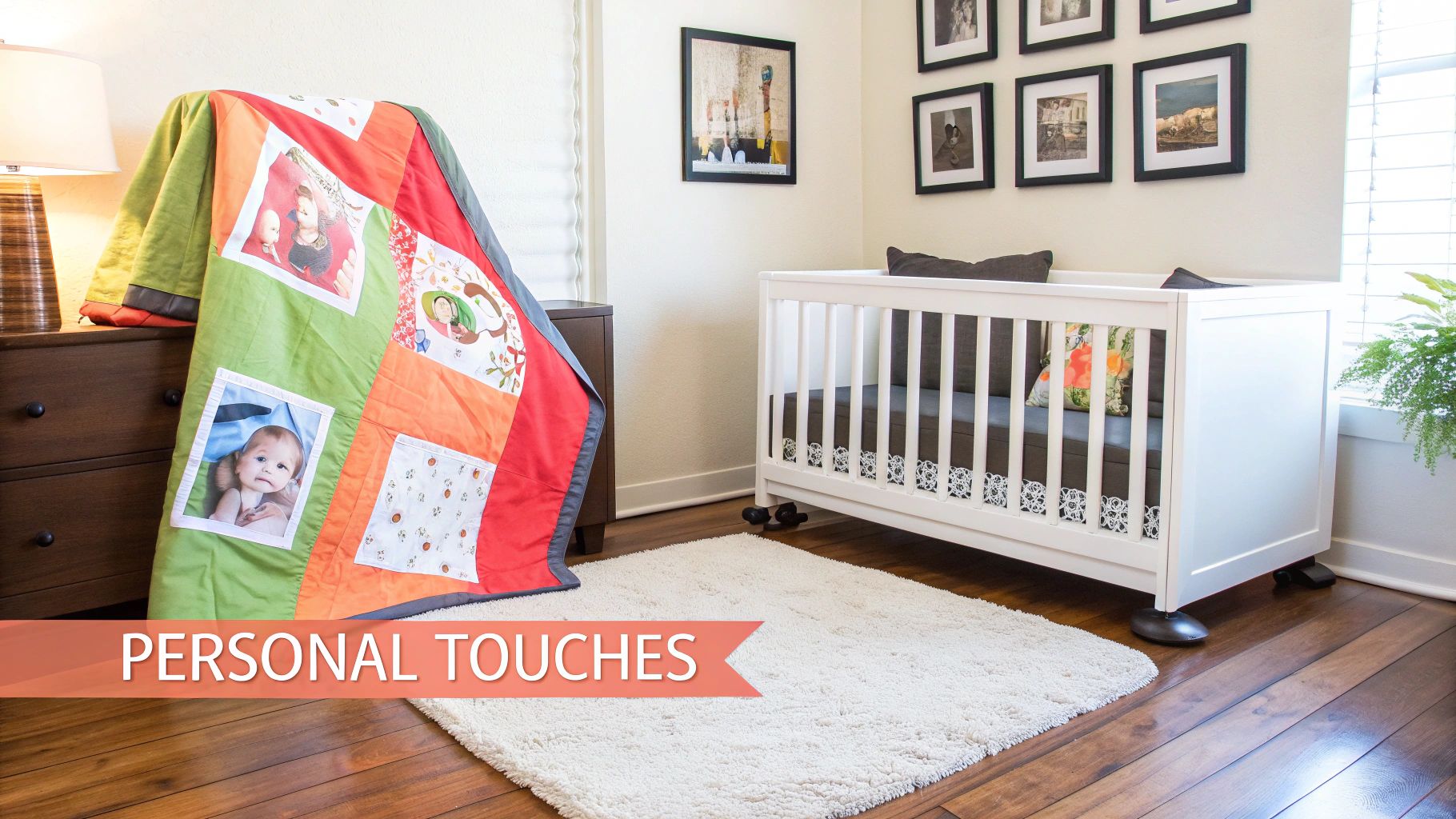
Every room needs a heart—that one spot the eye is naturally drawn to. In a nursery, this could be a beautiful gallery wall above the dresser or a single piece of art that tells a story. This is your chance to skip the generic big-box decor and choose items that are deeply meaningful to your family.
One of my favorite ways to add a unique, heartfelt element is with a Custom Photo Blanket. It’s so versatile—drape it over the glider for warmth during late-night feedings, or hang it on the wall as a beautiful, soft tapestry. Featuring a favorite family picture or a collage of sweet moments, it turns a simple essential into a cherished keepsake.
This one addition instantly personalizes the space, wrapping your baby in love and memories from day one. If you're looking for ideas, you can explore some of the best personalized baby blankets to see which styles might complement your theme.
Curating a Personal Gallery Wall
A gallery wall is a fantastic way to display art and family photos without creating clutter. The secret is to curate a small, thoughtful collection rather than just filling the wall with stuff.
- Mix and Match: Try combining different elements. A framed family photo next to a simple art print and a small, meaningful object can look amazing.
- Stay Cohesive: Stick to frames of a similar color or style. This simple trick ties everything together for a clean, polished look.
- Plan the Layout: Before you put any nails in the wall, arrange all the pieces on the floor. Play around with the composition until you find a layout you love.
For some fresh and creative approaches to personalizing your baby's room, check out these 10 inspiring nursery wall decor ideas.
Perfecting the Ambiance with Soft Lighting
Finally, let's talk lighting. Harsh overhead lights have no place in a calm, serene nursery. The key is creating a peaceful ambiance with layered, soft lighting that you can easily control.
Installing a dimmer switch on the main light is a simple update that makes a world of difference. Add a small, warm-toned nightlight, and you’ll have just enough glow for those late-night check-ins without waking your sleeping baby. It’s these thoughtful details that make the room a peaceful retreat, day or night.
Smart Storage and Organization Solutions
Let’s be real—a well-organized nursery is a sanity-saver, especially during those blurry, sleep-deprived first few months. The goal isn’t a picture-perfect showroom; it’s about creating simple, sustainable systems to manage all the tiny things. When you can find what you need in a flash, those middle-of-the-night diaper changes feel a whole lot less chaotic.
The key is to think practically. Start with the closet, which can quickly become a jumble of adorable outfits in a dozen different sizes. A simple set of closet dividers labeled by age (0-3 months, 3-6 months, etc.) is an absolute game-changer. This tiny hack saves you from digging through piles just to find something that fits.
Creating an Efficient Changing Station
Think of your changing station as mission control for all things diaper-related. Having everything within arm’s reach isn't just convenient—it's a must for safety. You never, ever want to leave your baby unattended, even for a split second.
A dresser topped with a secure changing pad is the perfect setup. Use drawer organizers to neatly corral diapers, wipes, creams, and backup bodysuits. Pro tip: keep the most-used items in the top drawer for instant access.
I’ve found that keeping a small, decorative basket on top of the dresser for the essentials—wipes, your favorite diaper cream—is a lifesaver. It keeps the surface tidy while ensuring everything you need is ready to grab.
Maximizing Your Space with Smart Storage
Beyond the big furniture, versatile storage will be your best friend in keeping the rest of the room tidy and calm.
- Cube Storage: You can’t go wrong with a classic cube shelving unit. It’s incredibly adaptable. Use it with fabric bins to hide away toys, extra blankets, and other supplies. As your child grows, it seamlessly transitions into a bookshelf or toy organizer.
- Decorative Baskets: I love using woven baskets to stash larger items like swaddles or even a soft, rolled-up Custom Photo Blanket. They add a lovely, soft texture to the room while offering practical, open storage that’s easy to toss things into.
- Vertical Space: Don't forget to look up! Floating shelves or picture ledges are brilliant for displaying books and small treasures. This trick keeps floors clear—making even a small room feel larger—while adding a personal touch to the walls.
A little organization goes a long way in creating a functional, soothing environment. I've put together a quick checklist to help you map out your storage needs zone by zone.
Nursery Organization Checklist
This table breaks down the essentials for each area of the nursery, helping you plan for smart, accessible storage solutions.
| Nursery Zone | Essential Items to Organize | Recommended Storage Solution |
|---|---|---|
| Closet | Clothing (by size), shoes, extra bedding, seasonal items | Closet dividers, hanging organizers, clear bins for top shelves |
| Changing Station | Diapers, wipes, creams, changing pad covers, extra onesies | Drawer organizers, decorative baskets on top of the dresser, caddy |
| Play Area | Toys, stuffed animals, activity mats | Cube storage with fabric bins, large woven baskets, toy chest |
| Reading Nook | Board books, picture books | Floating shelves, picture ledges, small forward-facing bookcase |
| Feeding Corner | Burp cloths, nursing pillow, bottles, pump parts | Small side table with drawers, rolling cart, decorative basket |
By planning ahead with these simple strategies, you’re not just organizing a room; you’re building a system that supports you and your baby. This makes the day-to-day routines smoother, leaving more time for what really matters: cuddles and connection.
Common Questions About Nursery Decorating
As you start putting the final touches on the nursery, it's completely normal for a few last-minute questions to pop up. Decorating this special room is a huge project, and you want to get every detail right. We hear the same great questions from parents all the time, so we've gathered the answers here to give you that final boost of confidence.
When Is the Best Time to Start Decorating the Nursery?
This is a big one, and timing really is everything for a stress-free experience. The sweet spot is definitely during your second trimester. Kicking things off then gives you plenty of breathing room to order furniture—which can have surprisingly long lead times—and get any painting done without feeling rushed.
Try to have the big-ticket items, like the crib and dresser, assembled and in place at least 4-6 weeks before your due date. This isn't just about being prepared; that buffer is crucial for letting any odors from new paint or furniture completely air out, ensuring the room is fresh and ready for your little one.
How Can I Make a Small Nursery Feel Bigger?
Don't let a small footprint cramp your style! With a few clever design tricks, even the coziest room can feel open and airy. Start with the walls. Lighter, softer colors are your best friend here, as they reflect natural light and create a sense of space.
Next, think smart with your furniture. Pieces that can pull double-duty are a game-changer. A dresser topped with a changing pad is the classic space-saver for a reason. And don't forget to look up! Using vertical space with floating shelves or picture ledges for books and decor draws the eye upward, keeping the floor clear and the room feeling larger.
Here’s a pro tip for small spaces: choose furniture with visible legs, like a mid-century modern style crib or dresser. Lifting furniture off the floor creates an illusion of more open space and makes the room feel way less crowded.
What Are the Most Critical Safety Features?
Above all else, the nursery has to be a safe haven. Your absolute top priority is the crib. Make sure it meets all current safety standards, and outfit it with a firm mattress and a snug fitted sheet. That’s it—no bumpers, loose blankets, or toys.
Beyond the crib, every single piece of heavy furniture—from the dresser to any bookshelves—must be securely anchored to the wall. This is non-negotiable for preventing dangerous tip-over accidents. And finally, cover all your electrical outlets and make sure any cords from lamps or monitors are tucked away and well out of your baby's future reach.
How Do I Add Personal Touches Without Creating Clutter?
The secret to personalizing a space without it feeling cluttered is to be intentional. Instead of filling every single surface, pick a few high-impact items that really mean something to you. A Custom Photo Blanket, for example, is perfect for this. You can drape it over the glider for a cozy touch or even hang it as a soft piece of wall art. It adds a deeply personal layer without taking up precious space.
Think about creating a curated gallery wall with just a handful of your favorite family photos or art prints instead of scattering frames all over. Displaying cherished books on a picture ledge is another great way to add personality that doubles as decor. When you’re selective, the space feels personal and warm, not busy.
At That Blanket Co, we specialize in creating beautiful, high-quality keepsakes that add that perfect personal touch to your nursery. Design your own one-of-a-kind blanket today at https://thatblanket.co.