


Matching Pillows and Throws How to Style Every Room
You've found the right pillows, chosen a throw you love, and placed everything on the sofa. Then the room somehow looks either too coordinated, like a showroom, or too busy to feel comfortable. The problem usually isn't the individual pieces. It's the relationship between color, pattern, scale, and texture.
Matching pillows and throws work best when they belong together without looking identical. A shared palette creates order, while differences in fabric, shape, and pattern keep the room relaxed and lived-in. The same restraint helps a Custom Photo Blanket feel personal rather than visually overwhelming.
Why Matching Pillows and Throws Feels Harder Than It Looks
A living room can contain beautiful pieces and still feel unsettled. I've seen sofas covered in pillows that repeat the exact throw color, fabric, and motif, leaving no contrast for the eye to rest on. I've also seen the opposite, a patterned throw paired with several unrelated prints, where every cushion competes for attention.
The issue is that “matching” often gets interpreted as duplication. Exact repetition makes a sofa look flat because the eye sees one large block rather than a layered arrangement. Too many unrelated elements create clutter because nothing tells the eye which detail matters most.
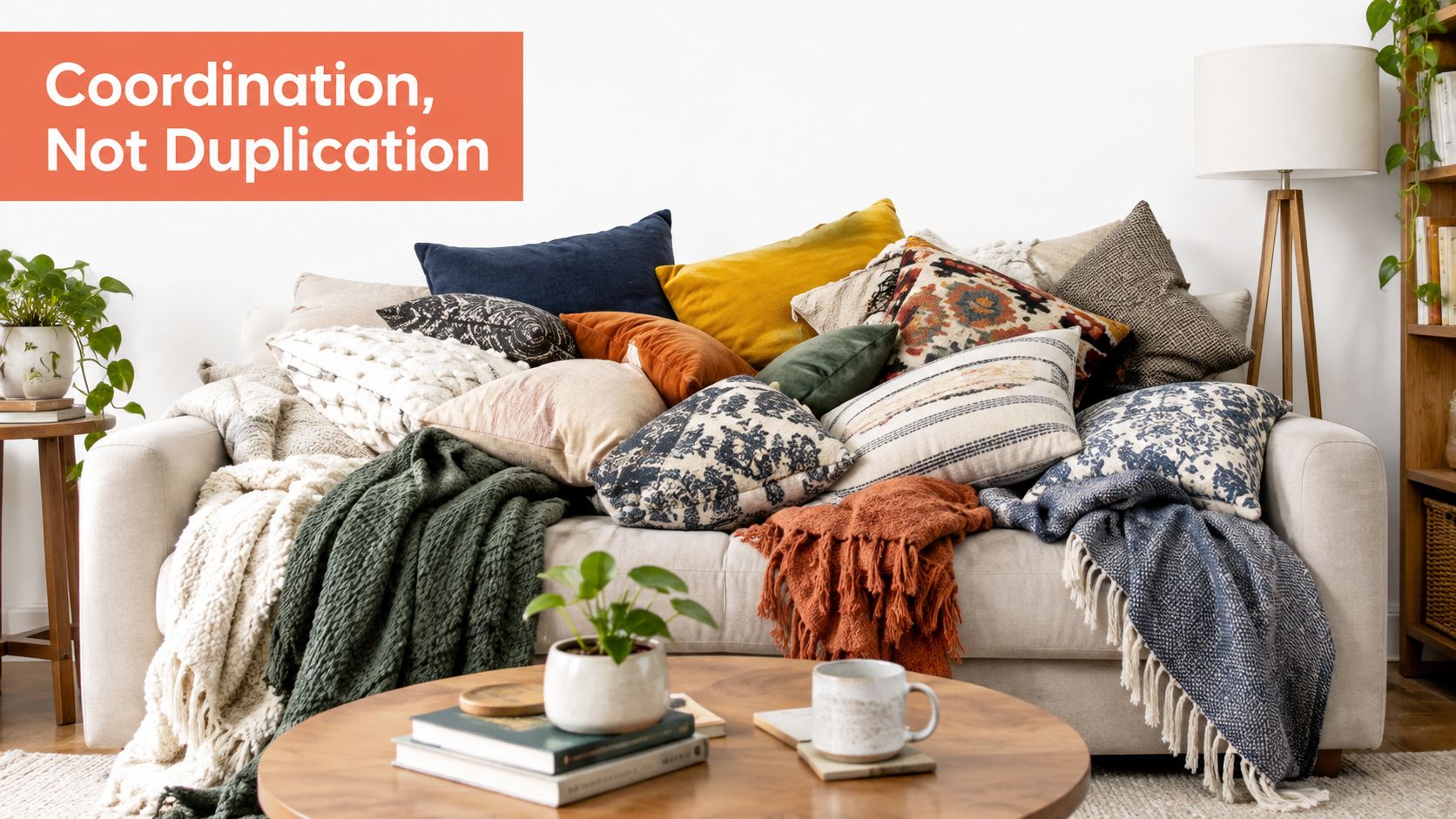
Coordinate instead of copy
Start by choosing one visual connection. That might be a warm terracotta thread running through a patterned pillow and a plain throw, or a soft cream shared by the sofa, lumbar cushion, and blanket. Once that link is established, let the other details differ.
A useful arrangement often has:
- One focal piece: This could be a large-print pillow or a richly colored throw.
- One quiet companion: A solid pillow gives the eye a pause.
- One tactile layer: Woven cotton, minky, sherpa, boucle, or a knitted throw adds dimension.
- One personal detail: A meaningful Custom Photo Blanket can anchor the arrangement when its colors are echoed subtly in the pillows.
The same principle applies when you're making pillows rather than buying finished cushions. A well-filled insert gives a cover structure, particularly with soft fabrics. If you're working with minky covers, this guide to buy pillow forms for minky covers can help you choose a form that won't leave the finished pillow looking limp.
Practical rule: If every piece is shouting, remove one pattern before adding another color.
The broader home-textile category is substantial, valued at USD 137.81 billion in 2025 and projected to reach USD 231.40 billion by 2033, with a 6.9% CAGR from 2026 to 2033, according to Dataintelo's throw pillows market reference. Pillows and throws aren't minor finishing touches. They're central ways people refresh and personalize a home.
The Simple Formula for Coordinating Color Pattern and Texture
The most reliable system begins before you shop. Decide what the room's palette can hold, then assign each pillow and throw a specific role. This prevents the common mistake of buying attractive pieces individually and discovering that they don't work as a group.
Lock the palette first
Use three to five colors across the arrangement, counting close tonal variations as part of the same family. In a beige room, that might mean ivory, camel, rust, muted green, and charcoal. In a blue room, navy, denim, pale blue, warm white, and a small amount of ochre can create enough variation without losing cohesion.
Don't distribute every color equally. Choose one dominant color, one supporting color, and one or two accents. The throw often works best in the dominant or supporting tone because its larger surface area can stabilize the arrangement.
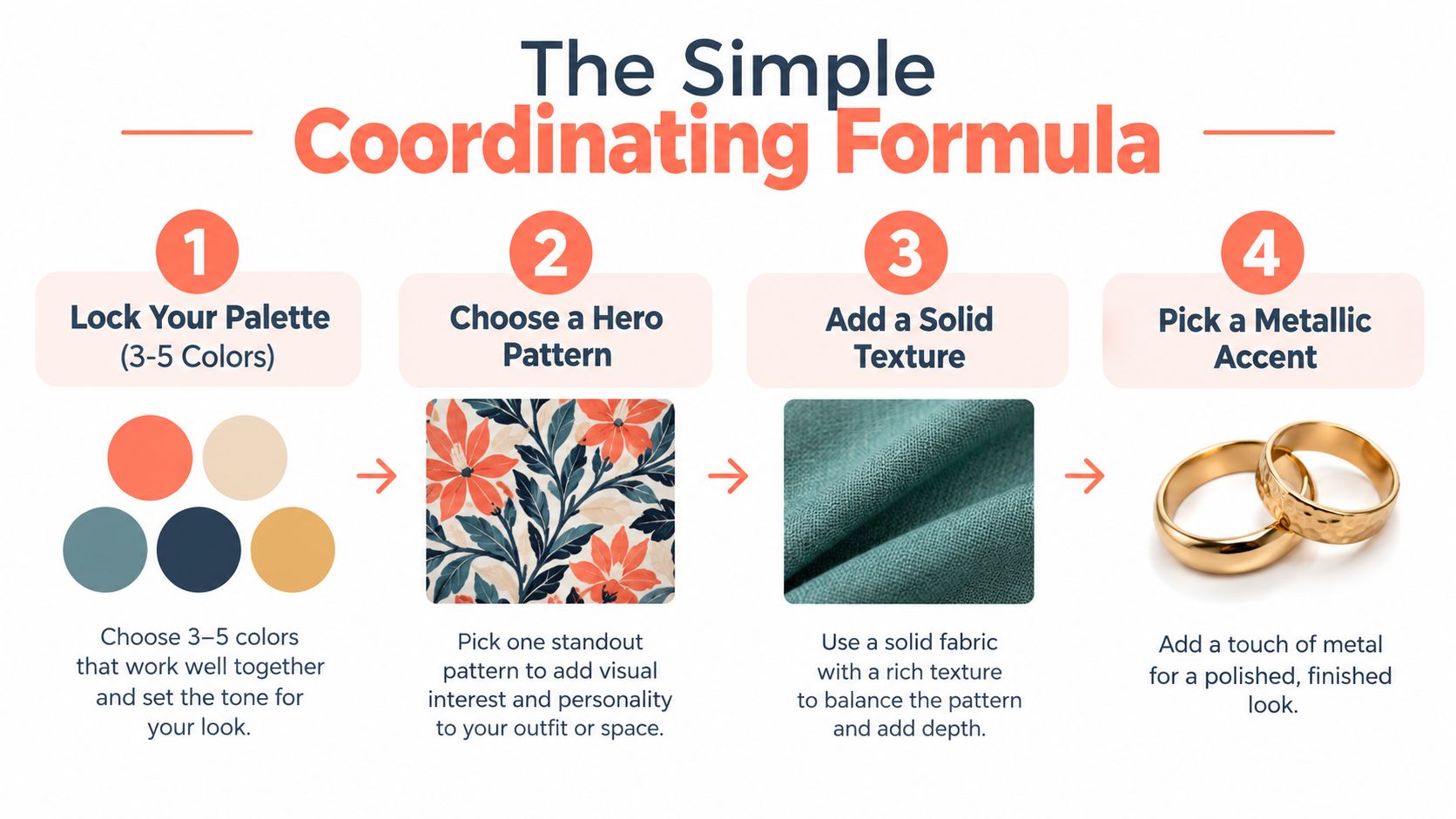
Give patterns different jobs
Choose one large print, such as a botanical, broad stripe, or oversized geometric. Pair it with a smaller print if you want more energy, but make sure the second pattern has a different scale. Finish with a solid or textured pillow that carries one of the existing colors.
Pattern guidance from Lott's Furniture's guide to using patterns in room design is useful here because scale matters as much as color. Two prints with similarly sized motifs tend to blur together, while a large pattern beside a small one creates hierarchy.
Let texture do the quiet work
The throw can be your solid or textured anchor. A nubby woven blanket beside a printed pillow adds interest without introducing another visual motif. If the pillows already include velvet, linen, and embroidery, choose a simpler throw. Many stylists recommend keeping the grouping to no more than three distinct textures so the result feels layered rather than overloaded.
Odd numbers usually look more natural than rigid pairs. Three or five pillows can create balance without making both sides of the sofa look mechanically identical. On a narrow seat, three may be enough. On a larger sofa, five can work if people still have room to sit comfortably.
Before buying, ask:
- Does every patterned piece share at least one color?
- Is there a plain or quiet surface?
- Does the throw contrast with the sofa?
- Are the textures varied but not competing?
- Can the arrangement be used without moving half the cushions?
If the answer to the last question is no, edit first.
How to Choose Fabrics Sizes and Shapes That Work Together
Color creates the first connection, but fabric and proportion create depth. A smooth pillow beside a nubby throw feels more considered than two pieces made from the same material. The contrast should be intentional, not extreme.
Minky and sherpa bring softness and warmth, making them useful for family rooms, reading corners, and winter arrangements. Woven cotton and linen offer more structure and a lighter visual weight. On a relaxed linen sofa, a plush pillow can add coziness. On a heavily textured boucle sofa, simpler woven pillows may be the better choice because the furniture already provides tactile interest.
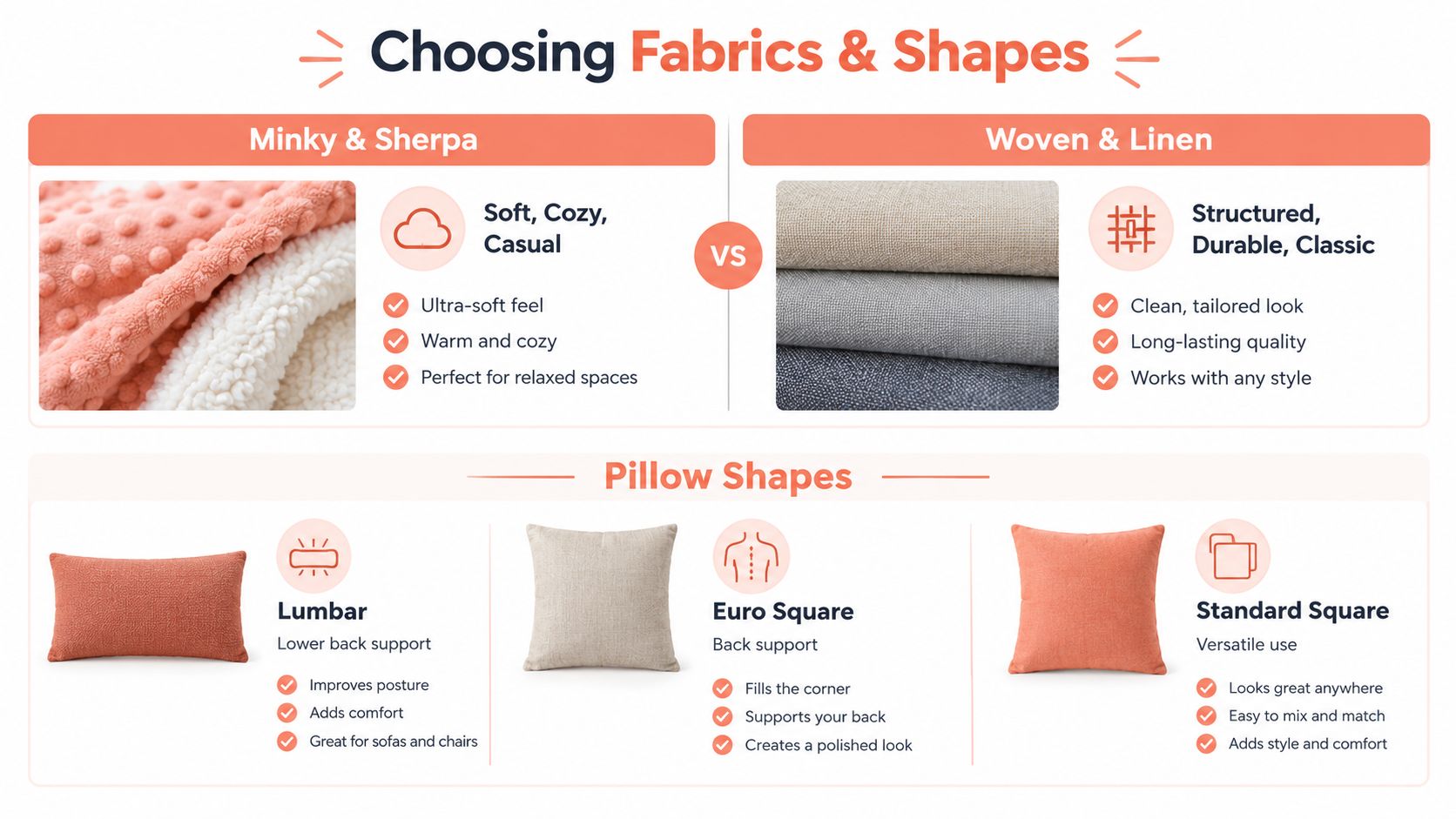
Build from large to small
For a sofa, begin with 24-inch square pillows at the corners. Layer 20- to 22-inch squares in front, then finish with a rectangular lumbar pillow. This arrangement lets each layer remain visible and gives the eye a clear path from the largest form to the smallest.
A three-seater sofa may need fewer cushions than you expect. Place two larger squares at the outer edges, add smaller squares in front, and position a lumbar pillow slightly off-center. The asymmetry keeps the composition from looking staged, while the shared palette holds it together.
For beds, the same stacking logic changes slightly with the mattress size:
- Queen bed: Start with two 24-inch squares, then add smaller decorative pillows and a lumbar.
- King bed: Three 24-inch squares can create a broad back layer, followed by smaller squares and a lumbar.
- Any bed: Place the throw across the lower third, allowing it to fall softly rather than pulling it tight.
Mixing square, rectangular, and round shapes adds dimension, but shape should support the room. A lumbar pillow is practical in front of a deep sofa arrangement, while a round cushion can soften a composition dominated by straight lines.
Avoid exact fabric matches
Matching the pillow fabric to the sofa or throw may seem safe, but it often makes the pieces disappear into one another. Keep the colors related and change the surface. A matte woven pillow next to a soft sherpa throw has more presence than two identical fleece pieces stacked together.
For a closer comparison of blanket surfaces and their styling implications, consult this custom blanket materials guide comparing fleece, sherpa, and woven fabrics. Check care labels before combining fabrics, especially when one item needs gentler washing or air drying.
Room by Room Styling Ideas That Feel Effortless
The same palette can behave very differently depending on the room. A family sofa needs open seating space, a bed benefits from a clear horizontal rhythm, and a nursery should feel playful without becoming visually loud.
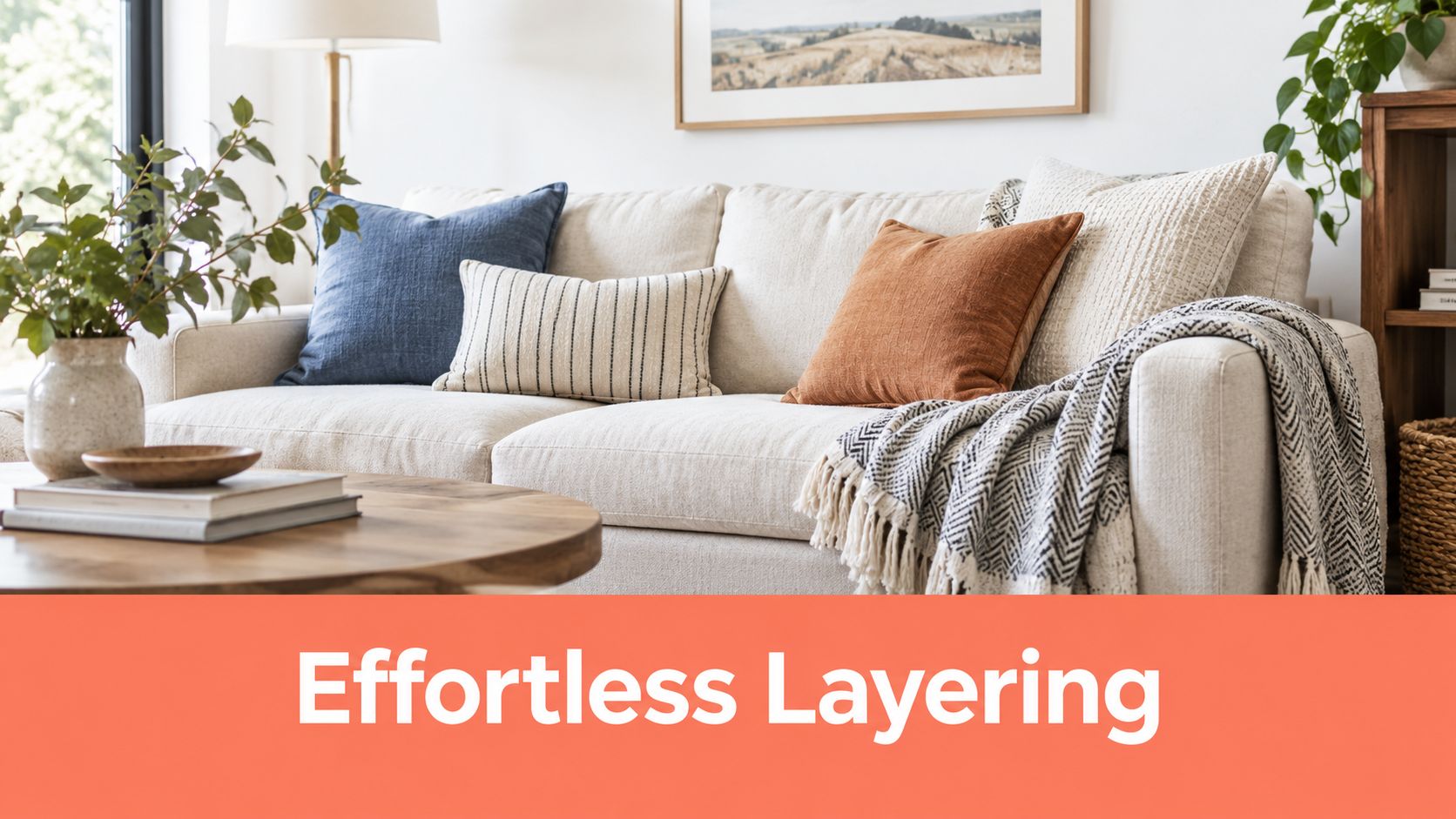
Living room
For everyday lounging, place larger pillows at the sofa's corners and gather the smaller accents into one or two clusters rather than spacing everything evenly. A neutral sofa might take two warm cream squares, two smaller rust or olive cushions, and one patterned lumbar. Fold a textured throw over one arm or tuck it across the back, leaving the opposite side visually open.
The throw should relate to the pillows through color or tone, not through an exact print. If the lumbar carries a botanical design, choose a plain throw that picks up the background color. This gives the patterned cushion importance without making the sofa feel themed.
Bedroom
A bed benefits from a more ordered arrangement because its broad surface needs a strong horizontal anchor. Use the sleeping pillows at the back, decorative squares in front, and a lumbar across the lower layer. A throw placed over the lower third can repeat the bed's accent color while introducing a contrasting weave.
Keep the strongest pattern away from the sleeping pillows. The bed should feel restful, so use the focal print on one decorative cushion and let the remaining pieces stay quieter.
The visual rhythm becomes easier to judge from the doorway. Step back and check whether the accent color appears across the room, perhaps in the artwork, rug, bedside lamp, or throw, rather than existing only in the center of the bed.
A short visual example can help clarify how the same restraint works across different furniture layouts.
Nursery or kids' room
Children's rooms can handle more personality, but the palette still needs an anchor. Choose a playful theme on one pillow or blanket, then repeat only its quieter colors in the surrounding pieces. A dinosaur, princess, animal, or star motif can feel charming when paired with plain cream, soft blue, sage, or warm gray rather than several competing character prints.
A personalized blanket can sit at the foot of a toddler bed or in a reading nook, with one or two simple pillows echoing its background colors. Keep the arrangement easy to remove and wash, and avoid placing decorative pieces where they interfere with sleep or safe movement.
Adding Custom Photo Blankets for a Personal and Giftable Touch
A Custom Photo Blanket works best as the emotional focal point, not as another pattern in an already crowded arrangement. Start with the images and overall tone of the blanket, then pull one or two colors from it for the pillows. If the blanket contains a family collage with several colors, neutral pillows can give the photos room to breathe.
Personalization also works through restraint. A monogram or name design can pair with a solid lumbar pillow, while a heart photo or floral motif can be supported by a small patterned cushion in a related color. For a child's room, a playful theme becomes easier to style when the surrounding pillows repeat the background rather than the complete illustration.
A complete guide to custom photo blankets can help you think through image selection, layout, and material before building a coordinated set.
Match the occasion to the styling
November and December should focus on holiday gifting. Search interest for fleece blankets peaks every November, and the blanket market is projected to grow from $26.58 billion in 2026 to $45.86 billion by 2034, according to Printway's Q4 bedroom decor trends. A photo blanket paired with a complementary pillow suits family gifting, pet lovers, grandparents, and couples because it combines comfort with a memory.
Holiday shopping often begins as early as September, picks up in early November, and shifts toward gift buying after Thanksgiving in the U.S., as described in Etsy's holiday marketplace insights. Plan personalized orders early enough to review images and coordinate wrapping.
April and May should center on Mother's Day gifting. Etsy frames that period around gifting, personalization, wellness, accessories, and keepsakes in its Mother's Day marketplace guidance. A collage of family photographs, a mother-themed message, or a soft floral design can make the blanket feel sentimental without requiring an elaborate pillow arrangement.
Personalized blankets are also associated with photo collages, mother-themed copy, and holiday gifting in Printway's seasonal product research. The styling lesson is simple. Let the memory lead, then make the surrounding textiles quieter.
Care and Maintenance Tips to Keep Your Set Looking Fresh
A coordinated set stays attractive when each piece keeps its shape and surface. Read the care label before washing, especially when you combine minky, sherpa, linen, woven cotton, or printed fabrics. Use the gentlest suitable cycle, avoid harsh heat when the label advises against it, and make sure blankets are fully dry before folding them away.
Keep pillows structured
Fluff pillows by pushing into the corners and redistributing the filling instead of squeezing only the center. Rotate frequently used cushions so one side doesn't develop a permanent hollow. If a cover is removable, wash it separately when possible and refit it while the fabric is still slightly relaxed, following the manufacturer's directions.
A quick edit can refresh the whole sofa. Replace one flattened lumbar, move the patterned pillow to a different side, or switch the throw placement from an arm drape to a loose back tuck. You don't need to replace the complete group to change its balance.
Store seasonal pieces carefully
Fold winter throws and heavier pillows only after they're clean and completely dry. Store them in a breathable container away from direct sunlight, and keep personalized pieces where their printed surfaces won't rub against rough objects. For a practical washing schedule, use this guide on how often to wash blankets alongside the care label.
Before bringing a seasonal set back into the room, shake out the throw, plump each insert, and inspect the colors in the room's current light. A small change in lamp warmth or wall paint can make an old accent look stronger or softer than you remember.
The easiest refresh is usually subtraction. Remove one competing piece, restore the pillow shapes, and let the original palette work again.
Matching pillows and throws should make a room easier to live in, not harder to maintain. Start with a controlled palette, vary the pattern scale, introduce texture through contrast, and let one piece carry the personality. That Blanket Co offers custom photo blankets and complementary pillows in personalized photo, text, monogram, family, pet, and kids' designs, so visit That Blanket Co to create a coordinated set for your home or your next holiday or Mother's Day gift.