


Heart Photo Designs: Creative Ideas for Blankets and Gifts
You're scrolling through old photos, trying to choose one image for a gift, and every option seems to hold a different part of the story. A heart photo design can bring those moments together, but choosing the pictures is only the beginning. The layout, print quality, recipient, and privacy all shape whether the finished keepsake feels personal and looks clear.
What a Heart Photo Design Actually Is
You pause over a family photo and wonder what it would look like inside a heart. Then you find another picture from the same day, and another from a different season. A heart photo design gives you a way to bring one image or several memories into a composition shaped like a heart.
The heart can be the shape of the photo itself, a frame around a picture, or the outline that holds a collage. In practice, that might mean a single portrait cropped into a heart, a group of family photos arranged to form one, or a heart placed over a favorite scene. The result turns separate images into a single visual keepsake.
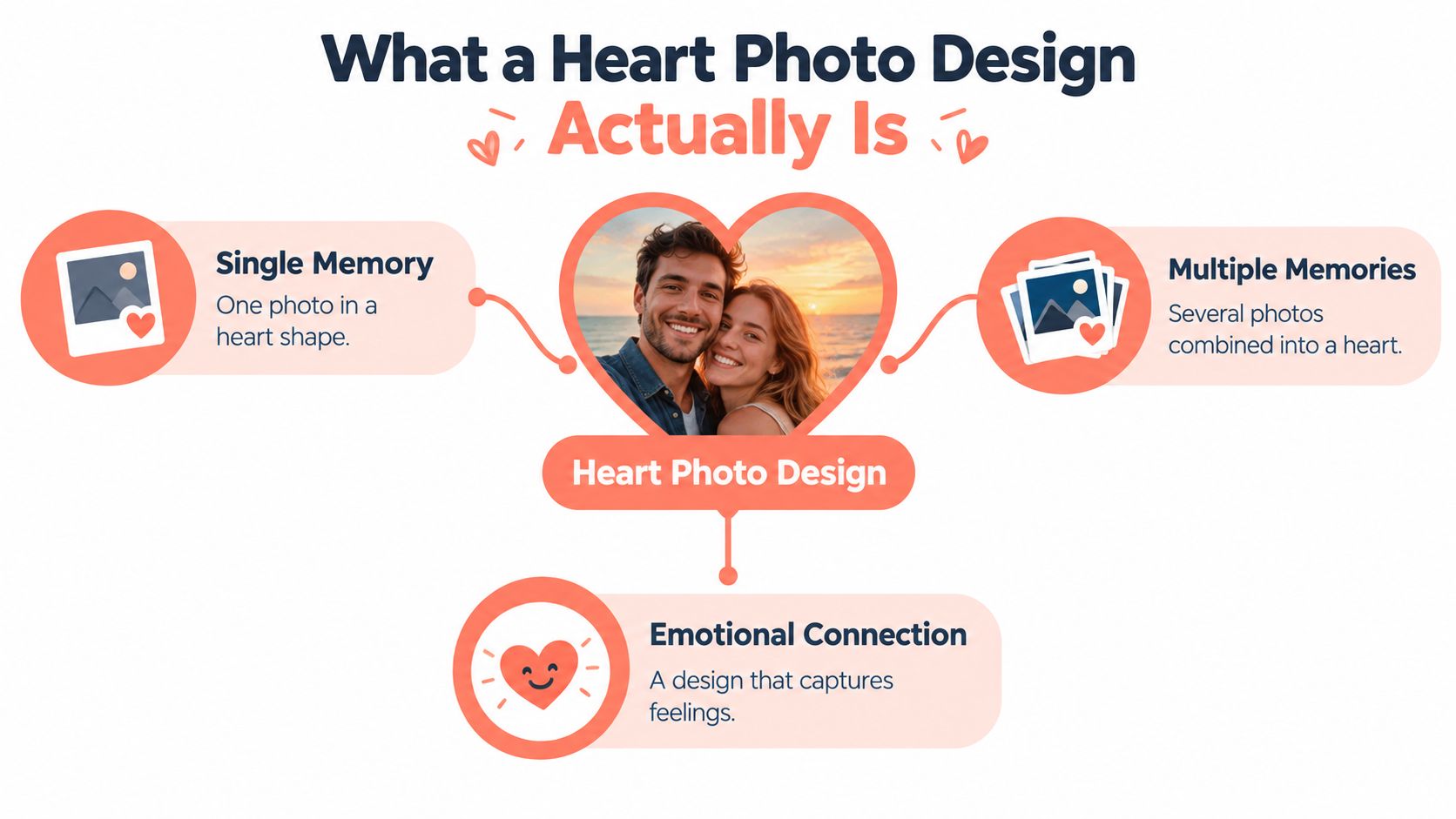
A heart isn't only a romantic symbol. It can hold a couple's wedding portrait, a parent and child, a grandparent surrounded by grandchildren, or a beloved pet. The same shape can feel affectionate, grateful, playful, or commemorative depending on the image and the person receiving it.
That flexibility has a long visual history. Disputed early examples of a heart shape associated with romantic love appear in the 1250s, including a miniature in a French manuscript, and the recognizable symbol became more established during the 15th century. The heart also carried meanings connected to devotion, charity, and the soul. (The history of the heart symbol)
Heart imagery can also evoke health, family, caregiving, and loss. Cardiovascular disease caused approximately 19.91 million deaths globally in 2021 and represented about 27% of all deaths worldwide in 2019, according to the American Heart Association. That context is a reminder to choose the meaning that fits your recipient. A heart can express romance, but it can also honor a caregiver, remember someone, or celebrate family connection.
The Building Blocks of a Heart Photo Layout
Think of a heart-shaped composition as a puzzle fitted inside an outline. Each photo is a piece, and the arrangement needs to make the whole shape recognizable without hiding the people or details that matter.
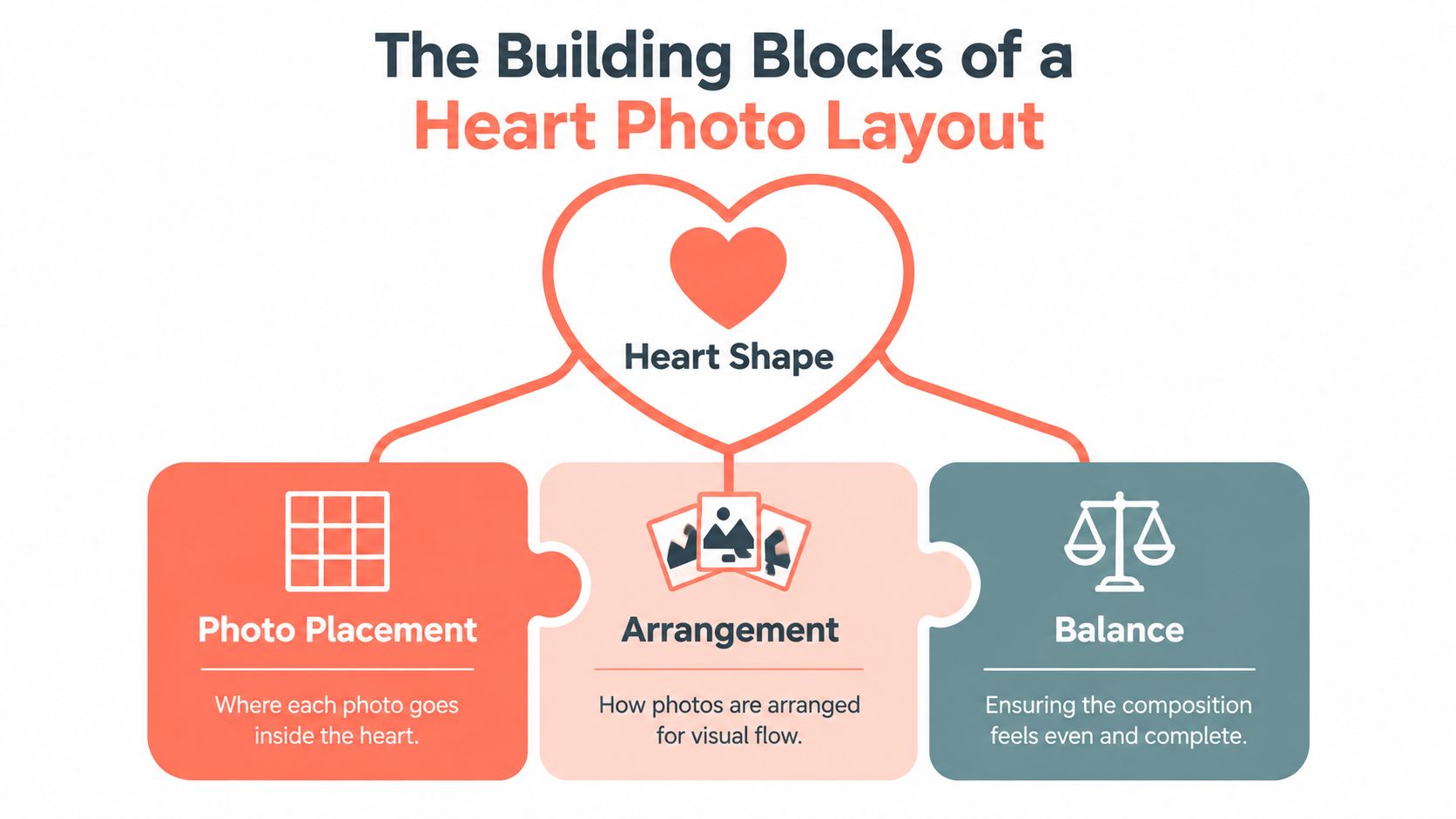
Start with the outline and focal point
A clear heart usually has a visible dip at the top and a distinct point at the bottom. Its two sides don't have to be perfectly identical, but a strong sense of balance helps people recognize the shape at a glance. If the outline is too crowded or one side is much heavier than the other, the composition may feel lopsided.
Next, decide where the eye should land first. For a couple's keepsake, that could be the central portrait. For a family collage, it might be the most expressive image, with smaller supporting photos arranged around it. Give faces room. When a face sits against the heart's curved edge, the crop can cut off hair, a shoulder, or part of an expression.
Choose how the images form the heart
A single-image heart masks one photo into the shape. It's simple and intimate, but the source image needs to leave enough room around its subject for the heart's edges. A multi-photo collage uses several images to create the heart silhouette or fill it, so each image becomes part of the overall rhythm. A heart layered over a background keeps a larger scene visible while using the motif as a frame or accent.
The number and size of photos affect how busy the design feels. If a collage cell is too small, a face may be hard to recognize. A quieter layout gives each picture more space; a fuller arrangement can feel lively and celebratory. For a hands-on introduction to arranging fabric shapes and motifs, B-Sew Inn's quilting pattern tutorial offers a useful look at how separate pieces can work together as a larger design.
Practical rule: Check the outline first, then check whether the most important faces still read clearly at a glance.
Popular Heart Photo Formats Worth Considering
The format sets the mood before anyone reads a message. A single portrait feels focused; a collage feels like a gathering of moments. Here are a few common directions to consider.
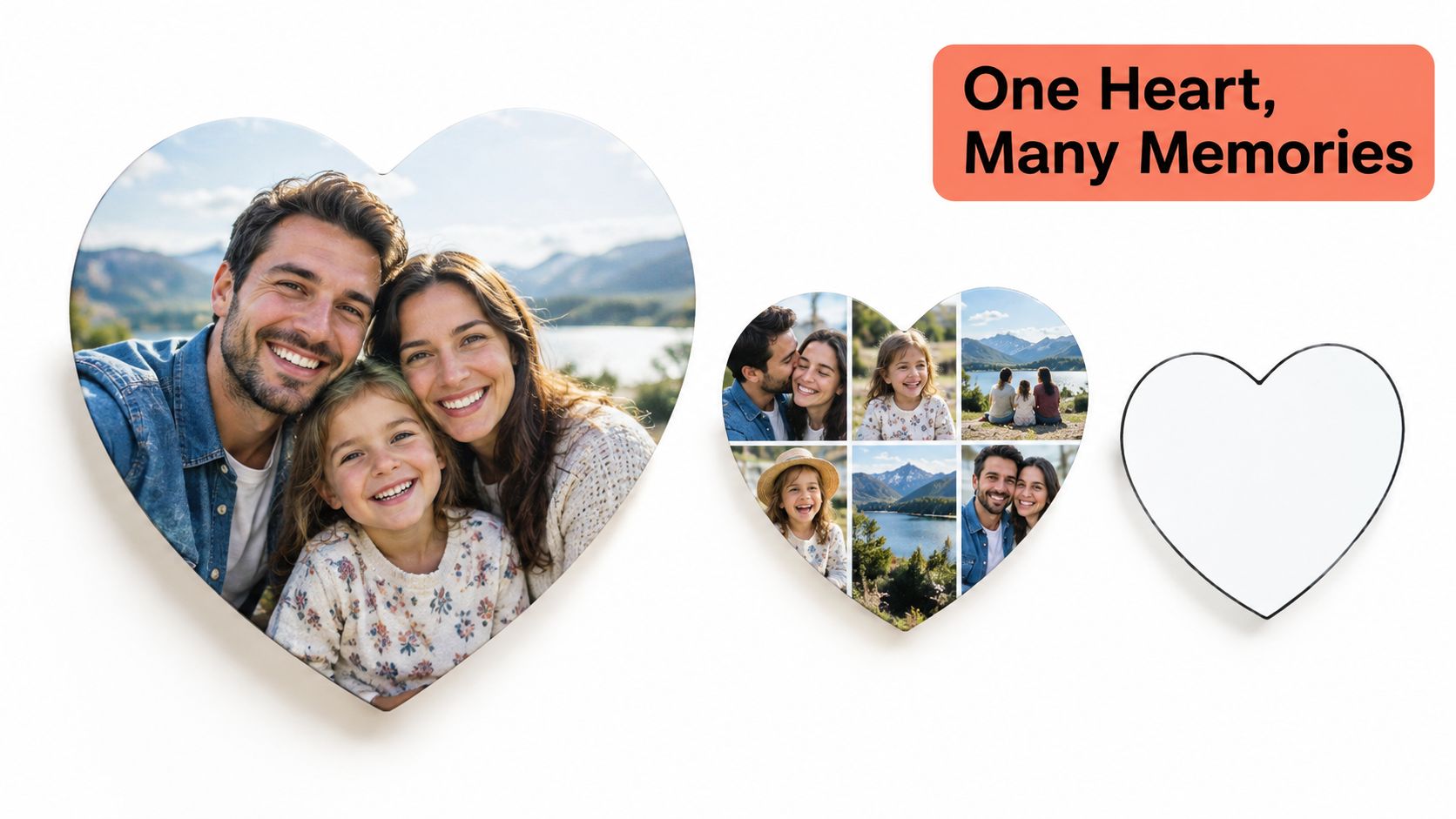
A single full-heart photo works well when one image says enough on its own: a wedding portrait, a parent holding a child, or a pet looking straight at the camera. It creates an intimate, uncluttered look that suits anniversaries, remembrance, or a small keepsake. Choose a picture with open space around the main subject so the heart crop doesn't crowd the face.
A collage inside a heart is better when the gift is about a shared story. Family gatherings, trips, and milestone celebrations can all contribute images. On a blanket, a larger surface can give faces more room than a small card can. If you're weighing different arrangements, these photo collage layout ideas can help you compare ways to group images without losing a clear focal point.
A heart silhouette over a family scene keeps one broad background visible while adding a heart-shaped picture or window as an accent. It can suit a family home, a new-parent gift, or a housewarming when the background itself is part of the memory. A floral or monogram frame creates a more decorative feel, with a central photo and a border that supports names, initials, or a short message. Keep the frame light enough that it doesn't compete with the image.
For couples choosing a wedding image or building a collection of portraits, looking at wedding photography gallery layouts can offer ideas for balancing a main image with supporting pictures. The same visual principle applies to a heart collage: let one photograph lead, and give the others a clear supporting role.
The format also affects the product. Custom Photo Blankets and matching pillows provide room for larger designs, while cards and compact keepsakes tend to suit one or two images. This video offers another visual reference for thinking about heart-shaped photo arrangements:
Choosing Photos That Print Beautifully
A photo can look crisp on your phone and still lose clarity when it's enlarged for a blanket. The difference often comes down to the original file, how the subject is positioned, and how much of the image the heart shape crops away.
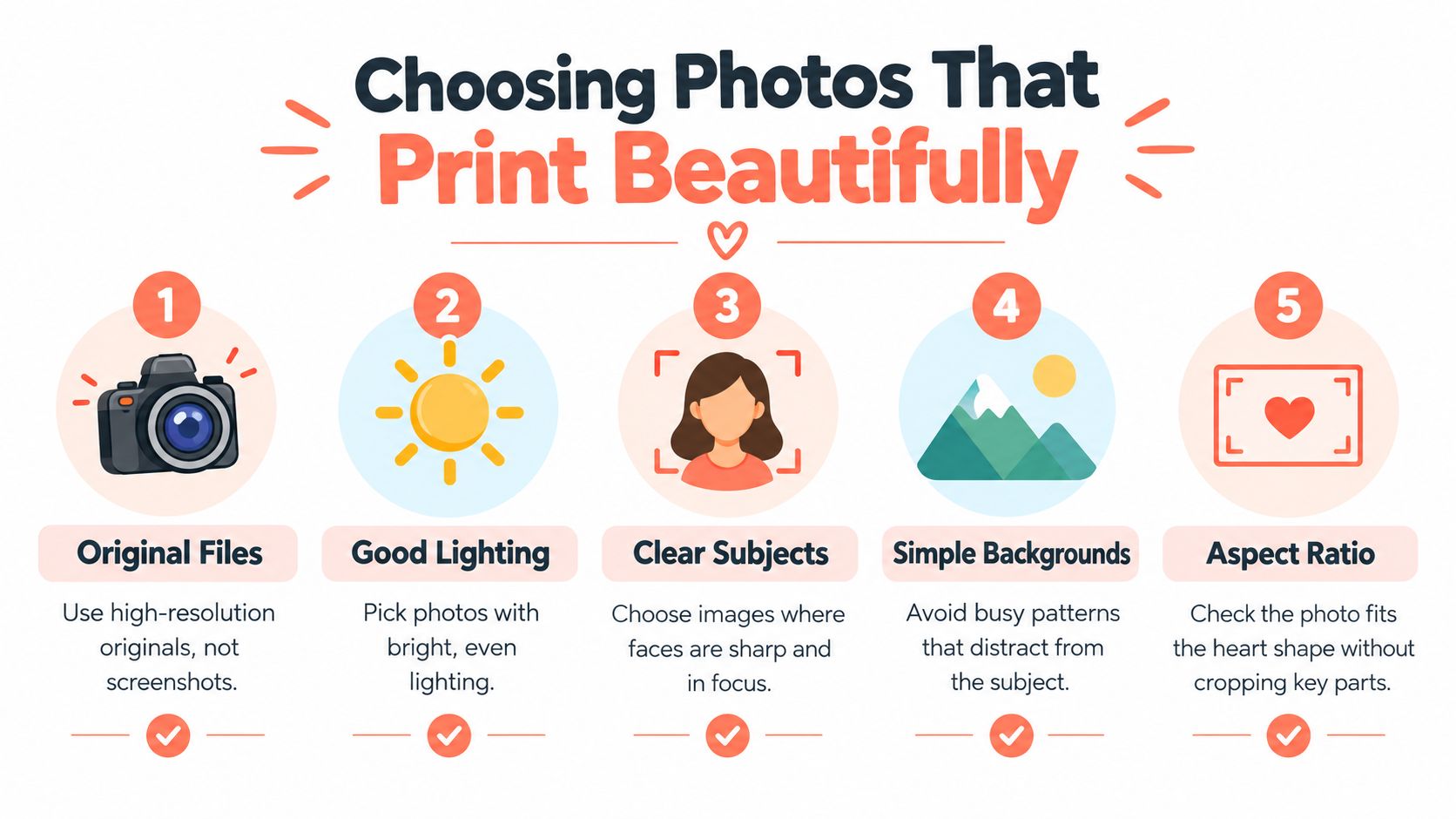
Before uploading, check the image itself rather than relying on a quick glance at the preview.
- Use the original file. Choose the photo saved directly from your camera or phone, not a screenshot or a heavily compressed social-media download. Extra compression can remove fine details that matter in a printed face.
- Look for even light. Bright, balanced lighting helps faces remain visible. Strong shadows can make expressions harder to read once the image is cropped or reduced.
- Keep faces away from edges. The curved outline may remove corners and sides. If someone's face sits close to the border, try another image or adjust the crop.
- Check small collage cells. Details that look clear on a full-screen phone may disappear when each photo is reduced. Preview the design at the size it will appear on the finished product.
- Avoid distracting backgrounds. Busy patterns can compete with faces and make a collage feel cluttered. A simple setting helps the subject stand out.
Contrast matters, but color alone shouldn't carry the design. A 2025 review of guidance for color-vision deficiency found that recommendations often focus on contrast ratios while overlooking other meaningful advice about color use. For a heart photo layout, that supports relying on spacing, luminance contrast, and a clear preview rather than asking viewers to distinguish red from green or subtle pastel shades alone. (Review of design guidance for color-vision deficiency)
Faces and expressions should do the emotional work. Decorative colors are there to support them.
If you're unsure whether a file will hold up at print size, review this guide to photo resolution for printing. Then check the design at a smaller viewing size, too. That simple test helps you see whether the main person, pet, or moment still stands out from across a room.
Matching Heart Photo Ideas to the Right Recipient
The same heart shape can feel romantic, family-centered, or playful. Start with the recipient and the moment you want the gift to mark, then choose the image and product around that purpose.
| Recipient or occasion | Heart photo idea | Product that fits |
|---|---|---|
| A partner celebrating an anniversary | One wedding-day portrait in a full-heart crop | A pillow for the couch or a blanket for shared downtime |
| Grandparents | A collage of children and grandchildren across family gatherings | A larger blanket that gives each photo room |
| A mother or new parent | A parent-and-baby portrait, or a small family collage | A cozy blanket for the living room or nursery |
| A pet owner | A pet portrait with a floral heart frame | A blanket for the sofa or a card with a personal note |
| Someone settling into a new home | A favorite family vacation scene with a subtle heart border | A decorative pillow for a couch or reading chair |
For an anniversary, one clear wedding-day photograph can feel more personal than a crowded collection. Grandparents may enjoy a collage that brings different family members together, while a pet owner might prefer one expressive portrait rather than a montage. Let the photo count match the story, not a desire to fill every available space.
In April and May, a baby-and-parent portrait or multigenerational family image can make a thoughtful Mother's Day gift. The National Retail Federation reported that 84% of U.S. adults planned to celebrate Mother's Day in 2026, with expected spending of $38 billion and average spending of $284.25 per person. The survey also reported that, among celebrants, 54% planned to buy for their mother or stepmother, 22% for a wife, and 13% for a daughter. (National Retail Federation Mother's Day survey)
In November and December, shift the idea toward holiday gifting. A pet portrait, a family collage, or a couple's favorite memory can turn a practical home item into something personal. The photo blanket gift guide can help you think through the occasion and recipient before settling on a layout.
Privacy and Consent When Uploading Family Photos
A family photo may show more than the people you intend to include. It can reveal a school uniform, a house number, mail on a table, or a familiar location in the background. Before you upload, look at the whole frame, including what's behind the subject.
Uploading an image to a product personalization tool isn't the same as posting it publicly, but you still need to understand how the image will be handled. Check the provider's privacy terms for how long it keeps uploaded images, whether you can request deletion, and whether it uses photos for marketing or training. If you're making a gift that includes a child, consider whether the child's parent or guardian is comfortable with the image being used.
A 2025 survey of 2,019 UK parents found that 72% considered keeping family photos private extremely important, 48% didn't know that major cloud services could access uploaded photos and associated data, and 97% wanted clearer explanations of how images would be used. (UK parents' views on photo privacy) Those findings make a practical point: don't assume people understand where their photos go after upload.
Before choosing an image, consider these quick checks:
- Remove identifying details. Avoid visible addresses, school logos, documents, or location clues.
- Ask before using someone else's photo. A brief conversation can prevent an uncomfortable surprise.
- Read the policy. Look for retention, deletion, and reuse terms before uploading.
- Keep the final design private if needed. A product order doesn't require you to post the image publicly.
For a further example of how photography privacy policies can be written for families, review privacy terms for metro Atlanta families. A keepsake doesn't have to be risky by default. Thoughtful image selection and clear consent help make the gesture considerate as well as personal.
Creating Your Heart Photo Blanket in Three Simple Steps
First, gather the pictures. Choose images that suit the format, then check lighting, focus, and crop space before you upload. For a collage, pick photos with a consistent feel, such as family portraits from the same gathering or a mix of everyday moments that belong together.
Next, arrange and preview. Upload the images to a customization tool, place them inside or around the heart, and adjust the crop until faces are clear. Look at the preview both close up and at a smaller size. If the heart feels too busy, remove a photo or give the central image more space.
Then, select the product and order. Choose the blanket size, fabric, and finish that fit the recipient's home and how they'll use it. Review production and shipping timelines before placing the order, especially if you're planning a holiday gift for November or December. The National Retail Federation's 2023 forecast estimated U.S. retail sales during those months would reach $957.3 billion to $966.6 billion, with shoppers spending an average of $875 on gifts and seasonal purchases. (NRF winter-holiday forecast)
Once the blanket arrives, follow its care label. A gentle routine such as washing cold, tumble drying low, and avoiding harsh detergents can help preserve the printed image and fabric.
That Blanket Co offers customizable photo blankets in throw, twin, and queen sizes, with heart photo and collage designs that can turn a favorite memory into a cozy keepsake. Choose the image that feels right, explore the available styles, and visit That Blanket Co to start creating your design.