


Personalized Memorial Throw Blankets Guide
The most popular advice about personalized memorial throw blankets is also the least considerate: give one immediately, use the most emotional photograph, and make the design as solemn as possible. That approach puts the giver's schedule and feelings ahead of the mourner's needs.
A memorial blanket should offer comfort, not create an obligation to grieve publicly or on someone else's timetable. The strongest designs balance recipient choice, image quality, durable construction, and flexible presentation. A soft throw can become a meaningful household keepsake, but only when the person receiving it feels ready to live with the memory in that form.
Rethinking Memorial Gifting and Timing
A personalized memorial throw blanket doesn't have to arrive immediately after a death. It also doesn't need a large, close-up portrait, dark background, or formal memorial message. Those choices may feel appropriate to one person and painfully intense to another.
A 2024 qualitative study of bereaved family members who received memory keepsakes found that participants valued photographs and physical mementos as sources of comfort and continuing connection. The study also emphasized choice, equity, and timing as important parts of meaningful bereavement care. The findings support the value of tangible remembrance, but they don't establish a universal delivery date or prove that a blanket will feel therapeutic for every recipient. Read the study on memory keepsakes and bereavement care.
Let the recipient set the emotional volume
Ask a practical question before designing: Would this person want the memory displayed across a couch, bed, or chair? Someone may cherish a small photograph in a private room but feel overwhelmed by a full-throw portrait in a shared living space.
Look for signals rather than assuming. Has the recipient asked for photographs, clothing, or other keepsakes? Have they talked about creating a memorial space? If they've avoided visible reminders, choose a quieter design or wait. A collage of ordinary moments, a favorite scene, a name, or a short message can feel gentler than a single intense image from a hospital, funeral, or final family gathering.
Practical rule: Ask whether the recipient wants a memorial blanket before you finalize a highly visible design. Consent can be simple, and it protects the meaning of the gift.
Timing also depends on the relationship and the nature of the loss. A blanket for a surviving partner, parent, child, pet, or someone grieving a miscarriage may call for different imagery and different levels of contact. There's no responsible universal timeline.
For broader inspiration on comfort-focused gifting, these thoughtful ways to keep her warm can help you think beyond a single memorial product. For seasonal planning, this photo blanket gift guide can help you match the gesture to the occasion without turning grief into a deadline.
Evaluating Fabric Blends and Print Durability
A beautiful memorial image means little if fine details weaken after repeated washing. Fabric, print method, pretreatment, ink, binder, curing, and finishing work as one system, so shoppers should evaluate the finished blanket rather than trust a broad phrase such as “fade resistant.”
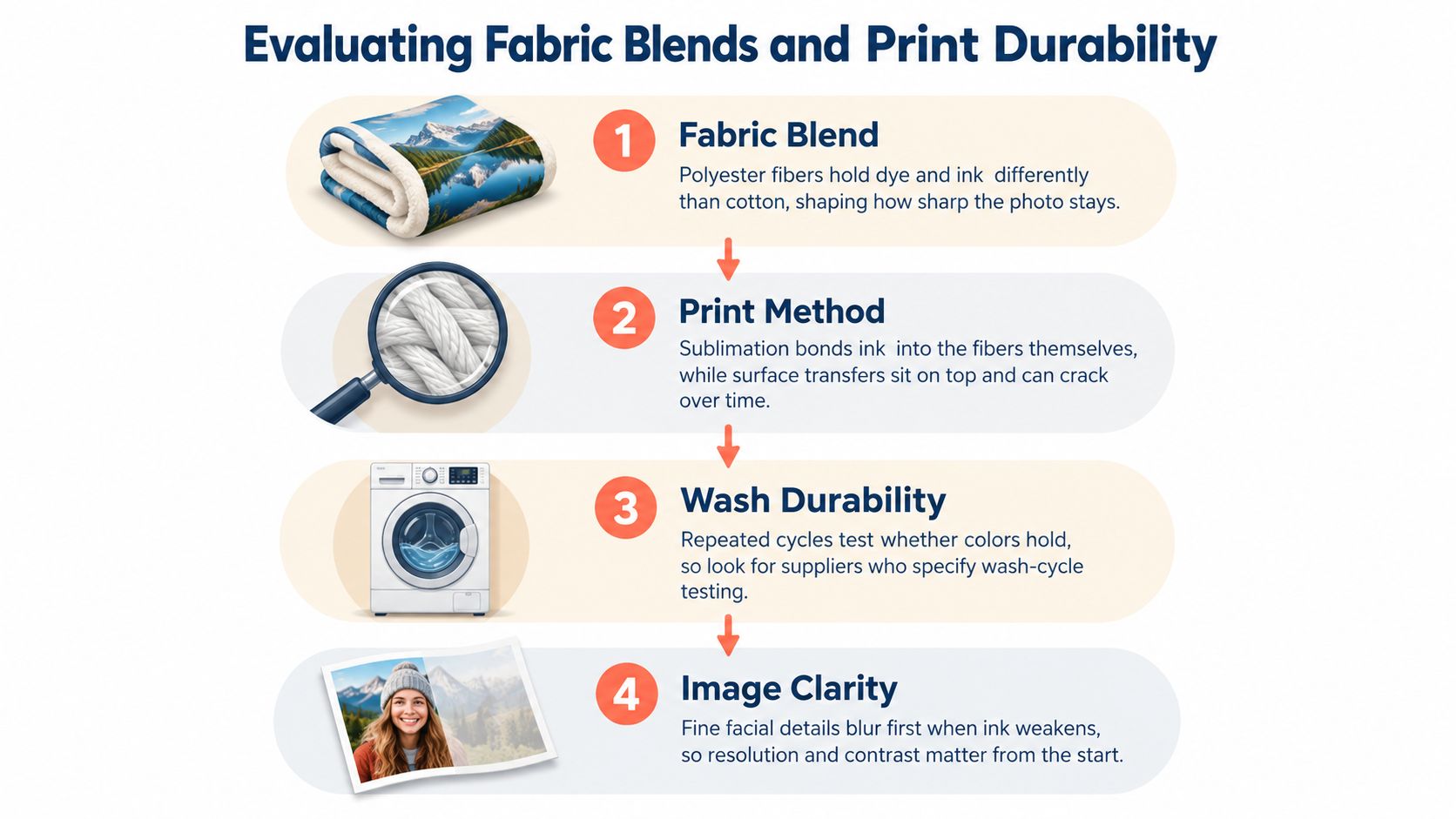
Polyester and cotton don't hold color in the same way. Polyester can support vivid photographic printing, but its performance depends on the ink and fixation process. Research on digitally printed polyester found that wash fastness can be measured through K/S color-strength values and CIE ΔE comparisons. In untreated polyester samples, one study observed an almost 60% reduction in color strength after the first wash. Review the textile-printing research on wash fastness.
What to ask before ordering
A supplier should be able to explain how the actual blanket construction was tested. Polymer pretreatment can improve pigment fixation on cotton, while synthetic binders can improve wash fastness on polyester. That means a high-resolution file alone won't protect a portrait from fading or loss of contrast.
Use these checks:
- Fabric blend: Confirm whether the throw uses polyester, cotton, or a blend, because the fiber affects ink behavior and surface appearance.
- Print process: Ask whether the image is bonded into the fibers or sits primarily on the surface.
- Wash testing: Look for testing on the finished blanket, not only on a separate fabric swatch.
- Image regions: A responsible test should inspect skin tones, black text, dark clothing, and saturated colors separately.
- Crocking and abrasion: Washing isn't the only stress. Rubbing can affect a printed face or message before the fabric shows structural damage.
Material care also matters outside memorial textiles. This guide to material-specific yoga mat care illustrates why cleaning advice should match the material rather than rely on one generic routine.
Before choosing fleece, sherpa, or another construction, compare how each surface affects softness, contrast, texture, and care. A practical custom blanket materials guide can help you identify which fabric best matches everyday use and the intended display setting.
Selecting Photos That Balance Quality and Meaning
The technically sharpest image isn't always the right memorial image. A candid photograph with imperfect lighting may carry more emotional weight than a polished portrait that feels unlike the person everyone remembers.
Start with the original file from a camera or phone. Avoid screenshots, compressed social-media downloads, and images repeatedly sent through messaging apps. These versions can lose detail, especially in hair, facial features, dark clothing, and background edges. Use the largest original available, then check the design preview at the final blanket proportions.
Separate emotional suitability from technical quality
Ask two separate questions:
- Does this image feel right for the recipient?
- Can the image reproduce clearly on fabric?
A photograph can pass one test and fail the other. A slightly blurred candid may be emotionally perfect but need a tighter crop or softer layout. A sharp studio photograph may reproduce beautifully but feel too formal or distant.
Textile-imaging research shows that color replication varies by printing process and fabric. Color accuracy isn't an automatic property of every printed textile, so prepare the file with the chosen material and production method in mind. Review research on color replication in textile imaging.
Keep faces and important text away from the edges. Check whether a crop removes a hand, pet, hat, or familiar setting that gives the photograph its meaning. If the original image is dark, compare a lightly brightened version with a grayscale treatment. Don't over-edit skin tones or add dramatic filters. Memorial designs usually benefit from honest color and clear contrast.
Build a calmer composition
A single portrait creates strong visual focus. A collage can represent a fuller relationship, especially when several relatives have different favorite photographs. Use fewer images if small faces would become difficult to recognize, and keep names, dates, or messages short enough to read at a glance.
Neutral gray patches are useful in professional color-control workflows because they help reveal shifts in brightness and color balance. You don't need to create a laboratory file for a household order, but you should inspect whether faces look unnaturally orange, gray, or dark in the preview.
For physical display planning, guidance on choosing a 10 by 13 frame offers a useful reminder: proportions influence how a memory is presented. The same principle applies to a throw. Review the crop, orientation, contrast, and visual breathing room before approving the design, then consult this guide to the best photo resolution for printing if the upload tool flags image quality.
Designing for Holidays and Mother's Day
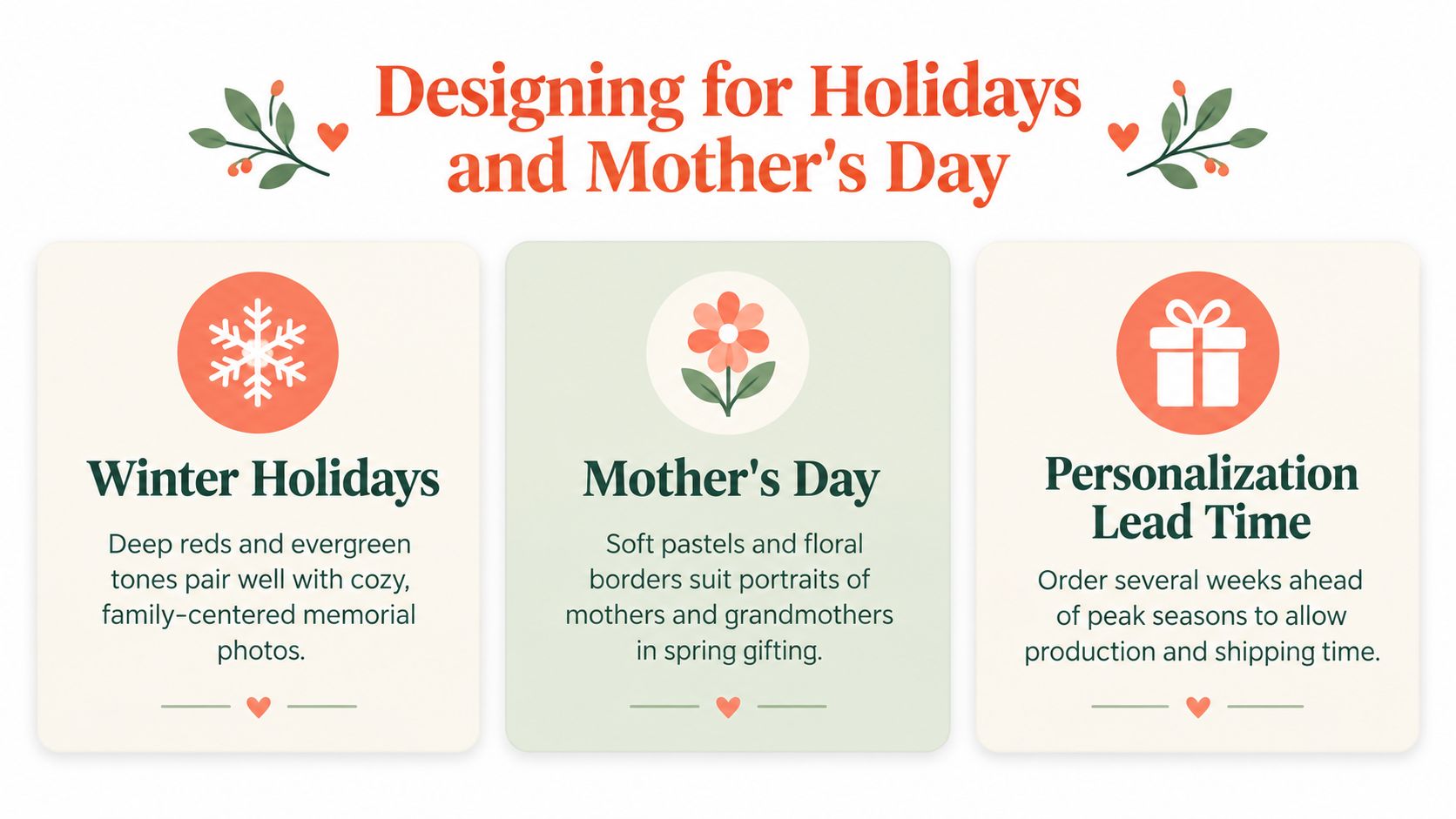
Memorial blankets fit seasonal gifting best when the design reflects the occasion without turning remembrance into decoration. November and December should focus on holiday gifting, when families naturally gather, revisit traditions, and look for gifts that last beyond the day they're opened.
The National Retail Federation reports that holiday sales have averaged about 19% of total U.S. retail sales over the past five years, with spending concentrated in November and December. Its holiday forecast estimated total seasonal spending at approximately $1.01 trillion to $1.02 trillion, while consumers budgeted an average of about $890 per person across gifts, food, decorations, and other seasonal purchases. Review the NRF winter holiday figures.
Match the layout to the season
For winter holidays, use family photographs with restrained seasonal accents. Deep red, evergreen, cream, or warm neutral borders can connect the blanket to existing traditions without overwhelming the memorial image. A small seasonal message may work better than a large holiday graphic.
Late shopping makes production and shipping important. NRF data indicated that shoppers had completed only 51% of their holiday shopping as of early December, and an estimated 158.9 million people planned to shop on the last Saturday before Christmas. See the NRF holiday shopping data. Order deadlines should come from the supplier's current production schedule. Don't promise last-minute delivery unless the specific product and destination support it.
April and May should center on Mother's Day gifting. A memorial throw can honor a mother, stepmother, grandmother, or another maternal figure with family photographs, handwritten-style text, or a floral border. Use soft pastels and gentle botanical details when they suit the recipient, but don't force a traditionally feminine style onto a person whose personality calls for something simpler.
NRF and Prosper Insights & Analytics projected 2025 Mother's Day spending at $34.1 billion, with 57% of celebrants shopping for a mother or stepmother. Read the Mother's Day spending projection. A blanket offers a lasting alternative to flowers or a card because it can remain part of the home, but its emotional visibility still makes recipient preference the deciding factor.
Protecting Image Quality Through Proper Care
Treat a memorial blanket as a textile print, not an ordinary throw. Every wash exposes the image to water, detergent, mechanical movement, heat, and friction. Dark text, facial features, and deep clothing colors often reveal changes before the blanket appears structurally worn.
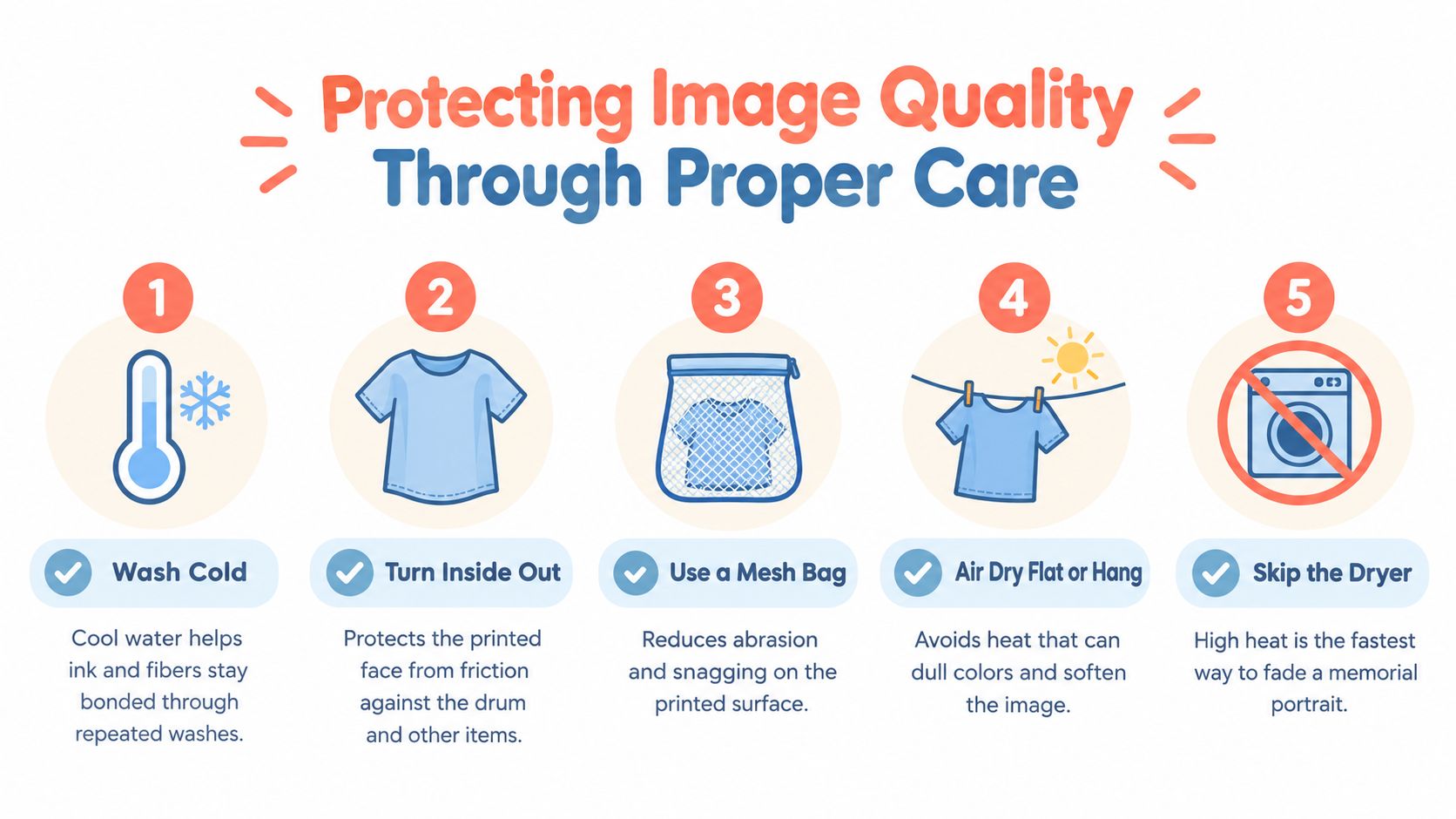
Follow the supplier's tested care label first. If the label permits machine washing, use a cool or cold cycle, mild detergent, and the gentlest practical setting. Avoid bleach and optical brighteners unless the manufacturer explicitly approves them. Turn the blanket inside out when possible, reduce rubbing, and air dry flat or hang it away from direct sunlight.
Use a documented care specification
ISO 105-C10 defines procedures for measuring textile color resistance under household washing conditions. A meaningful care specification should identify the tested wash temperature, detergent type, drying method, and any exclusions such as bleach or optical brighteners. Review ISO 105-C10 textile laundering guidance.
Don't assume “machine washable” means the image will remain unchanged under every cycle. Compare the care label with the conditions used during testing, and photograph the blanket before its first wash so you can notice gradual shifts in skin tones, black lettering, and saturated colors.
Store the throw clean and completely dry. Fold it loosely rather than compressing it under heavy items, and keep it away from prolonged direct sunlight. For long-term preservation, save the original photographs and message text separately. The blanket is a tactile display copy, not the only archive of the person's visual history.
Presenting the Gift with Empathy and Flexibility
Consider two people receiving the same blanket. One opens it at a family gathering, smiles at the photograph, and wraps it around their shoulders. The other sees the same image and needs to put the blanket away immediately. Neither reaction is wrong, and the giver can't predict the emotional impact from the design alone.
A 2024 qualitative study examining bereaved family members who received memory keepsakes concluded that such items may support bereavement care while emphasizing the importance of choice and timing. Read the discussion of memory keepsakes and bereavement care.
Make the delivery low pressure
Give the recipient control over when and how the blanket enters their space. You can write an open-ended card such as, “I made this for you, and there's no pressure to open or use it now.” You can also ask whether they'd prefer delivery later, a private handoff, or a package left unopened until they choose the moment.
A quieter design may be the right decision. Consider a small name, a meaningful date, a pet, or a collage of ordinary moments instead of a dominant close-up portrait. The purpose isn't to maximize emotional intensity. It's to create an object the recipient can approach, display, use, or store according to their own needs.
Digital preservation should sit alongside the blanket. Keep the original image files, record who appears in each photograph, and save the wording used on the design. A shared digital folder, memorial page, or private family archive can preserve context that a printed textile can't hold.
The best memorial gift doesn't demand a reaction. It leaves room for one.
If the recipient later wants a more visible tribute, a second blanket, pillow, framed photograph, or expanded collage can come at their request. That flexibility respects changing grief rather than treating the first gift as a final statement.
That Blanket Co offers Custom Photo Blankets in throw, twin, and queen sizes, including memorial photo designs with collages, messages, and important dates. Visit That Blanket Co to review the available layouts, upload a meaningful image, and create a keepsake at a pace that respects the person receiving it.