


Printing Photos on Pillows a Complete How-To Guide
Imagine turning your favorite photo into a soft, huggable pillow. A candid holiday laugh, a sweet Mother's Day moment, or your pet's goofy grin—these are the memories that bring warmth into our homes. Printing photos on pillows is an incredible way to take those moments off your phone and put them right into your living space.
This guide will walk you through everything, whether you're crafting a one-of-a-kind gift for the holidays or designing a unique piece for yourself.
Turn Your Memories Into Tangible Comfort
Printing a photo on a pillow does more than just create a cool decoration. It transforms a simple digital image into something you can hold, a functional and deeply personal piece of your home. It’s a tangible connection to the people, places, and moments that truly matter. You're not just making a novelty item; you're creating something with heart that adds emotional warmth and a touch of your own style to any room.
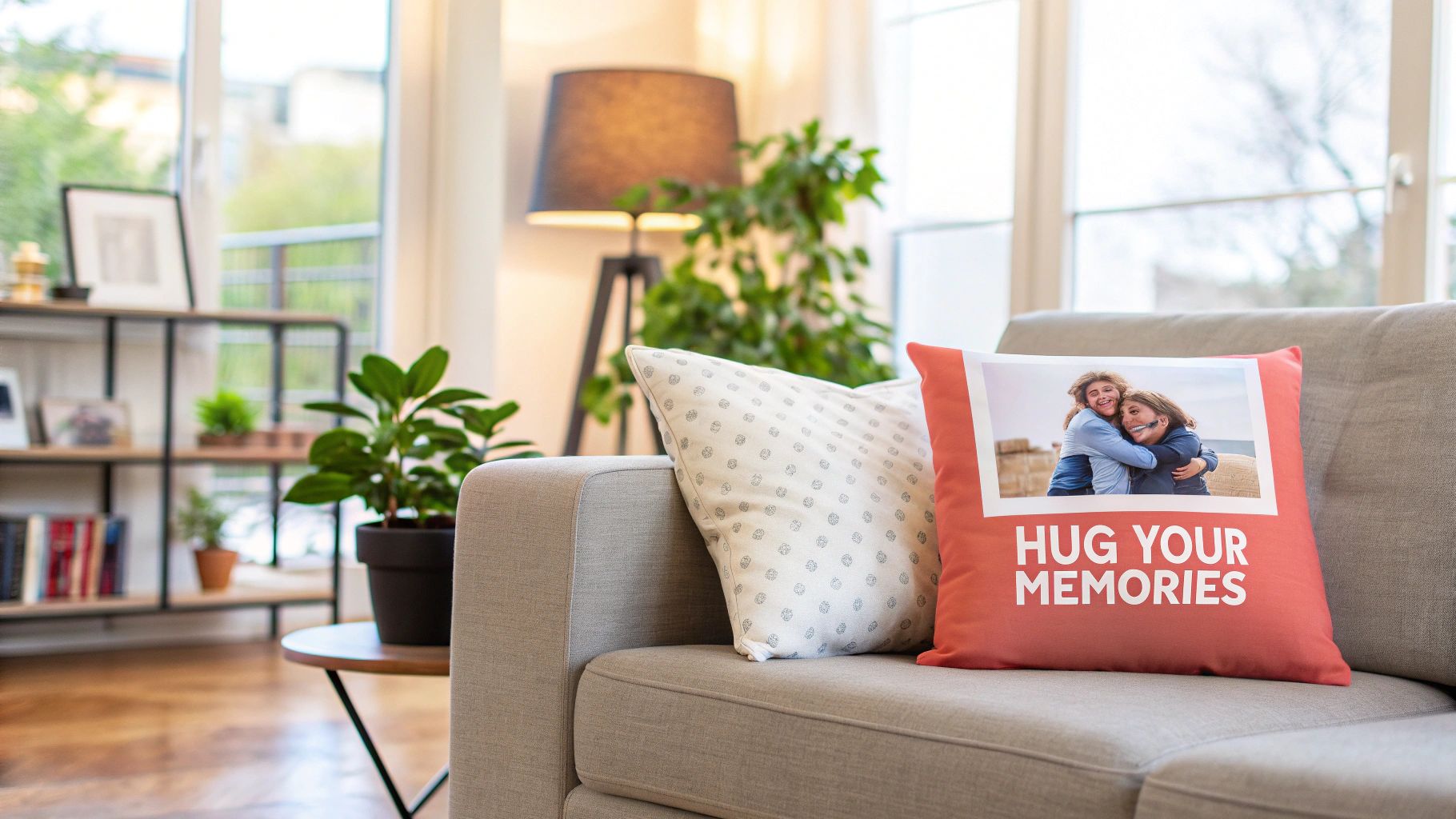
From picking the perfect picture to understanding the printing tech that makes it last, this guide has you covered. We'll make sure your memory is brought to life beautifully and vibrantly on fabric.
More Than Just a Pillow
Once you get the hang of creating a stunning photo pillow, you'll see how these same ideas can apply to other personalized keepsakes. Think about pairing your new pillow with a soft, inviting Custom Photo Blanket. Suddenly, you have a perfectly matched set that makes an incredibly thoughtful gift, especially during the holiday season. The ability to customize a whole range of items lets you build a cohesive collection of memorable pieces for your home.
Before you dive into designing, it helps to think about the decorative impact. Getting familiar with different pillow styles like shams can inspire how your memory translates into tangible comfort, elevating your custom item from a simple cushion to a sophisticated design accent.
Why Create a Photo Pillow
Making a photo pillow is an accessible and genuinely rewarding project. You don't need to be a seasoned decorator to get a meaningful result. The process is straightforward, and the final piece is always special.
Here are a few reasons people love them:
- Unique Gifting: They are unforgettable gifts for Christmas, anniversaries, or birthdays.
- Preserving Memories: It’s a creative way to keep cherished moments—from family vacations to everyday snapshots—visible and close.
- Personalized Decor: A photo pillow adds a layer of personality to your living room or bedroom that store-bought decor just can't match.
A well-chosen photo on a pillow does more than decorate a couch; it tells a story. It becomes a conversation starter and a constant, cozy reminder of a happy moment.
Ready to see what’s possible? This guide will give you all the technical and creative details you need to bring your vision to life.
Picking the Perfect Photo for Your Pillow
The secret to a jaw-dropping custom pillow? It all starts with the right photograph. Not every snapshot is destined for fabric greatness; what looks amazing on your phone screen might not translate well once it’s printed. Let's walk through what makes an image truly shine, so your finished pillow is something you'll absolutely love.
First things first: the most critical element is using a high-resolution image. Think of your digital photo as a mosaic made of tiny colored squares called pixels. When you blow that image up to fit a pillow, you're stretching that mosaic. If you don't start with enough pixels, you end up with a blurry, pixelated mess where you can practically see the individual squares. No one wants that.
Get the Technical Details Right
To avoid a blurry outcome, always, always start with the original, full-size photo straight from your camera or smartphone. Stay away from photos you've saved from social media or that have been sent through messaging apps. These platforms almost always compress images to save space, stripping away crucial data and quality in the process. You want a photo that’s crisp and clear, where all the little details pop.
- Pixel Dimensions: For a standard 18x18 inch pillow, an image that's at least 2700x2700 pixels is a fantastic starting point.
- DPI (Dots Per Inch): Aim for a photo with at least 150 DPI at the final print size. While 300 DPI is the gold standard for paper, 150 DPI looks great on fabric.
- File Format: JPEGs are the most common and work just fine. But if you have a PNG or TIFF file, even better—they often hold onto more quality.
If you’re scratching your head wondering about your photo's quality, our guide on the best photo resolution for printing breaks it all down for you. It's a lifesaver for checking your files before you hit "upload."
Choose a Photo That Makes an Impact
Beyond the tech specs, the photo’s subject and lighting are what will really make your pillow stand out. The best photos for pillows usually have a single, clear focus. A portrait where a person's face is front and center, a close-up of a beloved pet, or a stunning landscape with a strong focal point—all of these work wonderfully.
Images with super busy or cluttered backgrounds can sometimes distract from what’s important once they're on fabric. A simpler background helps your main subject pop, giving the pillow a much more professional and polished look. This is especially true if you're creating a gift for the holidays.
Bright, well-lit photos almost always print more vividly than dark, shadowy ones. Natural outdoor lighting is your best friend for capturing vibrant colors and sharp details. If your favorite photo is a little on the dark side, don't worry! A quick tweak to the brightness or contrast in a simple editing app can make a world of difference. That one small step can take a good photo to a great one, ensuring your memory looks its absolute best on its new canvas. This same rule applies when you're making bigger items like Custom Photo Blankets, where image quality is even more crucial.
Understanding Print Methods and Fabric Choices
Once you’ve nailed down the perfect photo, it’s time to think about the technology that brings it to life on fabric. The printing method and material you choose will shape everything—the final look, the texture, and how long your pillow will last. Getting to know these techniques is the secret to creating a custom pillow that not only looks incredible but feels amazing, too.
Different printing processes give you very different results. Some methods actually dye the fabric fibers, creating a soft, seamless feel you can’t even tell is there. Others lay ink on top of the material, which can change the texture. Knowing the difference helps you match your photo and your expectations to the best possible outcome.

This visual is a great reminder that a stunning photo pillow starts with a strong technical and creative foundation—long before the printing even begins.
Key Printing Technologies
Three main methods dominate the world of custom fabric printing. Each has its own strengths, whether you’re after vibrant color, a super-soft feel, or crisp, intricate detail.
- Dye-Sublimation: This is a top-tier choice for a reason. It uses heat to turn solid dye into a gas that sinks deep into the fabric fibers. The result is a permanent, brilliant image you can’t even feel. Best of all, it won’t crack or peel over time.
- Direct-to-Fabric (DTF): Think of this like a high-end inkjet printer for textiles. It applies ink directly onto the fabric, which is fantastic for capturing fine details and a huge range of colors. It’s a great pick for complex photographs.
- Heat Transfer: With this classic method, your design is printed onto special transfer paper and then applied to the fabric using heat and pressure. It's a versatile and common option, but it can sometimes leave a slightly stiffer feel on the fabric compared to dye-sublimation.
Comparing Photo Pillow Printing Techniques
To make things even clearer, here’s a quick side-by-side look at how these three printing methods stack up. Each technique shines in different scenarios, so this table should help you pinpoint the perfect one for your project.
| Printing Method | How It Works | Best For | Feel & Durability |
|---|---|---|---|
| Dye-Sublimation | Solid dye turns to gas and infuses into fabric fibers. | Vibrant, full-color images on polyester fabrics. | Ultra-soft feel, seamless finish. Extremely durable; won't crack or peel. |
| Direct-to-Fabric (DTF) | Ink is printed directly onto the fabric, like a paper printer. | Detailed, complex photos with a wide color spectrum. | Soft and flexible. Good durability, but can fade slightly over many washes. |
| Heat Transfer | Design is printed on special paper and heat-pressed onto fabric. | Cost-effective small runs and simple graphics. | Can feel like a thin layer on top of the fabric. Durability varies; can crack over time with heavy use. |
Ultimately, the right choice comes down to what you value most. For a truly huggable keepsake that will stand the test of time, dye-sublimation is almost always the way to go.
For a truly huggable keepsake, dye-sublimation is often the top choice. Because the image becomes part of the fabric itself, the pillow remains incredibly soft to the touch, which is essential for an item meant for comfort.
Finding The Perfect Fabric Match
The fabric you choose is just as important as how it's printed. The material impacts everything from how saturated your photo’s colors look to the pillow's overall feel and toughness.
The best fabrics for photo printing are typically polyester-based or polyester blends. These synthetic fibers work beautifully with modern printing dyes, especially for dye-sublimation, producing sharp, brilliant images.
Some of the most popular choices include:
- Velvet: Gives you a luxurious, soft feel with a slight sheen that can make colors look incredibly rich and deep.
- Faux Suede: Provides a smooth, matte finish that’s wonderful for detailed photos and has a comfortable, soft texture.
- Brushed Polyester: Known for being exceptionally soft and cozy, making it the ideal choice for pillows meant for snuggling.
This synergy between the print method and the fabric is what creates a beautiful, long-lasting product. The same idea applies when you’re making larger items like Custom Photo Blankets, where a soft, durable fabric is key for both comfort and print longevity.
Modern methods like dye-sublimation printing are also gaining favor for their environmental benefits and production flexibility. These techniques allow for quicker turnarounds and even make it possible to produce high-quality printed pillows using recycled materials. If you’re curious, you can discover more insights on digital printing trends and how they are shaping the market.
How to Design and Order Your Custom Pillow
Ready to turn that perfect photo into a cozy pillow? This is where your chosen image becomes a real keepsake, and the process is surprisingly simple—guiding you from a file on your computer to a finished product for your couch. It all starts with the easiest part: uploading your favorite picture.
Once your photo is uploaded, our system usually gives it a quick check for size and file type. To make sure your final print is sharp and clear, it's always a good idea to check these things yourself beforehand. Our guide on photo requirements for printing has a helpful checklist you can follow.
Using the Design Tool
This is where the real fun begins. The online design tool will show you a live preview of your pillow, letting you get the positioning of your image just right. You can drag, zoom, and rotate the photo until you love how it looks. It's your chance to see almost exactly how the final product will turn out.
Pay close attention to the edges and seam lines you see in the preview. A common mistake is putting important details—like faces or text—too close to the border. They can get sewn into the seam or cropped off, and nobody wants that! Keep all the key elements of your photo comfortably inside the safe printing area.
Finalizing Your Creation
Before you hit "add to cart," take one last look. Is the cropping just how you want it? Are there any typos in the text you added? This final check is your best defense against any little slip-ups.
Think of the preview tool as your final proofread. What you see on the screen is a very close representation of what will arrive at your door, so it’s worth taking a few extra seconds to ensure every detail is perfect.
The process of printing photos on pillows has become so accessible, and it’s part of a huge market for personalized goods. Here in the United States, the online photo printing industry is expected to pull in $4.7 billion in 2025. It’s a busy space, with around 843 businesses all working to meet the demand for unique items. If you're curious about the numbers, you can read the full industry analysis on IBISWorld.com.
By the way, this same easy design process works for our other custom items, too. After you’ve designed your pillow, you can create a matching Custom Photo Blanket in just a few clicks. They make a fantastic, coordinated gift set—perfect for making the holidays feel extra special.
Keeping Your Photo Pillow Looking New
Your custom photo pillow has arrived, and it's perfect. Now, how do you keep it that way?
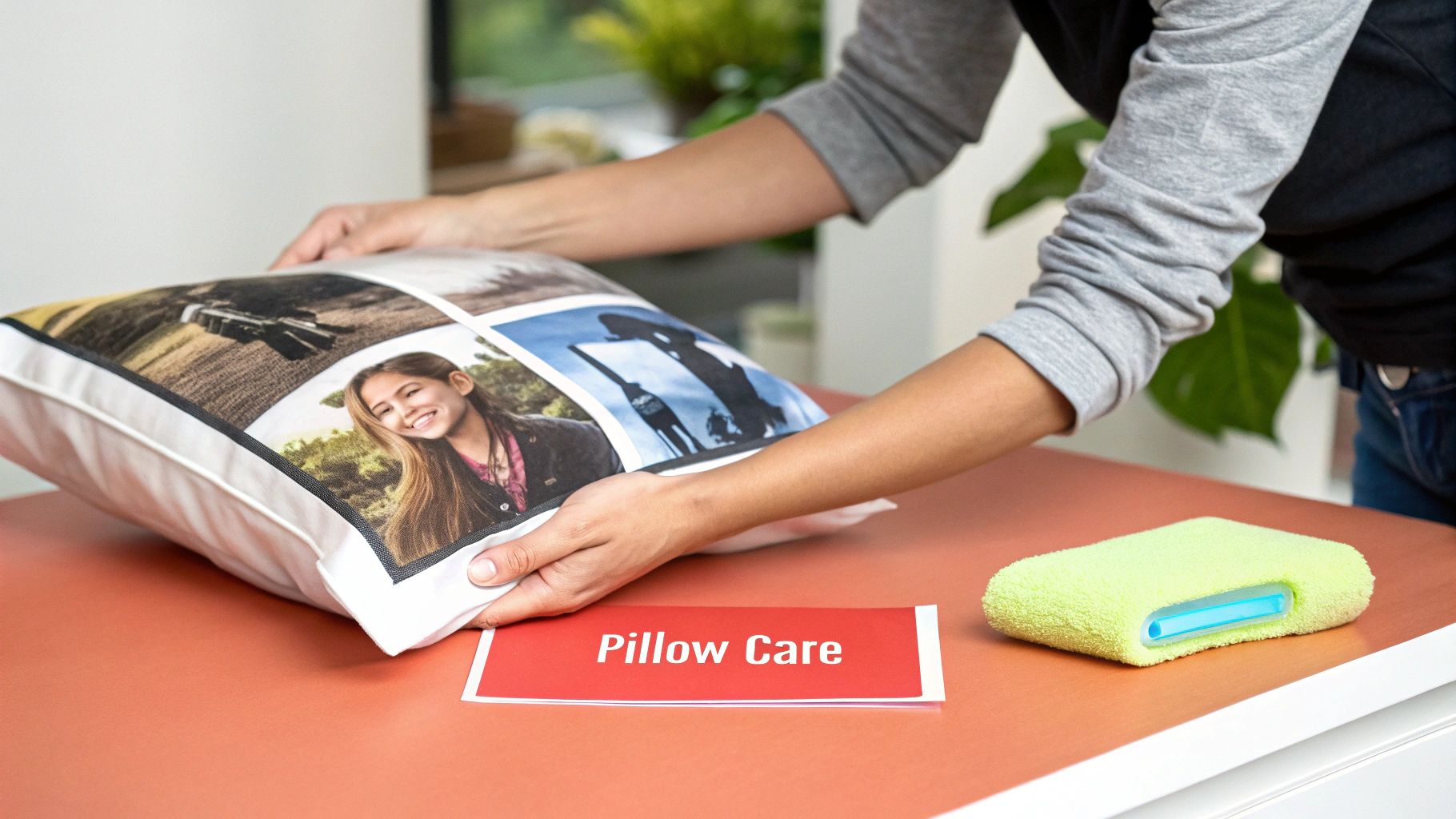
Proper care is the secret to preserving that vibrant print and soft fabric. With just a few simple habits, you can make sure those cherished memories stay bright and beautiful for years. The goal here is to protect the print's integrity while keeping the pillow itself clean and fluffy.
Gentle Cleaning for Lasting Vibrancy
Life happens. For minor spills or smudges, spot-cleaning is your best friend. Just grab a damp cloth, add a tiny bit of mild, bleach-free detergent, and gently dab the spot. Try to avoid any vigorous scrubbing, as that can be rough on the fabric fibers and the printed image.
When it's time for a more thorough wash, most photo pillows can handle the machine. Just follow these best practices:
- Remove the Cover: First things first—always unzip the cover and take it off the pillow insert before washing.
- Go Cold: Wash the cover on a gentle cycle using cold water only. Hot water is a fast track to faded colors, so it's best to steer clear.
- Use a Mild Detergent: Stick with a gentle, phosphate-free detergent. This will help protect the print's vibrancy.
- Turn It Inside Out: For an extra layer of protection, turn the cover inside out before tossing it in the machine. This shields the printed image from friction during the wash.
These same principles are great for other custom textiles you might have, like a Custom Photo Blanket, helping your whole collection of memories stay in pristine shape.
Drying and Daily Maintenance
How you dry the cover is just as important as how you wash it. To prevent shrinking or print damage, it’s always best to air-dry the pillow cover. You can lay it flat on a clean surface or hang it on a line, but try to keep it out of direct sunlight. Too much UV exposure can make the colors fade over time.
If you absolutely must use a machine, be sure to tumble dry on the lowest heat setting possible. High heat is the enemy of printed fabrics, so when in doubt, go low and slow.
Proper maintenance is key to ensuring your cherished photo pillow remains vibrant and comfortable for years. For a comprehensive guide on how to wash a pillow, ensuring its longevity, refer to this resource.
Finally, give your pillow a good fluff every now and then to help it keep its shape. By following these simple tips, your pillow won't just stay clean—it will continue to be a soft, beautiful reminder of your favorite moments.
Your Photo Pillow Questions, Answered
When you're designing a custom piece, it's natural to have a few questions pop up. From the nitty-gritty tech specs to figuring out the perfect gift, getting clear answers makes the whole process feel smoother and more fun. We get these questions all the time, so we've gathered them right here to give you the confidence to create something amazing.
What’s the Best Resolution for My Photo?
For a sharp, vibrant image on a standard decorative pillow (think an 18x18 inch size), you’ll want your photo to be at least 150 DPI (dots per inch). If you can get it to 300 DPI, even better.
What does that mean in practical terms? Aim for a photo that’s at least 2700x2700 pixels.
Using a low-resolution photo is the number one reason for a disappointing print. When stretched to fit the pillow, it will end up looking fuzzy, soft, or downright pixelated. To make sure that doesn't happen, always track down the original, high-quality version of your photograph. Steer clear of images saved from social media—they’re almost always compressed and won't give you the crisp look you’re after.
Can I Get a Print on Both Sides of the Pillow?
You sure can! Most services, including ours, offer double-sided printing, and it’s a fantastic way to get more bang for your buck.
You could feature two of your favorite photos—maybe one of the kids on the front and a picture of the dog on the back. Or, for a more uniform look, use the same image on both sides so it looks great no matter how it’s tossed on the couch.
Another really popular choice is to put a photo on the front and a complementary solid color or a simple pattern on the back. It’s all about what you prefer, so just be sure to explore the customization options when you're designing.
How Long Is the Print Going to Last?
The lifespan of your photo pillow's print really comes down to two things: the printing method and how you take care of it. We swear by dye-sublimation printing, which is known for its incredible durability. With this method, the ink actually becomes part of the fabric fibers instead of just sitting on top.
This makes the print highly resistant to fading, cracking, or peeling, even after years of use.
With the right care—like washing it gently in cool water and keeping it out of constant, direct sunlight—a high-quality photo pillow will stay vibrant and beautiful for years to come.
Photo Pillow vs. Photo Blanket: Which Is a Better Gift?
Honestly, both make incredible, personal gifts, especially for big occasions like the holidays or anniversaries! The right choice really hinges on the person you're gifting it to.
- A photo pillow is the perfect decorative touch for a favorite chair, a bed, or a cozy corner of the sofa. It’s a sweet, daily reminder of a special person or memory.
- A Custom Photo Blanket offers a much larger canvas, making it ideal for a collage of photos. Plus, it’s all about functional comfort—who doesn’t love wrapping up in a warm, cozy blanket?
Think about the recipient's space and personality. A pillow is a wonderful gift for someone who loves decorating and adding personal accents to their home. A blanket is perfect for that person who is always cold or loves snuggling up for a movie night.
Of course, for the ultimate "wow" factor, you can't go wrong with a matching set!
Ready to turn your favorite memories into something you can hold? We make it simple to create gorgeous, high-quality custom photo pillows and Custom Photo Blankets you’ll cherish forever. Start designing your perfect keepsake today at ThatBlanket.co.