

Throw vs Twin Blanket Size: Dimensions and Best Uses
A standard throw's 60-inch length is 15 inches shorter than a conventional twin mattress, using the dimensions described in this throw blanket guide. That difference explains why a blanket that feels comfortable on the sofa can leave your feet uncovered in bed. The important distinction isn't small versus large, it's personal coverage versus mattress coverage.
When comparing throw vs twin blanket size, start with what you expect the blanket to do. Covering someone curled up in a chair, covering an empty mattress, and replacing a nightly bed blanket are different jobs. A size that handles the first beautifully may struggle with the others.
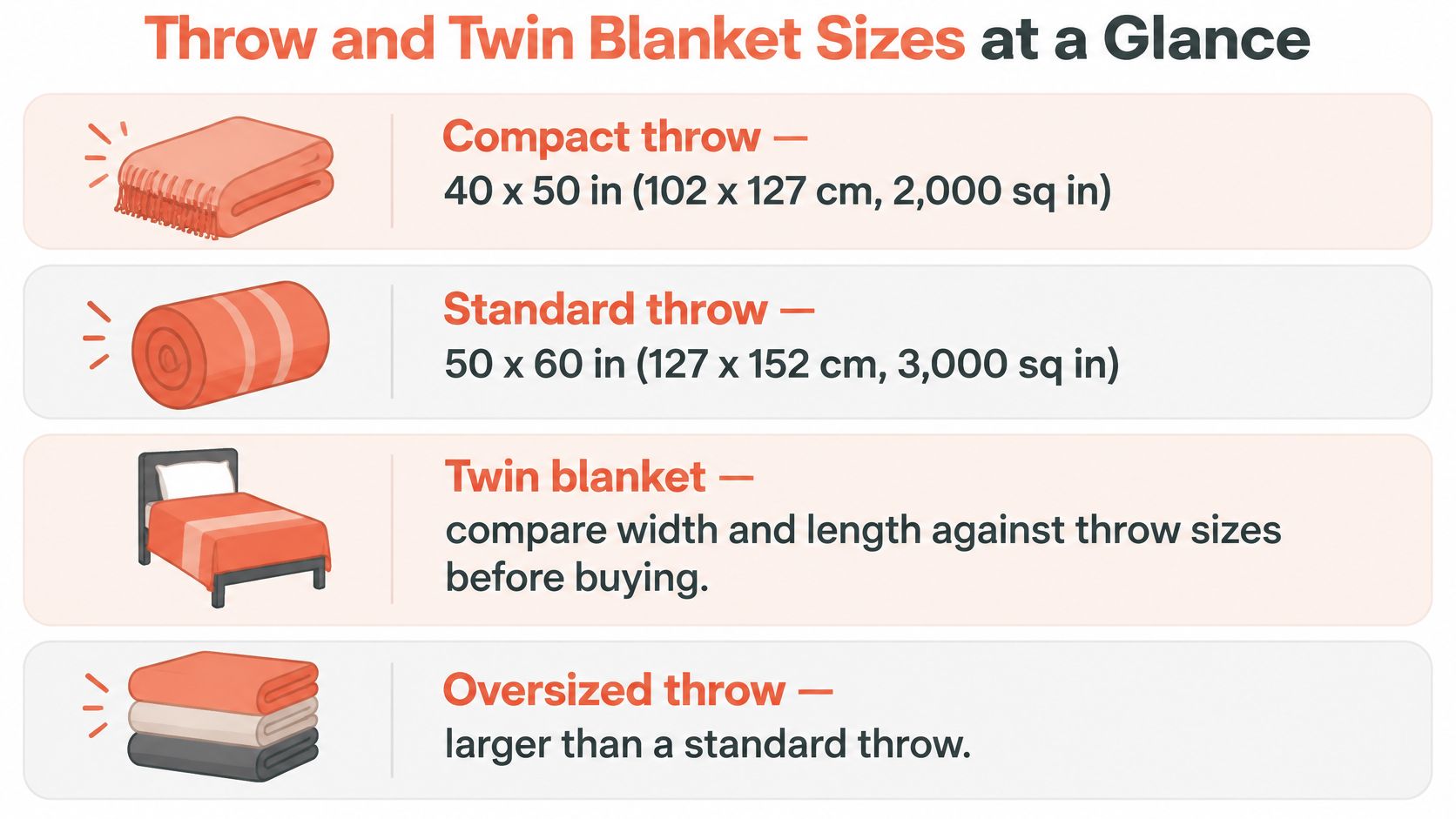
Throw and Twin Blanket Sizes at a Glance
Throw and twin dimensions and surface area
| Size | Dimensions (in) | Dimensions (cm) | Surface area (sq in) |
|---|---|---|---|
| Compact throw | 40 x 50 | 102 x 127 | 2,000 |
| Standard throw | 50 x 60 | 127 x 152 | 3,000 |
| Oversized throw | 60 x 80 | 152 x 203 | 4,800 |
| Typical twin blanket | 65–66 x 90 | 165–168 x 229 | 5,850–5,940 |
| Twin mattress surface (reference) | 38 x 75 | 97–99 x 191 | 2,850 |
The throw endpoints come from the guide linked above, with metric conversions and areas calculated from those dimensions; the conventional mattress reference is supported by this bed dimensions guide. For standard throws and typical twin blankets, StitchHow's blanket sizing chart gives the dimensions shown here, making the twin approximately 1.95–2.0 times the area, or about 98% more photo canvas at the larger end.
That extra fabric changes both coverage and composition. You can give a photo subject more space, include surrounding scenery, or leave room around a name without crowding the image. It doesn't automatically mean a larger blanket is the better purchase.
Read the Length Before the Area
Surface area can mislead you because a blanket and mattress aren't flat shapes doing the same job. The blanket must rise over the sleeper, fall over the mattress edges, and sometimes tuck underneath. A generous-looking area total can still conceal insufficient length.
At That Blanket Co, our 50 x 60 inch throw is our most popular and most-ordered size, and it's suited to a loveseat or couch. That's a useful furniture size, not a promise of full-bed coverage.
Practical rule: If the blanket must cover a whole mattress, start with the twin row. If it will live on a sofa or chair, start with the throw rows.
Treat these measurements as category references rather than universal specifications. Published twin sizes differ among sellers, and the word twin doesn't guarantee the dimensions in this table. Check the finished measurements on the product page, especially when comparing a personalized blanket with conventional bedding.
Whether a Throw Can Cover a Twin Bed
Coverage on a 38 x 75 in twin mattress
The comparison below uses the conventional mattress footprint and twin-blanket geometry described in this twin-bed shopping guide, with the throw differences calculated directly from the listed dimensions.
| Blanket | Length and width vs mattress | Coverage outcome |
|---|---|---|
| Standard throw 50 x 60 in | 15 in shorter; 12 in wider, allowing 6 in per side when centered | Torso and legs in a warm room; feet and sides may remain exposed |
| Oversized throw 60 x 80 in | 5 in longer; 22 in wider, allowing 11 in per side when centered | Room for one sleeper, including diagonally; little tuck at the foot |
| Typical twin 65–66 x 90 in | 15 in longer; about 14 in per side | Full sleeper coverage with side drape and potential foot tuck |
These allowances describe fabric beyond the mattress's flat top. Mattress thickness, the sleeper's body, and tucking all use some of that allowance. Extra length isn't automatically the same as usable tuck.
A throw is an unfitted personal layer for furniture or casual warmth. A twin blanket is intended to span a sleeping surface and accommodate movement. If you're checking a bed listing before choosing bedding, Woodstock Furniture & Mattress Outlet's twin measurements provide an additional mattress reference to compare with your own measurements.
Does It Cover the Sleeper?
Sometimes. A person curled up, sitting against pillows, or resting with bent knees needs less head-to-foot coverage than someone stretched out. A throw may therefore feel sufficient for a short rest in a warm room.
A small child may also fit beneath a standard throw during a supervised nap, provided loose bedding is appropriate for that child's age and circumstances. Don't apply this recommendation to infant sleep.
The practical test is movement. Can the person turn over, extend their legs, or pull the blanket toward their shoulders without uncovering another part of their body? If not, the throw offers temporary comfort rather than dependable sleeping coverage.
Does It Cover the Bed Surface?
A standard throw doesn't cover the entire twin mattress in its usual orientation. Moving it toward the pillows exposes more of the foot end; moving it down leaves more of the upper bed uncovered.
An oversized throw can cover the flat top more successfully. But covering an empty mattress isn't the same as covering someone lying on it. Once the fabric passes over shoulders, hips, and feet, less remains available around the edges.
Use an oversized throw as a decorative layer if that's the intended job. It can sit neatly across the foot of the bed without needing to perform like the main blanket.
Does It Replace the Bed Blanket?
Usually not. Overnight bedding needs enough room for changing positions, pulling the blanket up, and keeping the foot end covered. A short blanket may work initially but become frustrating as the sleeper moves.
A twin XL makes length checking especially important because its mattress is longer. Don't assume a blanket will work because both product labels include twin.
A throw can be useful on a twin bed without being suitable as the twin bed's main blanket.
The verdict is straightforward: choose a throw for a light personal layer or decorative accent. Choose a properly measured twin blanket when you want a complete nightly sleep layer.
Matching Size to How You Will Use It
Recommended size by use case
| Use case | Recommended size | Why it fits |
|---|---|---|
| Sofa reading or movie nights | Standard throw 50 x 60 in | Suits a loveseat or couch |
| Lap warmth and travel | Compact throw 40 x 50 in | A compact option to pack in a bag or keep in the car |
| Toddler nap | Standard throw 50 x 60 in | Covers a small sleeper when loose bedding is appropriate |
| Child's bed or dorm | Typical twin 65–66 x 90 in | Provides mattress coverage and overhang for movement |
| Guest bed | Typical twin 65–66 x 90 in | Gives a visitor a full-length layer |
| Nightly adult sleep | Typical twin 65–66 x 90 in or larger | Allows for mattress depth, body coverage, and tucking |
| Gift meant to be shared | Oversized throw 60 x 80 in | Suits sharing on a sofa |
These are the category dimensions established in the sizing comparison, not a claim that every product with the same label has identical measurements. For our blankets, the 60 x 80 inch size is suited to sharing with loved ones.
Choose for the Everyday Habit
For sofa reading, the goal is fabric you can pull over your lap without rearranging the room. A standard throw is easy to drape over the armrest when you're done. Our guide to what a throw blanket is used for can help you distinguish an everyday personal layer from a decorative accent.
For travel, consider packed bulk as well as dimensions. A compact footprint is convenient, but fabric thickness also determines whether the blanket fits comfortably in your bag.
A child's bed or dorm needs a different decision. Choose for the bed and the sleeper's movement, not just the child's current height. For a guest bed, aim for coverage that doesn't require your visitor to find a particular sleeping position.
For nightly adult use, measure before moving up a size. A tall sleeper may need more length, while a deep mattress may need additional width as well.
Match the Gift to the Recipient
Our 30 x 40 inch size is small and suited to babies and pets, but it isn't interchangeable with an adult lap blanket. For babies, distinguish a keepsake or supervised-use blanket from sleep bedding.
We offer blankets for weddings and anniversaries, new baby keepsakes, memorials, graduations, pet memorials, Mother's Day, and sports team pride. The occasion shapes the design; the recipient's habits should decide the size.
Ask who will use the blanket most often and where they'll reach for it. In November and December, make that question part of holiday gift planning. In April and May, apply it to Mother's Day, whether the recipient prefers a reading chair or a shared sofa.
Gifting by Season Holiday and Mother's Day
November and December Holiday Gifts
For holiday gifting, a furniture-friendly throw is a practical starting point. It doesn't require knowing the recipient's mattress dimensions, and it can become part of their usual reading, television, or travel routine. Choose a twin-style bed layer instead when the gift is specifically intended for a child's room or guest bed.
Timing deserves attention before you begin selecting photos. Deloitte's 2025 U.S. holiday survey reported shopping activity was expected to peak at 77% of active shoppers in late November and 76% in early December, while 70% planned to shop during Thanksgiving week.
Those findings describe that holiday shopping season, not a delivery guarantee. The useful takeaway is to make your size and design decisions before the gift date becomes urgent.
Custom Photo Blankets from That Blanket Co turn a family, pet, or milestone image into a usable keepsake. For a holiday gift, choose a photograph the recipient will enjoy seeing in their living space, rather than selecting an image solely because it looks festive.
Gift-planning advice: Decide where the blanket will live before deciding how elaborate the photo design should be.
April and May Mother's Day Gifts
For Mother's Day, start with the recipient's favorite place to relax. A standard throw suits a reading chair, while an oversized option makes sense for someone who likes sharing the sofa with a partner, children, or grandchildren.
A clear portrait of children or grandchildren can be more effective than a crowded collection of similar snapshots. Choose an image with an expression the recipient recognizes and enough surrounding space to accommodate the design.
Consider the memory as well as the photograph. A familiar family gathering, a much-loved pet, or a meaningful outing can give the blanket a personal connection without needing a long message.
- Choose the setting: Reading chair, shared couch, or bed.
- Choose the memory: A family portrait, pet photo, or milestone image.
- Allow production time: Order early enough for customization and delivery before the gift date.
Our photo blanket gift guide offers occasion-based ideas when you know the recipient but haven't settled on the image. For either seasonal window, prioritize a usable size over a larger size chosen only to make the gift seem more substantial.
How to Measure Your Mattress Before You Buy
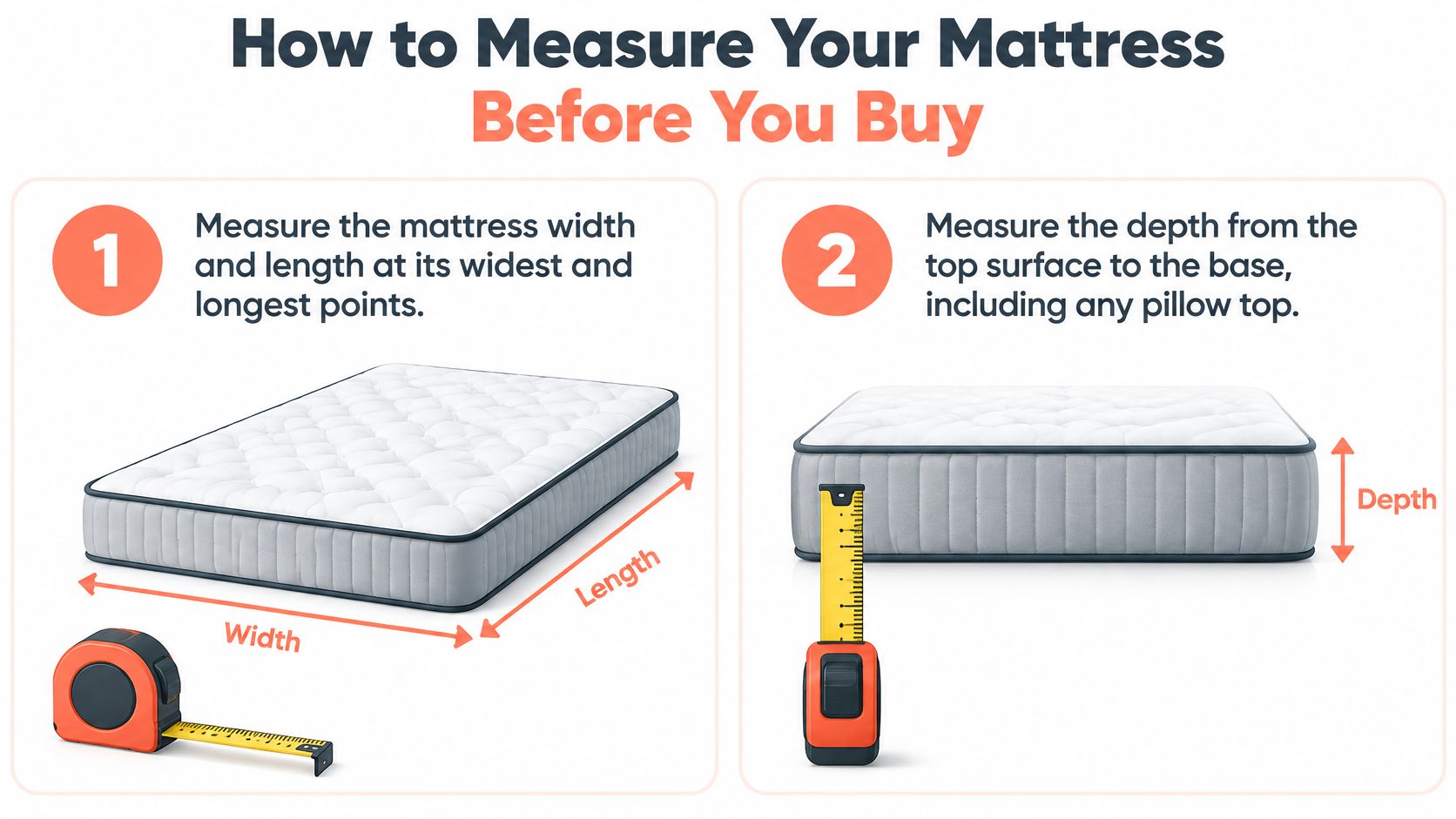
Use a flexible tape measure, a notepad, and the mattress you plan to cover. Remove bulky bedding so you're measuring the mattress rather than the comforter.
Measure the Coverage You Want
- Measure width and length. Run the tape across the widest point and from head to foot at the longest point. Keep it straight rather than following the curve of a padded edge.
- Measure mattress depth. Measure from the top sleeping surface to the mattress base, including any topper or pillow top. This is the distance the blanket must travel down the side before you get coverage below the mattress.
- Choose the side drop. Hold the tape at the mattress edge and let it fall to the point where you want the blanket to end. Add your desired drop on both sides to the mattress width, remembering that a sleeper also takes up fabric.
- Allow for the foot end. Decide whether you want a loose drape or a tucked finish. For tucking, allow fabric to travel down the mattress end and underneath it, rather than counting only the visible drop.
- Compare finished dimensions. Match your requirements to the product page's actual width and length. The finished dimensions matter more than the size name, particularly when a seller uses bedding labels for personalized gift sizes.
- Check twin XL separately. Measure its length rather than borrowing the measurements of a standard twin. A blanket that looks generous across the width can still be too short from head to foot.
Designing Idea's throw dimension guide illustrates the label problem: a 60 x 70 inch oversized throw can still be shorter than a typical bed-blanket recommendation. Oversized describes its relationship to other throws, not guaranteed suitability for your mattress.
Don't Automatically Buy the Largest Option
A child's room, bunk bed, or lightweight summer layer may benefit from a tidier drop. Excess fabric can be awkward to arrange, particularly where there's limited clearance around the bed.
A tall adult or deep mattress creates the opposite problem. Give those needs priority over how the blanket looks when laid flat.
Before opening the product page, write down mattress width, mattress length, mattress depth, desired side drop, and foot-tuck preference. Keep the minimum blanket width and length beside those measurements so you can compare options directly.
How Size Changes Your Photo Layout
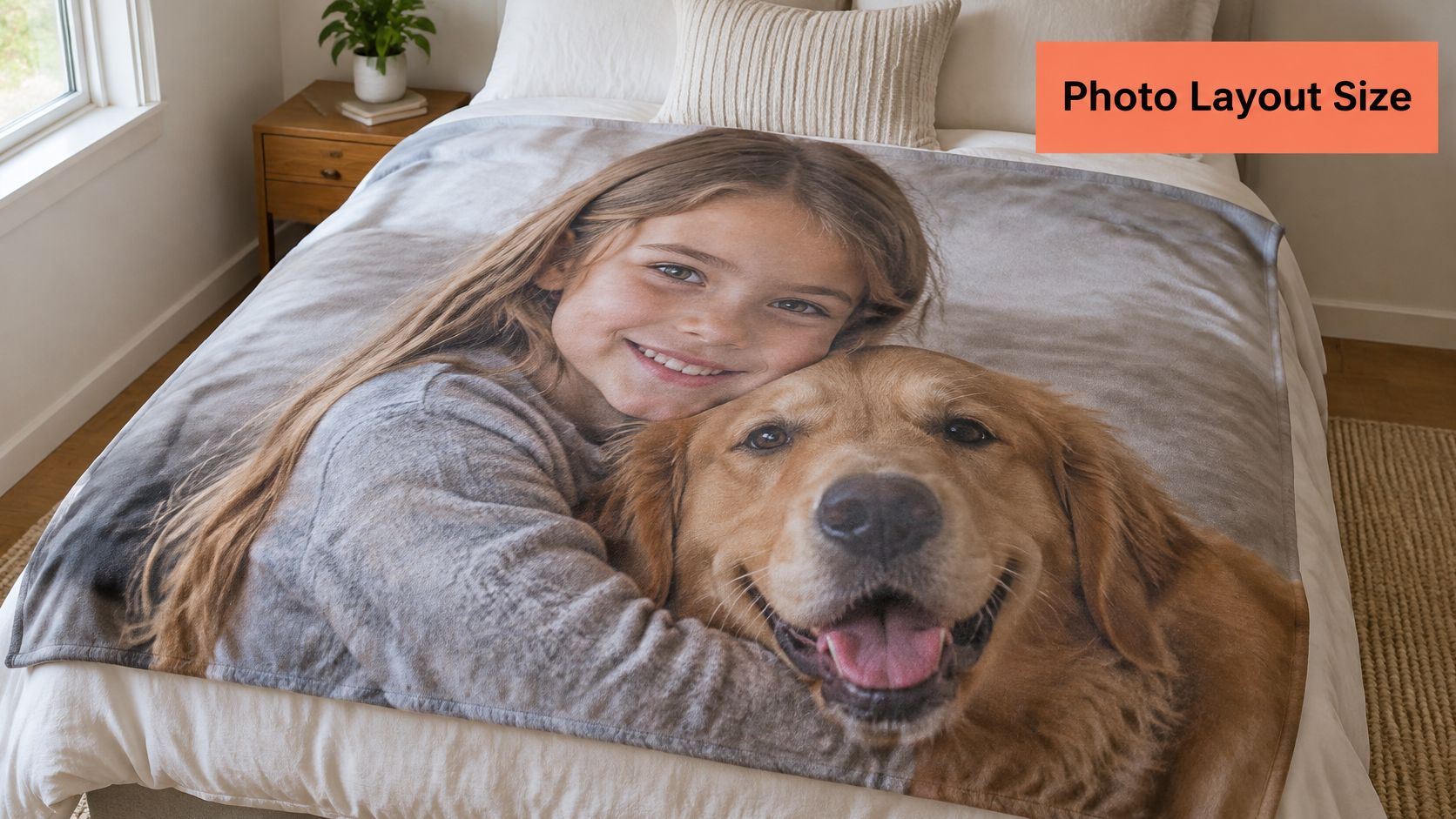
A single-photo blanket has one large image filling the entire blanket. That makes composition important: the photograph must work as a whole surface, not just as a small preview on your phone. A standard throw suits a clear portrait, while a larger blanket can accommodate more surrounding scenery.
Match the Composition to the Format
For a single portrait, choose an image with room around the person's head and shoulders. Say you're using a photograph of a child holding a dog. Keep both faces away from the outer edges so the crop doesn't sacrifice the detail that makes the image meaningful.
For a pet collage, give the strongest image the clearest position. Use supporting photos that show different expressions or moments rather than filling every available space with nearly identical pictures. More canvas is useful only if each image remains easy to read.
For a text-led design, check the relationship between the words and the photograph. A name or dedication should have its own clear area rather than crossing a face or disappearing into a busy background.
Our guide to designing a blanket with photos offers practical layout ideas. Review the design in the selected blanket format, not just in the original photograph's proportions.
Plan for the Part People Will See
Our prints are one-sided and run edge to edge. Plan the full printed surface rather than assuming a blank border will protect the subject from cropping.
A throw folded over a sofa arm may show only a narrow section of the image. A blanket spread over a bed may hide its lower portion beneath a fold or tuck. Place the meaningful detail where it will remain visible in the intended setting.
- Portrait test: Keep the main face within the likely visible fold.
- Collage test: Make sure a partial view still includes a recognizable subject.
- Text test: Keep the important words together rather than splitting them across folds.
Our Custom Photo Blankets come in throw and twin size options, but compare the selected product's finished measurements with your coverage needs. Before checkout, mimic the intended fold in the preview and confirm that the main face still reads clearly.
Confirm the Size Before You Order
Who will use it most often? Think about the person's height, preferred resting position, and whether they'll use the blanket alone or share it. Choose for their normal routine rather than an occasional possibility.
Where will it live? A chair-side blanket should be convenient to reach for and put away. A sleeping blanket needs to meet the bed's coverage requirements without relying on careful positioning.
Must the photo remain visible after folding? Decide whether the blanket is primarily for wrapping up, displaying, or both. A meaningful image should still make sense when the recipient uses the blanket naturally.
A throw is a furniture blanket, and a twin is a bed blanket.
- Compare the finished dimensions. Put the product measurements beside your mattress and coverage notes. Don't let the size label override a mismatch.
- Check the chosen design. Confirm that faces, names, and important details fit the selected format and remain in the visible area.
- Confirm before checkout. Review the size selection and uploaded image carefully. Each blanket is made-to-order, and blankets cannot be adjusted after an order is placed.
Custom Photo Blankets can be ordered in your chosen size with your photo uploaded at checkout. Our custom blankets are machine washable, so choose an image you'll enjoy as part of everyday home life, not only on the day the gift is opened.
Keep your measurements beside you while ordering. Choose the size, upload the photo, and confirm the finished dimensions before placing the order.
That Blanket Co offers made-to-order Custom Photo Blankets for personal sofa comfort, shared relaxing, and meaningful gifting. Visit That Blanket Co, choose the finished dimensions that suit your recipient's space, and upload a favorite photo to create a blanket they can use every day.