


10 Creative Ideas: What to Do with Old Family Photos in 2025
Boxes of old family photos hold more than just images; they contain the stories, laughter, and milestones of generations. For many of us, these precious memories are tucked away in dusty attics or forgotten closets, their edges curling and colors fading. The question of what to do with old family photos can feel overwhelming, but letting them deteriorate is not the only option. Transforming these fragile heirlooms into lasting, accessible legacies is more achievable than ever. This guide is designed to move you from overwhelmed to inspired, providing clear, actionable steps to give your family's history a new life.
We will explore a comprehensive list of creative and practical solutions. You will learn how to properly preserve your prints through professional digitization and DIY scanning techniques, ensuring they are safe from damage and decay. We will also delve into exciting projects that turn static images into dynamic family treasures. Discover how to build a digital family archive, design stunning photo books, and even integrate your pictures with genealogy projects to tell a richer story.
Furthermore, we will cover unique ideas for bringing these memories into your daily life. From creating a captivating photo timeline in your home to commissioning beautiful, tangible keepsakes like custom photo blankets perfect for holiday gifting, you will find a project that fits your style and goals. Let's unlock the potential sitting in those shoeboxes and create something your entire family can cherish for years to come.
1. Professional Photo Digitization Service
If your primary goal for what to do with old family photos is preservation, a professional digitization service is the gold standard. This approach outsources the time-consuming and delicate task of scanning to experts who use high-resolution, specialized equipment far superior to standard home scanners. The result is a crisp, clear, and archival-quality digital copy of your entire collection, safeguarding it from fading, damage, or loss.
These services handle everything from fragile, century-old prints to slides and negatives. You simply pack your organized collection and mail it in; they return your original photos along with digital copies. This method is ideal for those with large, overwhelming collections or anyone who lacks the time or technical expertise to do it themselves.
Why Choose a Professional Service?
Using a professional service ensures you receive the highest quality digital files possible. Technicians often include minor color correction and dust removal as part of their standard process, breathing new life into aged images. This high-quality digital foundation is perfect for creating beautiful keepsakes, such as a Custom Photo Blanket featuring a cherished wedding portrait or a collage of multi-generational family members.
Actionable Tips for Professional Digitization
To get the most out of the service, follow these practical steps:
- Organize First: Before sending your photos, group them into logical batches. This could be by year, family branch, or special event. This not only helps the technicians but also makes organizing the digital files much easier later on.
- Request Multiple Formats: Ask for your images in at least two formats. A TIFF file is an uncompressed, high-quality format ideal for archival purposes and high-resolution printing. A JPEG file is smaller and perfect for easy sharing online or via email.
- Specify Delivery Media: Don't rely on just one storage method. Request your digital collection be delivered on multiple media, such as a USB flash drive, an external hard drive, and a secure cloud storage link for easy access and backup.
2. DIY Home Photo Scanning with Smartphone
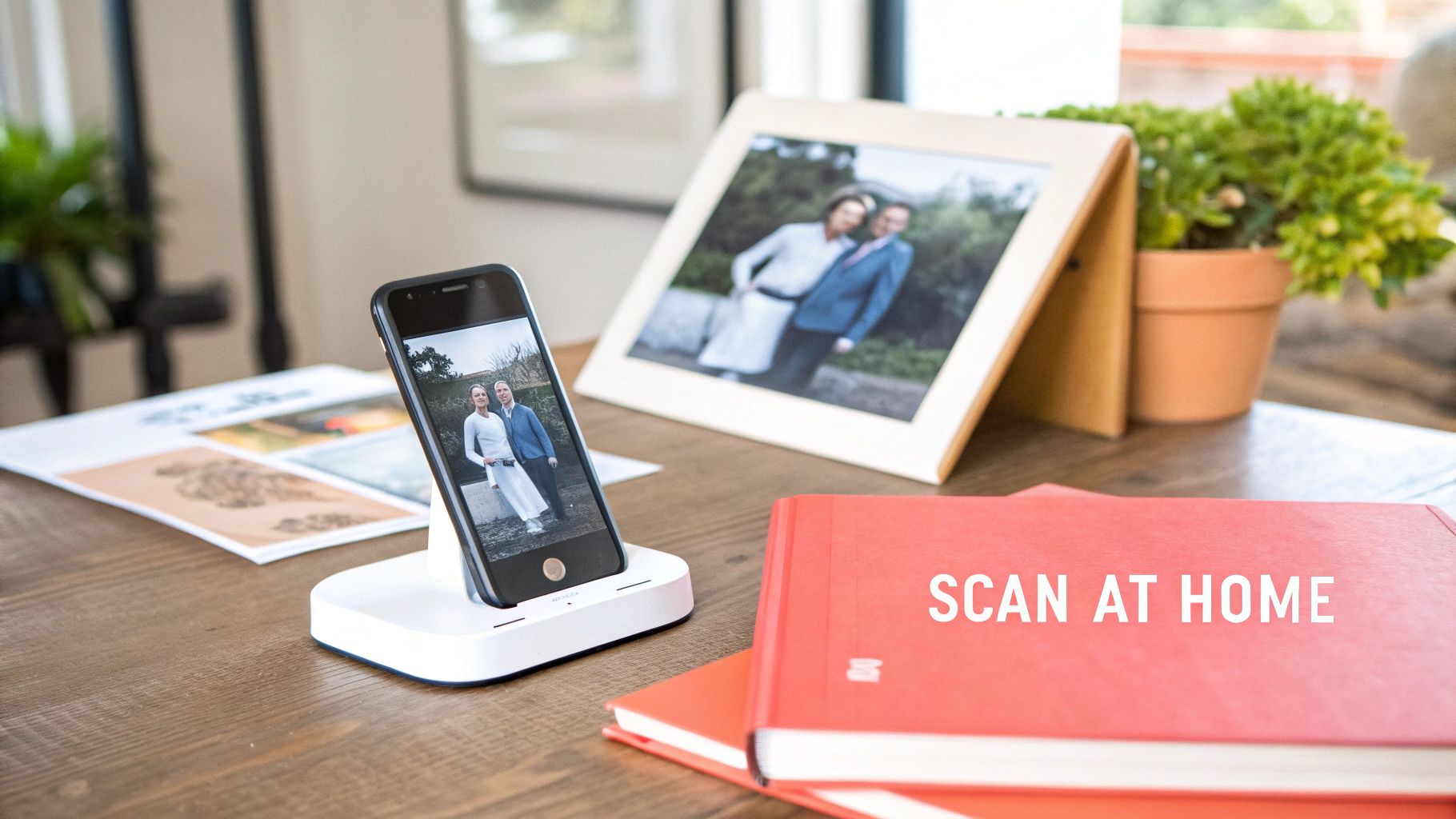
For those looking for a cost-effective and immediate way to preserve old family photos, your smartphone offers a surprisingly powerful solution. This DIY approach leverages the high-resolution cameras in modern phones, combined with specialized apps, to create quality digital copies without needing a flatbed scanner. It's a fantastic, accessible method for anyone wanting to tackle a small-to-medium-sized collection on their own schedule.
This method is perfect for quickly digitizing a curated selection of favorites or for those who enjoy a hands-on project. The process involves using an app to capture the physical print, which then corrects for glare, crops the edges, and saves the image as a digital file. The quality is often more than sufficient for sharing online or creating personalized gifts.
Why Choose DIY Smartphone Scanning?
The primary benefit of this approach is its convenience and affordability; you already own the necessary equipment. It turns a potentially daunting task into a manageable weekend project. Once digitized, these photos are ready to be transformed into meaningful gifts, such as a Custom Photo Blanket for a Mother's Day surprise, featuring a treasured picture of her and her parents. Understanding the photo requirements for such projects is key to a beautiful result.
Actionable Tips for Smartphone Scanning
To achieve the best results with your phone, follow these practical steps:
- Use a Specialized App: Download a dedicated photo scanning app. These apps are designed to reduce glare and automatically detect and crop photo edges, which is a major advantage over using your phone’s standard camera app.
- Control Your Lighting: Place your photos on a flat, non-reflective surface in a well-lit area. Indirect natural light from a window is ideal. Avoid using your phone's flash, as it will create a harsh glare on the glossy photo surface.
- Ensure Stability: To avoid blurry images, keep your phone as steady and parallel to the photo as possible. Consider using a small, inexpensive smartphone tripod or stand to maintain a consistent height and angle for each shot.
3. Digital Family Archive Website or Blog
Creating a digital family archive on a private website or blog transforms your static collection of old family photos into a living, collaborative history. This approach creates a centralized online hub where relatives can not only view scanned images but also contribute their own, add stories, and identify unknown faces. It’s an interactive way to preserve memories and make them accessible to family members scattered across the globe.
Unlike simply storing files on a hard drive, a dedicated site allows for rich context. You can build timelines, create galleries for specific events like anniversaries or holidays, and attach detailed captions and narratives to each image. This method is perfect for families who want to build a shared legacy, document their genealogy, and ensure the stories behind the photos are never lost.
Why Choose a Digital Archive Website?
A private website offers unparalleled control over privacy and organization, ensuring your family’s history is shared only with whom you choose. This controlled environment makes it an excellent foundation for creating collaborative family gifts. For instance, family members can collectively choose the most meaningful images from the archive to feature on a Custom Photo Blanket for a grandparent’s birthday, turning a shared digital project into a tangible, heartwarming keepsake.
Actionable Tips for a Digital Archive Website
To create a successful and secure online archive, follow these key steps:
- Choose the Right Platform: Select a platform with strong privacy controls. Options range from dedicated genealogy sites to building your own private blog. For those looking for a simple, modern solution, you can even explore how to build a Notion to website to quickly create a private, organized space for your photos and stories.
- Establish a Clear Structure: Before you start uploading, create a clear organizational system. Categorize photos by family branch, decade, or major life event (e.g., "The Miller Family - 1960s," "Grandma June's Wedding"). This ensures the archive is easy to navigate as it grows.
- Prioritize Security and Backups: Enable two-factor authentication to protect your account from unauthorized access. Regularly download complete backups of all photos and associated text to an external hard drive or a separate cloud service to safeguard against data loss.
4. Custom Photo Books and Albums
Once your family photos are digitized, one of the most rewarding things you can do with them is create custom photo books and albums. This approach transforms a folder of digital files into a tangible, beautifully printed book that tells a cohesive family story. It moves your cherished memories from a hard drive back into your hands, allowing you to share and relive them in a modern, organized format that can be passed down for generations.
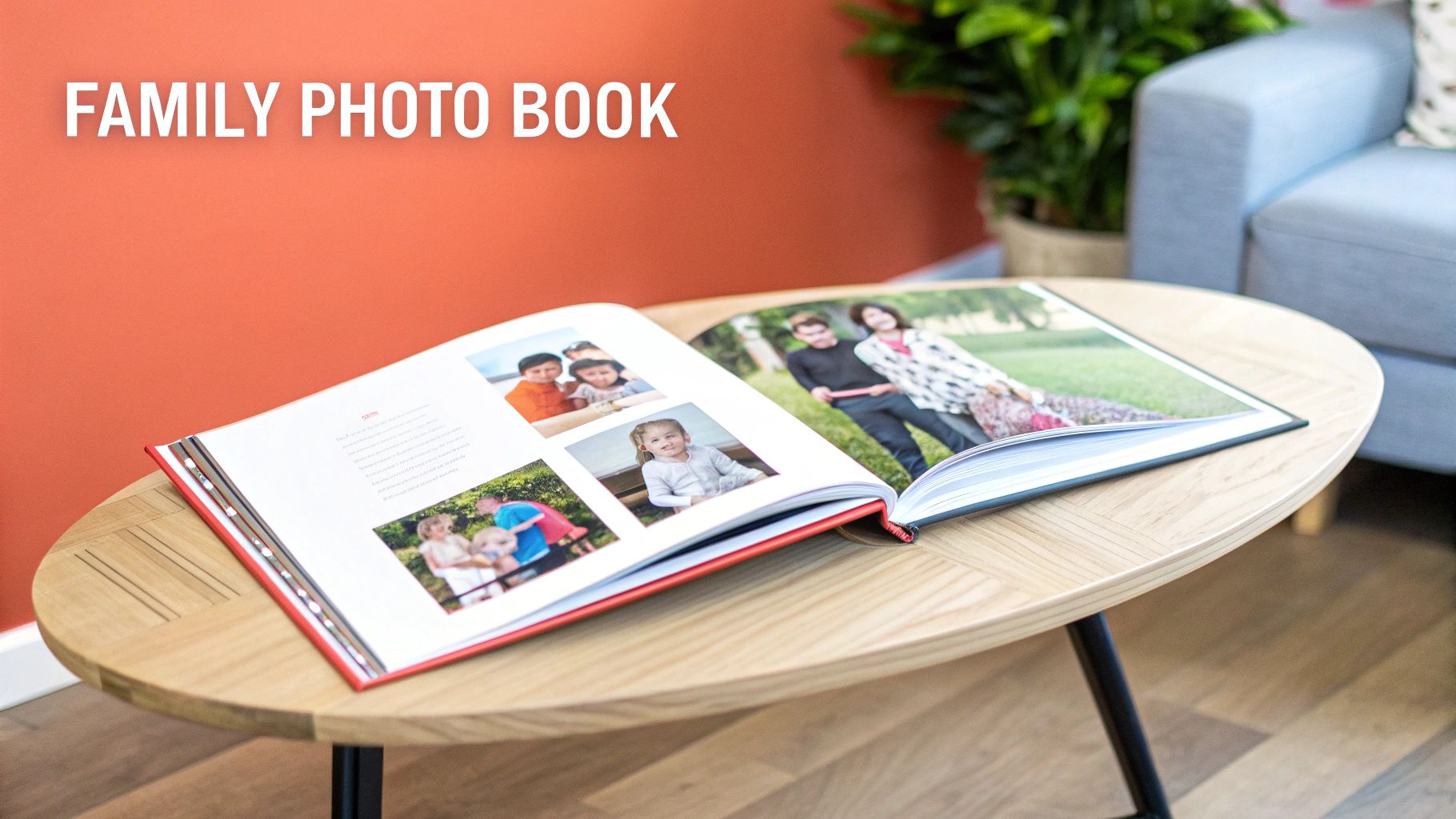
These services offer a range of styles, from simple, softcover books to premium, lay-flat albums suitable for coffee tables or special occasions. This method is perfect for anyone wondering what to do with old family photos in a way that is both archival and emotionally resonant, creating a curated narrative that celebrates your family's history.
Why Choose a Custom Photo Book?
Creating a photo book gives context and life to your collection. Instead of just a pile of pictures, you have a story with a beginning, middle, and end. The process allows you to add captions, dates, and anecdotes directly alongside the images, preserving details that might otherwise be forgotten. For example, a book dedicated to your grandparents' early life can become a powerful storytelling tool for younger generations, far more engaging than a simple digital folder. While a Custom Photo Blanket beautifully showcases a single powerful image, a photo book allows you to present the entire story behind that moment.
Actionable Tips for Creating Photo Books
To get the most out of your project, follow these practical steps:
- Plan a Theme: Before uploading, decide on a theme or chronological order. You could create a book for a specific family branch, a single decade, or a collection of holiday memories from over the years. This focus makes the design process much more manageable.
- Write Your Stories: Use the text features to include names, dates, locations, and short stories. This turns your photo album into a genuine family history document, preserving the who, what, and when for future family members.
- Create Multiple Copies: One of the best features of photo books is their easy reproducibility. Print copies for siblings, parents, and children to ensure everyone has a copy of your shared history. This makes an incredibly thoughtful gift for Mother's Day or other family celebrations.
5. Genealogy DNA Test Integration and Storytelling
One of the most powerful things to do with old family photos is to integrate them with genealogical research and DNA test results. This transforms your collection from a series of anonymous faces into a rich, verifiable family narrative. Platforms that combine DNA matching with family tree building allow you to attach photos to specific ancestors, connecting them to dates, locations, and life stories, creating a living digital archive for future generations.
This process adds incredible depth and context, helping you identify unnamed relatives in group portraits or confirm family lore. By linking an image to a specific profile backed by DNA evidence and historical records, you are not just preserving a photo; you are validating and enriching your entire family history. This method is perfect for anyone serious about genealogy or looking to create a comprehensive and accurate family legacy.
Why Choose Genealogy Integration?
Integrating photos with your family tree provides irrefutable context and brings your ancestors’ stories to life. Seeing a photograph of a great-great-grandmother alongside her birth records, census data, and DNA connections creates a powerful and emotional link to the past. This deeply personal history can then be celebrated in beautiful, tangible ways, such as designing a Custom Photo Blanket that maps out a key family branch with portraits of each ancestor.
Actionable Tips for Genealogy Integration
To effectively merge your photos with your family history research, follow these steps:
- Connect Systematically: As you receive DNA matches or build out your family tree, create a system for attaching photos. Link each relevant image to the corresponding individual's profile on your chosen genealogy platform.
- Document Stories: While organizing, take the time to interview older relatives and document the oral histories associated with each photo. Add these anecdotes as notes or stories within the platform to preserve the context that gives the images meaning.
- Be Mindful of Privacy: Before uploading photos or linking DNA results of living relatives, always get their permission. Understand and configure the privacy settings on the genealogy website to control who can view your tree and personal information.
6. Photo Timeline and Memory Lane Projects
Transforming a box of old family photos into a visual timeline is an incredibly powerful way to tell your family's story. This project organizes images chronologically, creating a "memory lane" that illustrates the progression of time, family growth, and historical context. Instead of viewing photos as isolated moments, a timeline connects them into a compelling narrative that even younger generations can easily understand and appreciate.
This method is perfect for family reunions, anniversary celebrations, or simply as an interactive digital archive. By arranging photos by date, location, or life event, you create a dynamic map of your heritage. It’s a fantastic solution for what to do with old family photos when you want to make history feel tangible and accessible, bringing ancestors' stories to life in a linear, easy-to-follow format.
Why Choose a Photo Timeline Project?
Creating a timeline adds a rich layer of context that a simple album cannot. You can see fashion trends change, watch children grow into adults, and track the family's journey across different homes or even countries. This visual storytelling is also a wonderful way to honor a loved one for a milestone birthday or Mother's Day, creating a display that celebrates their entire life's journey. Such a well-curated collection is also the perfect source for a powerful Custom Photo Blanket featuring a collage of key life moments. For more inspiration, you can learn how to create a photo collage here.
Actionable Tips for Creating a Timeline
To build an effective and engaging memory lane, follow these practical steps:
- Date and Document: Before you begin, do your best to date each photo. Involve older family members to help identify people, places, and approximate years for uncertain images. Write this information lightly on the back of each photo with an archival-safe pen.
- Add Contextual Notes: A great timeline includes more than just pictures. Add short captions describing the event, the people involved, or a brief personal anecdote. These stories are what transform a sequence of images into a cherished family history.
- Use Digital Tools: Leverage free online tools to build a professional-looking digital timeline. These platforms allow you to upload your scanned photos, add dates and descriptions, and easily share the final project with family members anywhere in the world.
7. Themed Photo Exhibits and Virtual Galleries
Transform your collection from a box of assorted pictures into a curated museum-style experience by creating themed exhibits. This approach to what to do with old family photos involves organizing images into compelling narratives based on a specific topic, time period, location, or family member. These projects can be presented as virtual galleries online, engaging social media series, or even physical displays in your home that celebrate unique aspects of your family history.
This method turns passive photo viewing into an active storytelling experience. Imagine a virtual gallery dedicated to “Family Vacations Through the Decades,” or a physical wall display showcasing the “Women of Our Family” across generations. It’s an incredibly powerful way to connect with your roots and share these stories in a structured, engaging format with relatives near and far.
Why Choose a Themed Exhibit?
Curating an exhibit helps you uncover deeper connections and themes within your family’s history that might otherwise go unnoticed. It’s an excellent way to involve younger generations, turning family history into a fun, collaborative project. Once digitized, these themed collections can also be used to create stunning, story-rich gifts, like a Custom Photo Blanket that showcases the "Family Homes We've Lived In," making a perfect and thoughtful gift for Mother's Day or a family reunion.
Actionable Tips for Creating Your Exhibit
To build a captivating photo exhibit, follow these practical steps:
- Choose a Compelling Theme: Select a theme that tells a story. Ideas include “Generations of Love: Wedding Photos,” “Our Family’s Military Service,” or “A Year in the Life: 1955.” Pick something that resonates with your family's unique journey.
- Write Engaging Captions: Don’t just display the photo; tell its story. Write brief but descriptive captions for each image, noting the who, what, where, and when. Add a personal anecdote or a piece of family lore to make it even more compelling.
- Create a Virtual Gallery: Use platforms like a dedicated Instagram account, a themed Pinterest board, or even a simple shared Google Photos album. These digital formats make it easy to share your exhibit with family members globally and invite them to contribute their own photos and memories.
8. Oral History and Photo Documentation Projects
Transforming your static collection of old family photos into a living archive is one of the most meaningful things you can do. An oral history project pairs these images with recorded stories, voices, and memories from family members, creating a rich multimedia experience that preserves not just what people looked like, but who they were. This approach breathes life into silent images, providing invaluable context and emotional depth for future generations.
This method involves sitting down with relatives, using specific photos as conversation prompts, and recording their recollections. Inspired by projects like StoryCorps, this turns a box of pictures into a documentary of your family’s unique journey. It is the ultimate solution for what to do with old family photos when you want to capture the soul behind the smile and the story behind the event.
Why Create an Oral History Project?
An oral history project ensures the personal stories connected to your photos are never lost. A picture of your grandparents' wedding is beautiful, but hearing their voices describe the day adds an irreplaceable layer of emotion. The resulting digital archive is perfect for sharing at family reunions or can even serve as the narrative foundation for creating a deeply personal Custom Photo Blanket, where a cherished image is paired with a QR code linking to the recorded story.
Actionable Tips for Oral History Projects
To capture your family’s legacy effectively, follow these practical steps:
- Prepare Thoughtful Questions: Before you start, create a list of open-ended questions related to specific photos. Ask things like, “Tell me what you remember about the day this picture was taken,” or “Who are the other people in this photo, and what were they like?”
- Use Quality Recording Gear: A dedicated audio recorder or even a modern smartphone in a quiet room can produce clear audio. Ensure there is minimal background noise so the focus remains on the storyteller’s voice.
- Get Consent and Organize Files: Always get verbal or written permission to record. Name your audio files clearly to correspond with the photos being discussed (e.g., "Grandma-Jane-1955-Wedding-Story.mp3") and back them up on multiple drives and in the cloud.
9. Photo Restoration and Enhancement Services
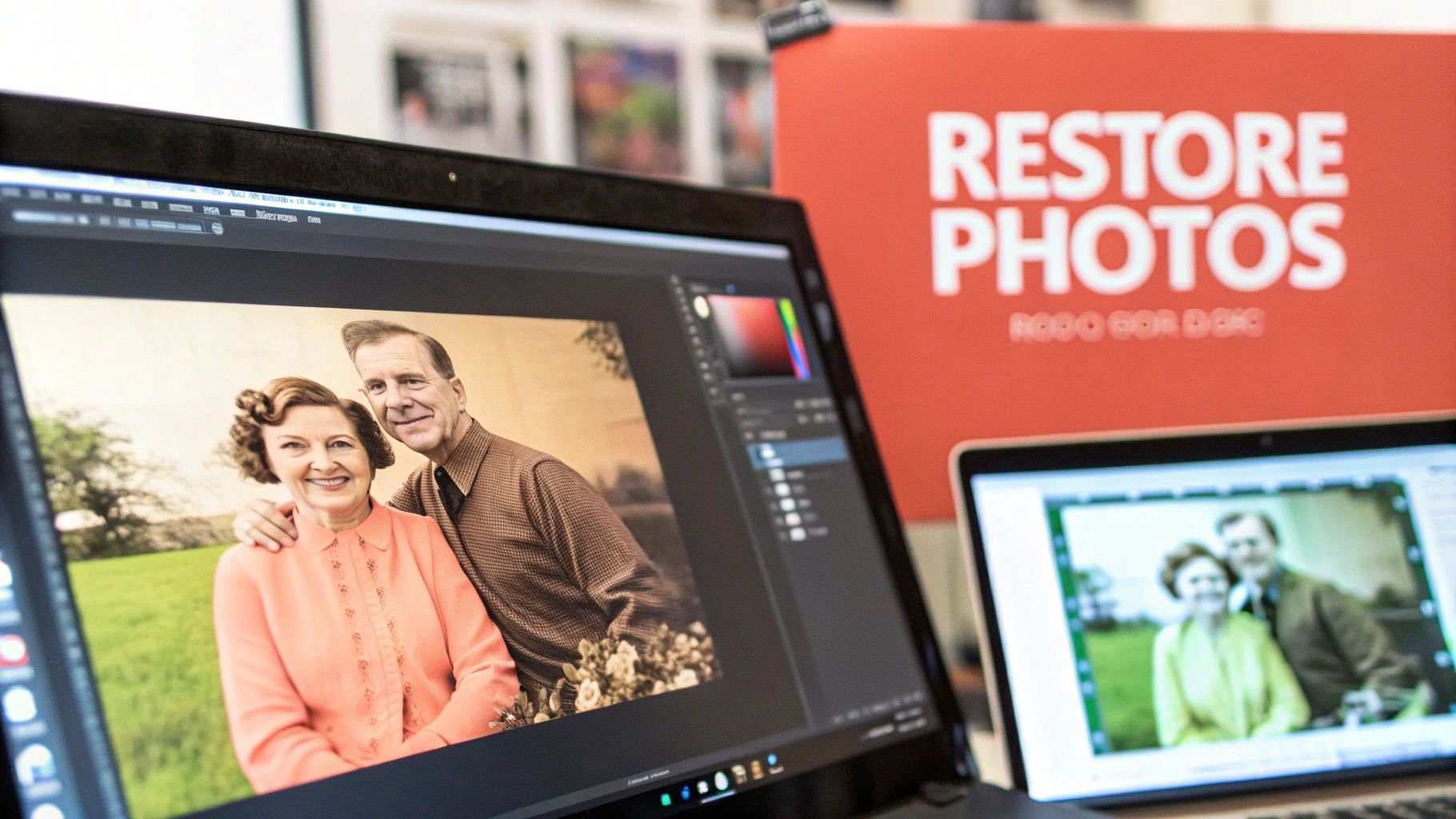
For cherished but damaged family photos, professional restoration offers a powerful solution beyond simple digitization. This specialized service uses advanced digital tools to repair everything from creases, tears, and water spots to severe fading and discoloration. It is an essential step when deciding what to do with old family photos that are one-of-a-kind and have suffered damage over the years, preserving the irreplaceable visual history they contain.
Restoration experts can meticulously bring a faded portrait back to life or even colorize a black-and-white image with stunning historical accuracy. The process turns a fragile, damaged artifact into a vibrant, high-quality digital master file. This renewed image is then perfect for printing, sharing, and creating beautiful gifts that honor your family's legacy.
Why Choose Photo Restoration?
Restoration does more than just save a photo; it revives the moment and the people within it. By correcting damage and enhancing clarity, you make the image far more impactful and suitable for modern uses. For faded or low-resolution old photos, services offering an image upscaling demo can dramatically improve detail, making them clear enough for large prints or a detailed Custom Photo Blanket featuring a restored wedding photo of your grandparents. This is an especially thoughtful gift for Mother's Day, allowing you to present a piece of family history in a beautiful, usable form.
Actionable Tips for Photo Restoration
To achieve the best results while preserving the integrity of your originals, consider these tips:
- Always Work on a Copy: Never perform edits on your original scanned file. Always duplicate the file first, ensuring the untouched original remains a safe archival backup.
- Balance Enhancement and Authenticity: The goal is to repair, not reinvent. Guide your restorer or adjust your own settings to remove damage while maintaining the photo's original character and historical feel.
- Start with AI Tools: For those attempting DIY restoration, modern AI-powered apps and software can handle common issues like scratches, dust, and color correction automatically. Use these as a starting point before making manual adjustments.
- Use Layer-Based Editing: If using software like Photoshop, perform each type of correction (e.g., color, scratches, tears) on a separate layer. This non-destructive workflow allows you to easily undo or modify specific changes without starting over.
10. Printed Family Photo Merchandise and Gifts
Transforming vintage images into everyday items is a wonderful way to keep family memories present and functional. This approach takes your cherished photos off the shelf and integrates them into daily life through custom merchandise like mugs, calendars, canvas prints, and puzzles. It’s an excellent answer for what to do with old family photos, turning them from static artifacts into dynamic, usable gifts that can be shared with loved ones.
This method keeps family history alive by making it a part of your morning coffee routine with a photo mug or family game night with a custom puzzle. These personalized items serve as heartwarming, daily reminders of your heritage and are perfect for gifting during holidays, anniversaries, or family reunions, ensuring that relatives near and far feel connected to their roots.
Why Choose Photo Merchandise?
Creating custom merchandise brings your family history into the present in a tangible and often useful way. A classic black-and-white photo of your grandparents can become a stunning piece of wall art on a canvas, while a collection of funny childhood snapshots can make for a delightful yearly calendar. For a truly cozy and sentimental gift, a Custom Photo Blanket featuring a multi-generational family portrait is an unparalleled choice for grandparents, especially during the holiday season. You can learn more about creating a photo blanket to see how easy it is to design a unique and heartwarming keepsake.
Actionable Tips for Creating Photo Gifts
To ensure your custom products look their best, follow these practical steps:
- Select High-Quality Scans: Start with a high-resolution digital copy of your photo. A crisp, clear image will prevent the final product from looking blurry or pixelated, especially on larger items like blankets and canvas prints.
- Consider the Recipient: Tailor the gift to the person. A tech-savvy cousin might love a custom phone case, while a grandparent would likely cherish a classic photo album or a set of decorative throw pillows featuring family pictures.
- Plan for Gifting Seasons: Think ahead for the holidays. Ordering custom gifts in advance ensures they arrive on time and allows you to create thoughtful, personalized presents that truly stand out as perfect holiday gifts.
Comparison of 10 Options for Old Family Photos
| Option | Implementation Complexity 🔄 | Resource Requirements ⚡ | Expected Outcomes 📊 | Ideal Use Cases 💡 | Key Advantages ⭐ |
|---|---|---|---|---|---|
| Professional Photo Digitization Service | Medium–High — specialized equipment & workflows | Moderate–High cost; shipping; vendor handling | High-fidelity digital masters, restoration, archival files | Large collections, damaged/fading originals, archival preservation | Consistent professional quality; expert restoration; efficient for bulk |
| DIY Home Photo Scanning with Smartphone | Low — simple but technique-sensitive | Low cost (phone + apps); time-intensive for many photos | Good casual-quality digital copies; immediate backups | Small batches, privacy-focused users, quick sharing | Very accessible; immediate control; minimal expense |
| Digital Family Archive Website or Blog | Medium — setup and ongoing maintenance | Moderate (hosting, organization time, user management) | Centralized searchable repository; collaborative storytelling | Dispersed families, multi-contributor archives, long-term access | Structured metadata; collaboration; scalable backups |
| Custom Photo Books and Albums | Low–Medium — design time and vendor production | Moderate cost per book; one-off production effort | High-quality physical keepsake; curated narrative | Gifts, heirlooms, curated story collections | Tangible legacy; excellent presentation; shareable |
| Genealogy DNA Test Integration and Storytelling | High — data integration, research, privacy management | High cost/time (tests + research); technical learning curve | Deep contextualized family narratives; verified connections | Verifying relationships, discovering relatives, historical context | Powerful discoveries; enriches photo meaning; evidence-based links |
| Photo Timeline and Memory Lane Projects | Medium — dating, sequencing, platform setup | Moderate time investment; tools range simple→advanced | Clear chronological insight; highlights gaps/patterns | Educational displays, anniversaries, generational timelines | Narratively clear; engaging; reveals family evolution |
| Themed Photo Exhibits and Virtual Galleries | Medium–High — curation and presentation skills | Variable cost; design/time; hosting or physical space | Focused storytelling; high audience engagement | Celebrations, memorials, thematic family stories | High-impact presentations; curated narratives; flexible formats |
| Oral History and Photo Documentation Projects | High — interviews, syncing, transcription | Moderate cost (equipment/time); interpersonal skills required | Rich multimedia records with emotional/contextual depth | Preserving elders' memories; adding voice to photos | Deeply meaningful; preserves unique voices and context |
| Photo Restoration and Enhancement Services | Medium–High — skilled editing or pro workflows | Variable cost (DIY low, pro high); software or expert needed | Improved visibility and preservation; potential authenticity trade-offs | Severely damaged/faded photos; preparing images for print/display | Recovers detail; improves usability of degraded photos |
| Printed Family Photo Merchandise and Gifts | Low — design selection and ordering | Low–Moderate per item; quick turnaround | Practical, visible uses; variable longevity and quality | Gifts, everyday displays, seasonal presents | Fun and practical; widely appealing; great for gifting |
Give Your Family History a New Beginning
Navigating the question of what to do with old family photos can feel like an immense responsibility. We've explored a wide array of options, from high-tech digital preservation to heartfelt, handcrafted keepsakes. The journey through your family’s visual history is not merely an act of organization; it's an act of rediscovery and celebration. You've seen how a shoebox of forgotten prints can be transformed into a dynamic digital archive, a professionally restored masterpiece, or a beautifully bound photo book that tells a compelling story. Each path offers a unique way to honor the people and moments that have shaped your family's identity.
The key takeaway is that inaction is the greatest risk to these irreplaceable heirlooms. Fading, discoloration, and physical damage are silent threats that time will inevitably amplify. By choosing to act, you are not just preserving images; you are safeguarding the narratives, emotions, and connections they represent. Whether you start small by scanning a handful of key photographs with your smartphone or embark on a larger project like building a family history website, every step you take ensures that these stories will not be lost to future generations. The value lies in transforming these static objects into living, accessible parts of your family's ongoing story.
Your Action Plan: Moving from Inspiration to Implementation
The most challenging part of any project is often the beginning. To help you move forward, here is a simple, actionable plan to get started on your own family photo project today.
- Step 1: The Initial Sort. Don't try to tackle everything at once. Begin by gathering all your photos into one place and performing a quick sort. Create three piles: "Must-Keep Treasures," "Maybe Pile," and "Duplicates/Unknowns." This initial triage makes the entire process feel more manageable and less overwhelming.
- Step 2: Define Your Primary Goal. What is your most pressing objective? Is it preservation against loss? Or is it sharing these memories with family? If preservation is your top priority, focus on digitization and archival storage first. If sharing is the goal, projects like creating a custom photo book or planning a themed virtual gallery should take precedence.
- Step 3: Choose One Project to Start. Looking at ten different ideas can lead to paralysis. Pick the single project from this article that excites you the most. Perhaps it's creating a stunning photo timeline for your hallway, or maybe you're inspired to design a meaningful gift for an upcoming occasion. Focus all your energy on completing that one project from start to finish. Success will build momentum for the next one.
The Enduring Power of a Tangible Memory
In our increasingly digital world, there is a profound and growing appreciation for tangible objects that connect us to our past. While a digital archive is essential for preservation and easy sharing, the emotional impact of holding a physical piece of your history is unparalleled. This is where creative keepsakes truly shine, turning cherished memories into items that can be seen, touched, and experienced daily.
Consider the upcoming holidays or a special milestone like Mother's Day. A custom photo blanket, featuring a beautifully restored portrait of a grandparent or a collage of candid family moments, becomes more than just a gift. It becomes a source of comfort, a conversation starter, and a warm, tangible link to your heritage. It’s a way of wrapping a loved one in the arms of their ancestors, creating a powerful emotional connection that a digital file alone cannot replicate. By giving your photos a new physical form, you give them a new life and a new purpose in the homes and hearts of your family today.
Ultimately, the best thing you can do with your old family photos is to bring them back into the light. Share them, display them, and use them to tell the incredible story of where you came from. Take that first step, and begin the rewarding process of giving your family's history the vibrant, celebrated future it truly deserves.
Ready to turn a beloved family photo into a warm, cozy keepsake? At That Blanket Co, we specialize in transforming your cherished images into high-quality, custom photo blankets that make for unforgettable gifts. Preserve your memories in a beautiful and functional way by visiting That Blanket Co to start creating your family heirloom today.