


Photo Collage Throw Pillow Guide: Design to Doorstep
Your camera roll is probably full of the same problem: hundreds of lovely photos, one gift occasion approaching, and no clear way to turn those memories into something people can actually use. You scroll past birthday dinners, muddy dog walks, family holidays, and ordinary Tuesday cuddles, trying to choose just one image.
A photo collage throw pillow gives those memories room to stay together. With a thoughtful layout, suitable fabric, and colors that belong in the room, it can become more than a printed present. It can be the cushion your family reaches for every evening.
Why a Photo Collage Throw Pillow Makes the Perfect Keepsake
A single-photo cushion can be beautiful, but it asks you to choose one favorite moment. A collage lets you tell a fuller story. A grandparent can see every grandchild on one pillow, a couple can combine engagement and wedding photos, and a pet owner can create a small portrait collection of a companion who belongs at the center of the family.
That flexibility makes the format work in more places than a typical novelty gift. A soft square pillow can sit on a living-room sofa, a nursery chair, a guest bed, or a reading nook. The object remains useful after the occasion has passed, which is why the design deserves as much attention as the photos themselves.
The wider home décor category gives personalized pillows plenty of room to grow. The global throw pillow market was estimated at USD 7.89 billion in 2025 and projected to reach USD 16.5 billion by 2033, with a projected 9.66% CAGR from 2026 to 2033, according to Verified Market Reports' throw pillow market overview. Residential applications were reported to represent 72.5% of market share in one 2033 forecast, reinforcing the idea that decorative pillows belong in everyday home styling, not just in the gift aisle.
A keepsake that works in real rooms
The trick is to avoid treating every photo as equally important. Choose a few images with a shared feeling, then give them enough space to remain recognizable. A warm neutral background can make family snapshots feel calm and modern, while a deeper clay or olive tone can help a pet collage sit comfortably beside wood furniture and woven textures.
That approach also makes the pillow easier to give. New parents might appreciate a nursery-friendly collage of early milestones. Couples can choose images that reflect a relationship rather than one formal portrait. Someone remembering a beloved pet can use a quieter arrangement with one strong central image and smaller supporting moments around it.
From camera roll to sofa
The finished piece starts with photo preparation, continues through layout and material choices, and ends with previewing, ordering, styling, and care. You'll learn how to check pixel dimensions, choose between grid, heart, and organic arrangements, protect color during washing, and time a gift around the occasion.
The result should feel personal without looking out of place. That balance is what turns a photo collage throw pillow into a lasting part of the room.
Preparing Your Photos for a Flawless Print
Pixelation is the most common disappointment with a first custom pillow. The source file may look fine on a phone, but enlargement exposes blurry edges, blocky faces, and soft details. Screenshots and compressed downloads cause many of these problems because they contain less usable image information than the original camera file.
For fabric, a practical target is 150 DPI at the final pillow size. Textile texture helps the image look sharp at this resolution, while paper printing often requires 300 DPI. The important phrase is “at the final size.” A small image that looks crisp in a messaging app may not have enough pixels to cover a large cushion cleanly.
Pixel Requirements by Pillow Size
| Pillow Size | Minimum Pixels | Notes |
|---|---|---|
| 16 × 16 inches | 2,400 × 2,400 | A good target for a square collage |
| 18 × 18 inches | 2,700 × 2,700 | Check both dimensions before placing photos |
| 20 × 20 inches | 3,000 × 3,000 | Larger surface makes weak source files easier to notice |
These targets follow the textile-resolution guidance described by RareCustom's photo pillow quality guide. For a 12 × 20 inch lumbar pillow or a body-pillow shape, pay closer attention to the aspect ratio. A square image may need careful cropping or repositioning so important faces don't disappear near the edges.
A simple file check
Start with the original files from your phone or camera, not an image saved from social media. Look at the shortest side of each photo and compare it with the pixel target for the pillow size. If the image is already close to the needed dimensions, keep the crop gentle.
Build the collage on a canvas that matches the pillow's final dimensions. This lets you see whether faces, hands, and small details remain clear when each photo occupies its actual portion of the surface. If a picture only works after severe cropping, choose another image rather than forcing it into the layout.
You can also review practical guidance on how to enlarge photos without losing quality when an important older image needs careful preparation. Enlargement can help in some cases, but it can't recreate detail that was never captured, so an original file is still the safest starting point.
Before exporting, check the preview at full size and save a high-quality JPEG. Avoid compressed social-media screenshots, tiny previews downloaded from messaging apps, and files that have been repeatedly saved and shared. For additional background on choosing files for fabric gifts, see this guide to the best photo resolution for printing.
Choosing a Collage Layout That Fits Your Photos
Layout should follow the photos, not the other way around. A neat grid suits a set of similarly framed portraits, while a heart shape creates a more obvious romantic or family-gift feeling. A scattered organic arrangement works better when your images have different orientations, backgrounds, and subjects.
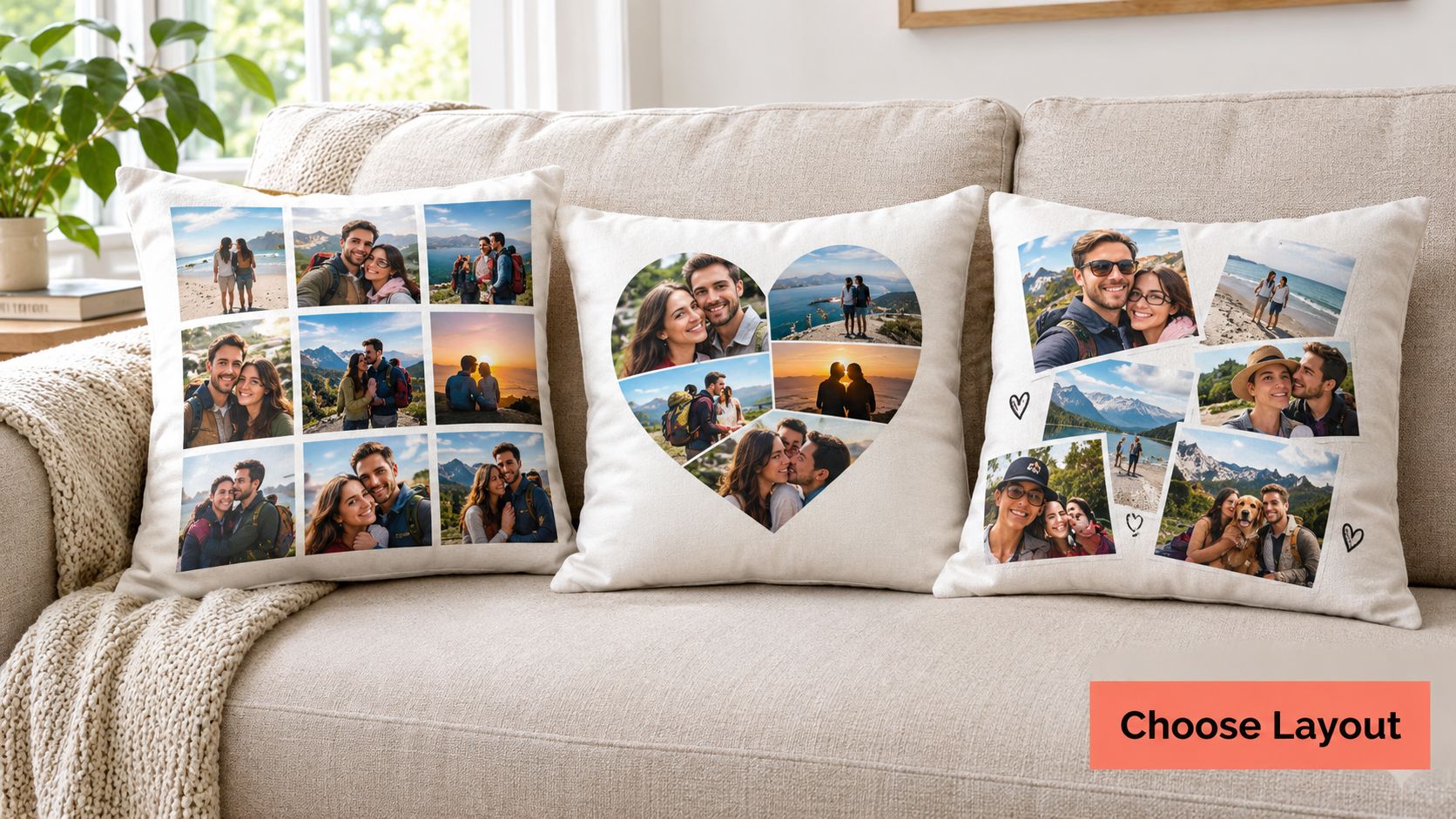
Three useful layout families
Clean grid: Choose this when your photos have similar lighting and mostly show faces. Even spacing creates a calm, organized surface, especially in a room with modern furniture or simple upholstery.
Heart-shaped collage: This arrangement suits anniversaries, weddings, Valentine's Day, and family keepsakes. Use a strong central image or a balanced pair of portraits, then place supporting photos around the shape. Keep important faces away from narrow points and outer edges.
Scattered organic layout: Mixed wide and portrait images often look more natural here. The designer can vary image sizes, rotate the visual rhythm slightly, and use background space to stop the pillow from feeling crowded. It's a good option for travel memories, pet photos, or a family year in pictures.
The most frequent mistake is adding every image you love. On a 16 × 16 inch pillow, roughly 3 to 5 photos generally leave enough room for faces to remain readable, as noted in Photo Cushions' collage pillow guidance. Smaller images can still work when the layout distributes them carefully, but too many competing faces turn the design into visual noise.
Design rule: If you can't recognize a face at the pillow's final preview size, remove that photo or give it more space.
A lumbar format needs different thinking. With a 12 × 20 shape, a horizontal row may work for a couple or a pet portrait, while a loose collage can spread smaller vertical images across the wider surface. Keep the main subject away from seams and corners, where trimming can reduce the visible area.
Match the room, not just the occasion
Current 2026 pillow styling is moving toward earth tones, organic textures, oversized forms, and more sustainable material choices, according to MarketIntelo's throw pillow market coverage. You don't need to make the collage look trendy in an artificial way. Instead, borrow the room's existing colors.
For a beige sofa, try warm cream, terracotta, muted olive, or soft brown behind the photos. In a cool nursery, dusty blue or gentle sage can connect the images to the rest of the space. If your room already contains woven baskets, linen curtains, or boucle upholstery, an organic layout with breathing room will usually feel more at home than a tightly packed grid.
For more help arranging different images into one cohesive design, explore this guide on how to create a photo collage.
Materials and Printing That Keep Colors True
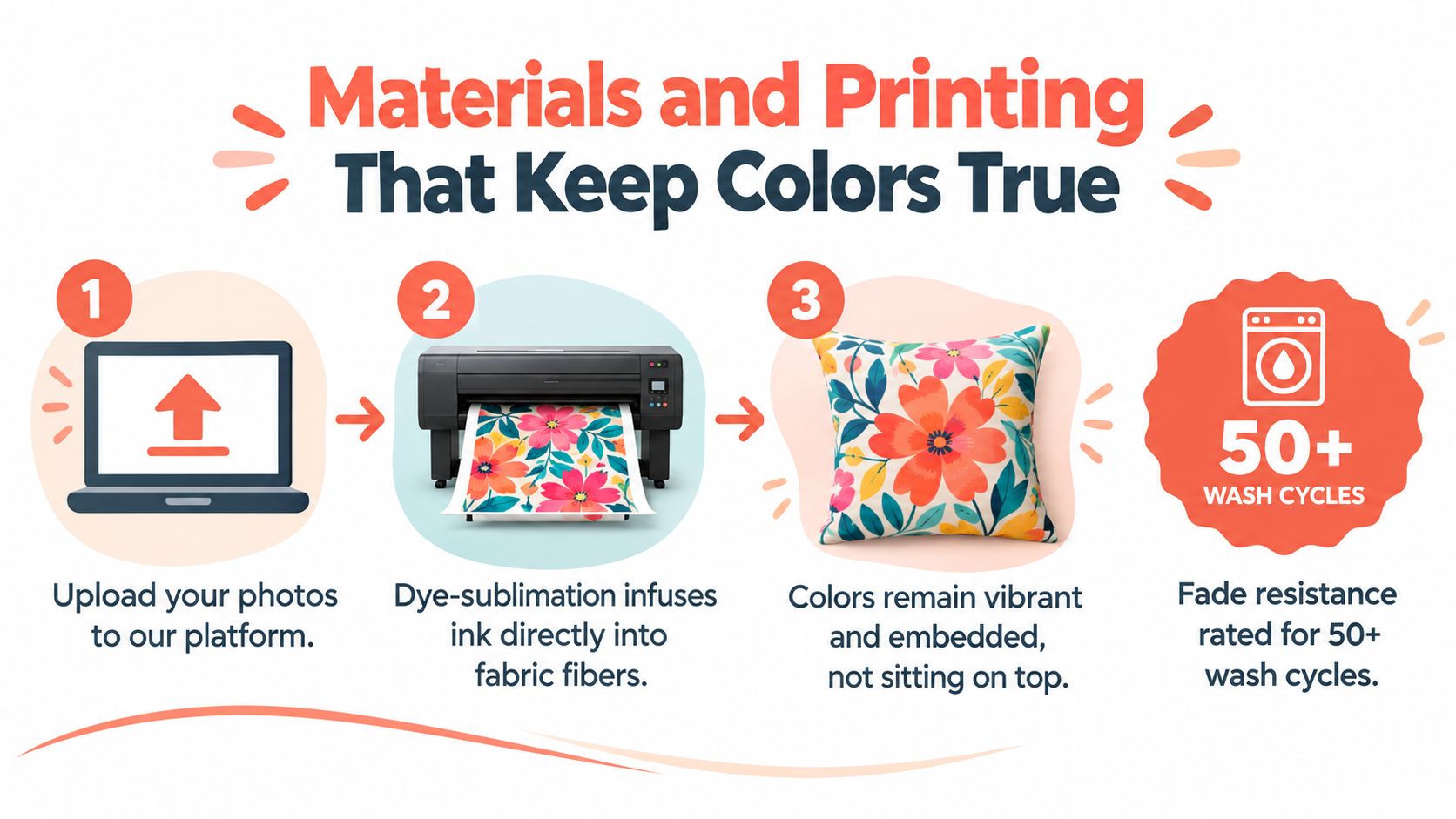
The printing method affects how the pillow looks after the first unboxing and after repeated use. Dye-sublimation and fiber-infusing digital printing move color into the fabric fibers instead of leaving a layer sitting on top. That helps reduce the cracking and surface wear associated with a print that behaves like a coating.
Polyester-based and plush textiles are common choices because they accept vibrant color well and remain soft against the skin. Some printers use 6-color systems to improve gradients and fine detail, which can be useful when a collage includes skin tones, pale skies, fur, and shadows in the same design.
What happens after you upload
The customization flow should feel straightforward:
- Upload your photos. Select original files and arrange them in the chosen template.
- Review the preview. Check faces, borders, background tones, and the edges where the pillow may be sewn.
- Complete checkout. Confirm the size, fabric, shipping details, and final design before placing the order.
That Blanket Co offers a Custom Photo & Text Pillow alongside its personalized blanket range. Its stated production process uses gallery-quality color and detail, ultra-soft machine-washable fabrics, and typical printing and shipping within 2 to 3 business days, with free shipping on orders. Previewing the collage at final scale remains important regardless of the maker, because a design that looks balanced on a phone may feel crowded when enlarged.
Fabric is part of the design
A smooth polyester surface can make colors appear clean and vivid, while plush fabric adds softness and a more relaxed feel. Think about where the pillow will live. A decorative cushion on a formal sofa might benefit from a structured surface, while a nursery chair or family room may suit a softer, touchable finish.
Don't judge color from a bright phone screen alone. Lower the screen brightness, check the photo in natural daylight, and look for very dark shadows or pale details that may blend into the chosen background. A sample is especially sensible for a larger order or a collage where exact color matching matters.
Styling and Gifting Ideas for Every Occasion
A collage pillow earns its place when it participates in the room instead of shouting for attention. Pair it with solid cushions in related tones, then add one textured piece, such as a nubby weave or soft boucle. The photos remain the emotional focus while the surrounding pillows give the arrangement a finished look.
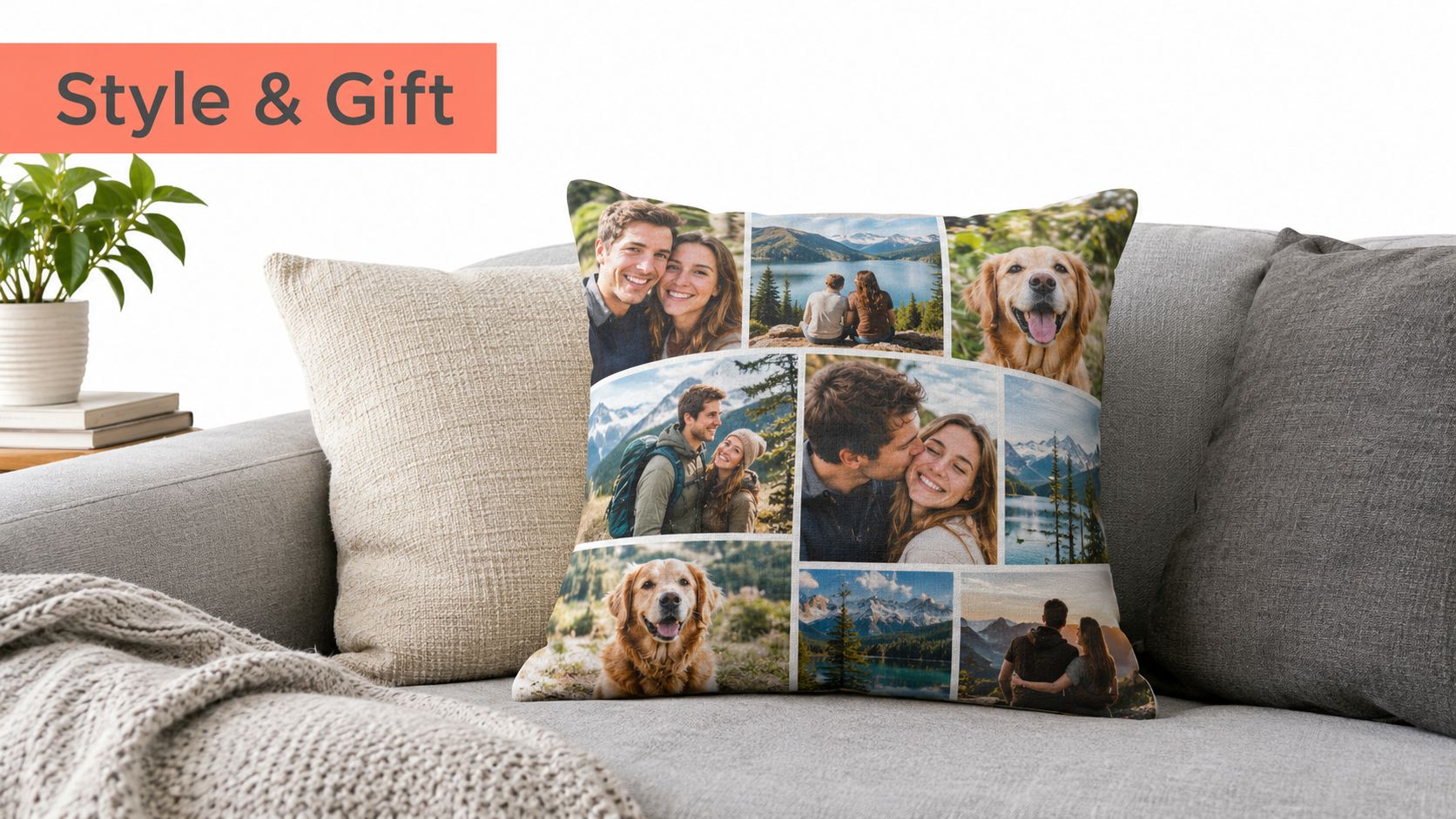
An oversized pillow can act as the anchor on a deep sofa, especially when the rest of the cushions are plain. For earth-tone interiors, keep the collage background warm and restrained. A pillow with family or pet photos can then feel like part of the palette rather than a separate display.
If you're testing a softer blush scheme, look at examples of styling blush throw pillows alongside neutral upholstery and natural textures. The same principle works with a photo design. Let one color from the room guide the background, border, or supporting cushions.
Match the gift to the story
Grandparents: Use one photo of each grandchild, keeping the faces similarly sized. A gentle grid makes the collection easy to read from across the room.
Pet owners: Combine a clear portrait with candid images of the pet sleeping, playing, or exploring. For a memorial pillow, a quieter layout and soft neutral background can feel more fitting than a busy arrangement.
New parents: Choose a few milestone images and coordinate the background with the nursery's existing colors. Leave enough open space for the pillow to feel restful in a reading chair or nursing corner.
Couples: A heart layout can suit a wedding or anniversary, while a scattered arrangement may better capture a shared trip, first home, or growing family.
This kind of gift also pairs naturally with a Custom Photo Blanket. Matching the photo set across a pillow and blanket creates a coordinated keepsake, with the pillow adding a smaller sofa accent and the blanket carrying the larger visual story. You can explore personalized ideas through customized throw pillows.
Time the order around the occasion
Holiday gifting needs earlier planning than many people expect. A 2026 consumer-journey study found that October represented 12% of holiday gifting searches, November 29.3%, and December 52.2%, according to Measure Protocol's holiday gifting analysis. For November and December content, focus on Christmas and year-end gifting, and check the stated production and delivery window before promising a specific arrival date.
Personalized gifts are also commonly purchased before the final rush. Industry reporting describes a 2.3x volume spike during November and December, with most personalized gift purchases made 10 to 18 days before the gift-giving date, as reported in Beyond Memories' personalized gifting overview.
Mother's Day deserves its own spring schedule. In a 2026 U.S. survey, 35% of consumers said they shop two weeks in advance, 26% shop one month in advance, and 8% wait until Mother's Day or the day before, according to Statista's Mother's Day shopping-period data. A personalized pillow fits that occasion particularly well because 46% of shoppers said finding something unique or different mattered most, while 39% valued creating a special memory, and projected U.S. Mother's Day spending reached USD 38 billion, with planned average spending of USD 284.25 per person, as reported by the New Jersey Business & Industry Association.
Caring for Your Keepsake and Final Checklist
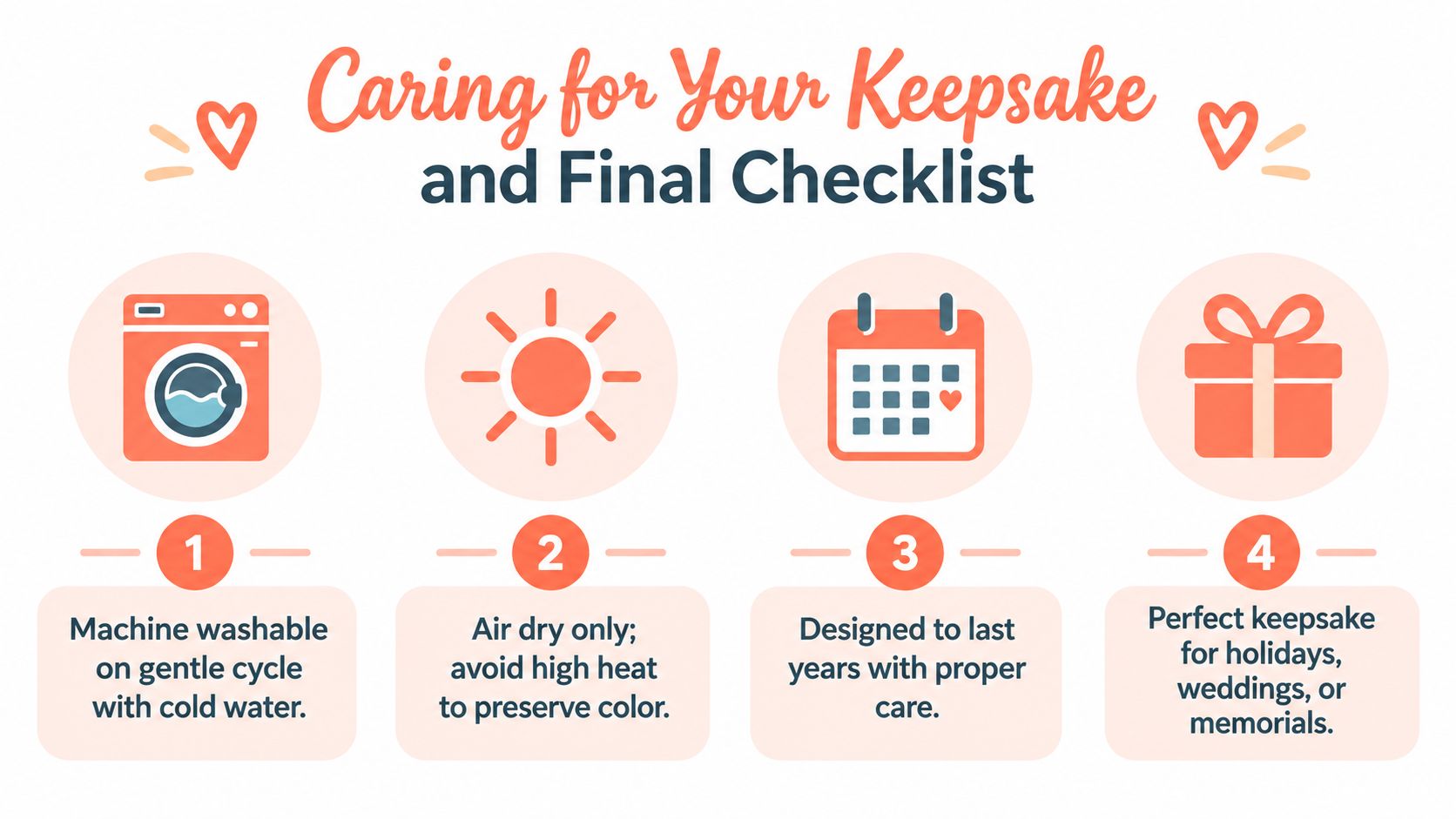
A printed pillow can stay attractive through regular use when you follow the care label and avoid unnecessary heat. For machine-washable fabrics, use a gentle cycle with cold water, then air dry or choose low heat. High heat can stress the fabric and affect the look of an embedded dye print over time.
Keep the pillow away from harsh bleach and aggressive stain treatments unless the maker specifically approves them. If the cover has a removable insert, take the insert out before washing and reshape the cover while it dries.
Before you click order
- Original files: Confirm that you're using camera originals rather than screenshots or compressed social-media downloads.
- Pixel target: Check that the shortest side exceeds the appropriate pixel requirement for your pillow size.
- Photo count: For a 16 × 16 inch pillow, start with roughly 3 to 5 images and remove any face that becomes too small.
- Final preview: Inspect the collage at its actual size, including borders, corners, seams, and cropping.
- Room palette: Make sure the background and photo edits sit comfortably with the sofa, nursery, or bedroom.
- Gift timing: Compare the occasion date with the maker's production and shipping window, especially for November, December, April, and May orders.
That Blanket Co says its satisfaction-focused experience is supported by 50K+ happy customers, 100K+ blankets created, and a 4.95-star average from verified reviews since 2024. Open your camera roll, choose the memories that belong together, and start with a layout that gives each one room to be seen.
That Blanket Co offers custom photo pillows and Custom Photo Blankets made from your favorite images, with collage designs, soft machine-washable fabrics, and a simple upload-to-checkout process. Create a coordinated keepsake for a holiday, Mother's Day, wedding, memorial, or everyday sofa by visiting That Blanket Co.